



The Most Stolen Cars: A Complete Guide to High-Risk Models, Theft Methods, and Protection
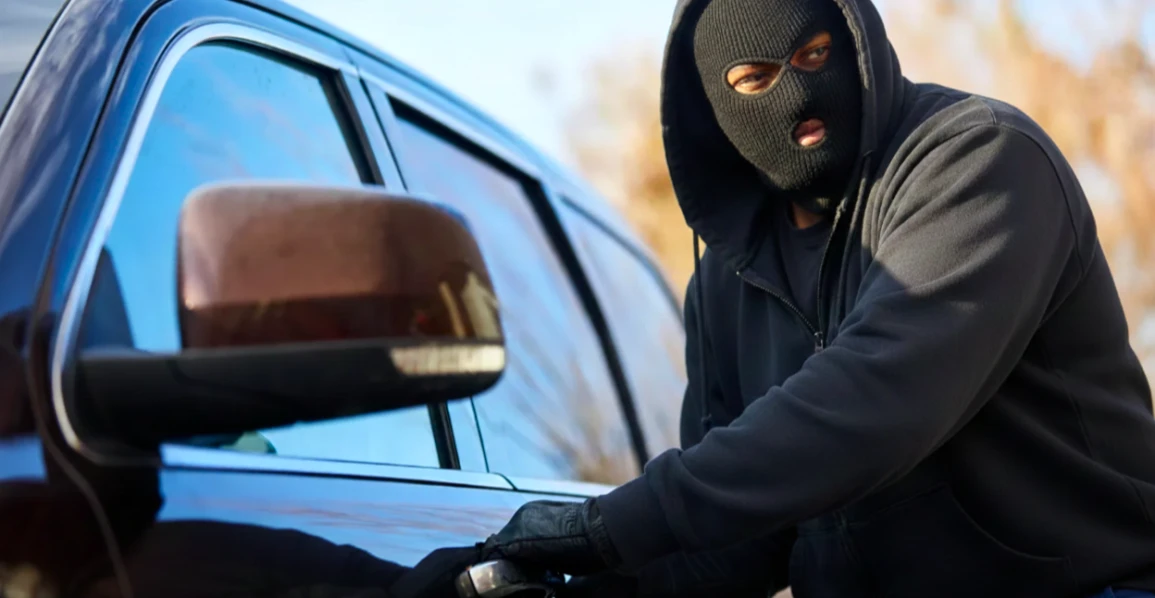
Your car can disappear in 60 seconds. While you're grabbing a coffee or shopping for groceries, professionals could already be driving it to a chop shop for disassembly. Car theft – not a random act, but a well-oiled business where every model has its price and its demand. Knowing which cars interest criminals is the first step toward effective protection.
It isn't just premium SUVs that get stolen. Mass-market and budget-friendly models, popular with taxi services or on the second-hand market, are often targeted. A car's appeal to a thief is determined by three factors: the demand for its parts, the ease of bypassing its factory security system, and its liquidity on the black market. In this article, we will break down the most stolen cars, explain why they are at risk, and provide a step-by-step plan to protect your property.
The Top Most Stolen Cars
While theft rankings can shift slightly from year to year, the core group of targeted vehicles remains stable. Criminals are interested in cars that are easy to sell, either whole or in parts. Our stolen vehicles list highlights models whose owners should be especially vigilant.
- Hyundai Solaris / Santa Fe & Kia Rio / Sportage
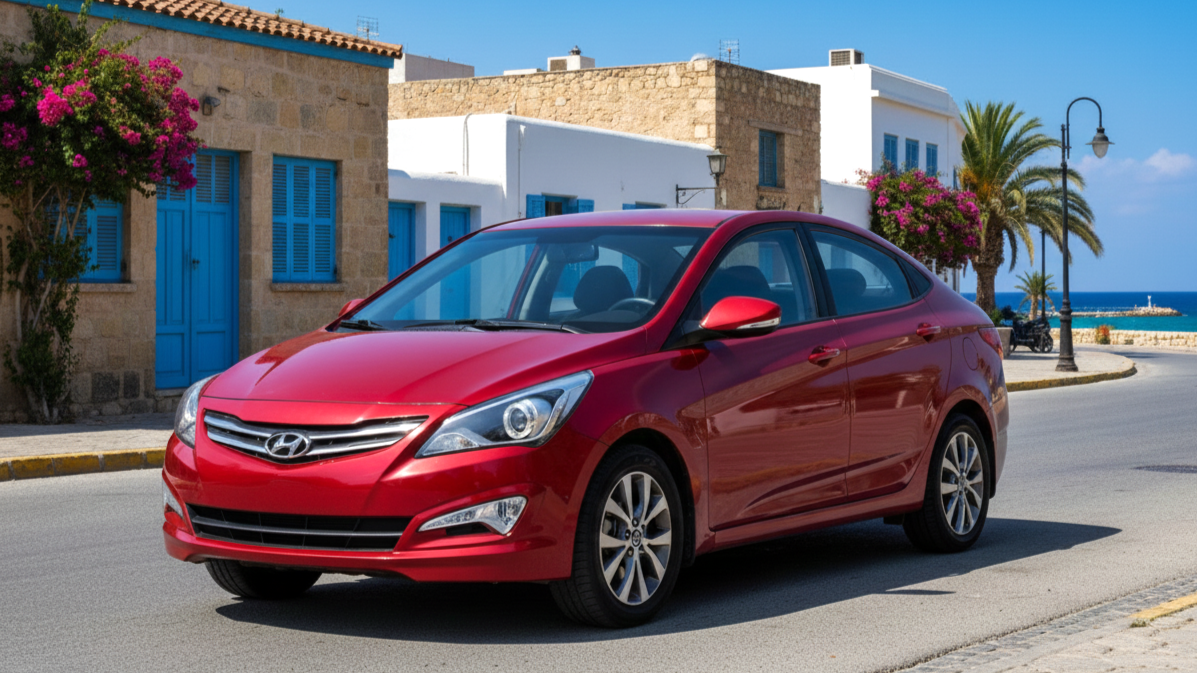
Why they are at risk: Until recently, many Korean vehicles had vulnerabilities in their standard keyless entry systems and relatively simple lock cylinders. The immense popularity of these models creates constant demand for inexpensive used parts on the secondary market. Theft for resale with new documents or for dismantling is a common practice.
- Toyota Camry / RAV4 / Land Cruiser
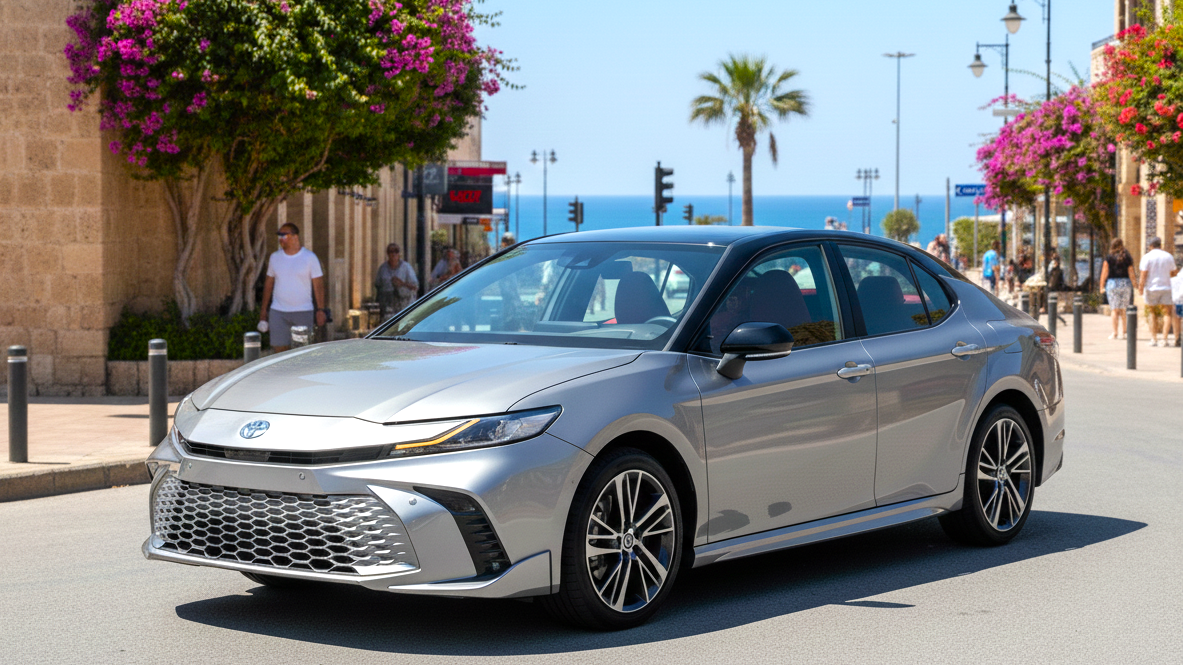
Why they are at risk: Toyota's legendary reliability makes these cars desirable not only to buyers but also to thieves. The Camry is popular in taxi fleets, which generates a huge demand for parts. The RAV4 is one of the most common crossovers on the road. And the Land Cruiser is the king of "theft-to-order," often for resale in other countries where its off-road capability and durability are highly valued.
- Lexus RX / LX
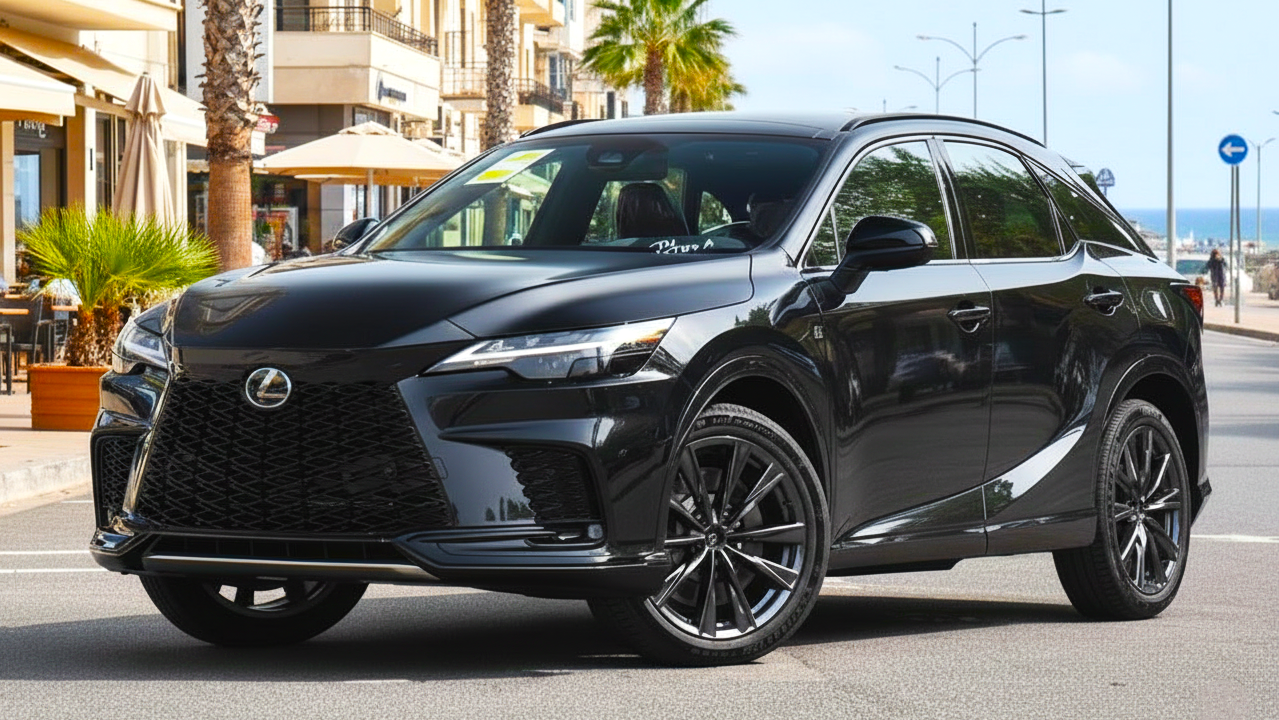
Why they are at risk: These premium Japanese SUVs are typically stolen "to order." They are valued for their comfort and reliability. Vulnerabilities in their keyless entry systems allow thieves to use relay devices for quick entry and engine start.
- Ford Focus / Kuga (Escape in the US)
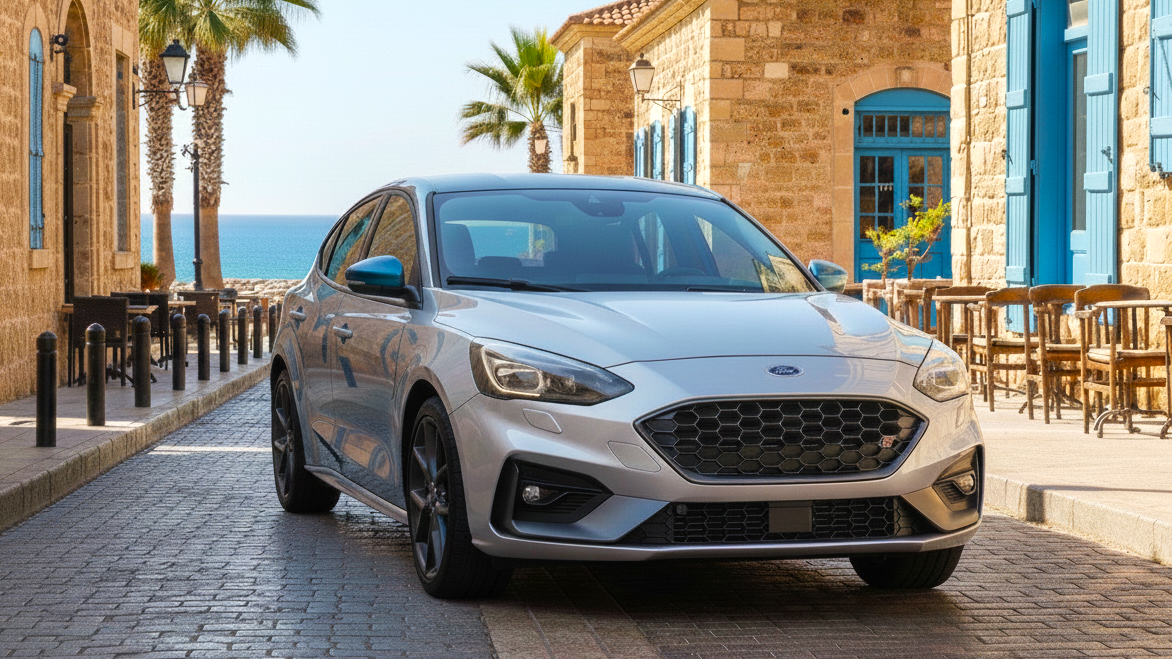
Why they are at risk: As with the Korean brands, their popularity ensures a steady demand for body panels, lights, and interior components. Some older models are vulnerable to electronic hacking through the OBD diagnostic port.
Theft Trends and Statistics: Who is in the Risk Group
To answer the question, what is the most stolen car, one must look beyond specific models to broader trends. Statistical analysis shows that criminals have clear preferences based on vehicle class, age, and even resale regions. Understanding these patterns helps to more accurately assess the risks for your own vehicle.
Mid-size sedans and crossovers are the most frequent targets. Their popularity guarantees that their parts will always be in demand. In the United States, for instance, the most stolen car in America has consistently been a full-size pickup truck, like the Ford F-Series or Chevrolet Silverado. The reason is the same – their sheer numbers on the road and the constant need for repair parts.
A vehicle's age also plays a role. Cars older than 5-7 years are most often stolen to be dismantled for parts. Newer and more expensive vehicles (under 3 years old) are stolen "to order" for resale with altered VINs or for export. Ironically, having modern security systems doesn't always help – professional thieves have the equipment to bypass them.
Theft Methods: From Lock Picks to High Technology
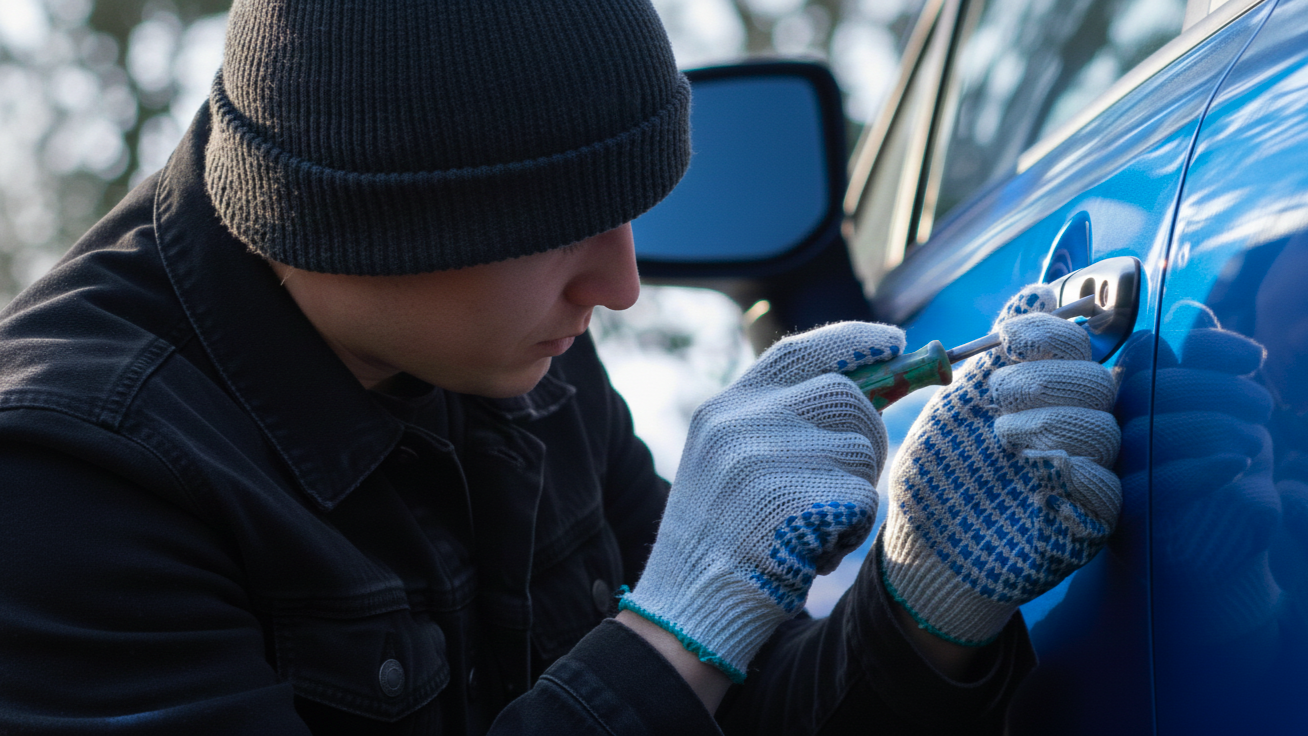
A car thief's toolkit is constantly evolving. While older methods required mechanical tools, today's thefts increasingly involve sophisticated electronic equipment.
Classic Methods (for older cars)
Despite the rapid evolution of automotive security, many traditional theft techniques continue to work perfectly on older vehicles. These methods rely on mechanical weaknesses rather than electronic vulnerabilities.
- Forcing the lock cylinder. This is a classic brute‑force technique where thieves use a specialized tool—often a reinforced screwdriver or a “spinner” device—to twist or break the door lock cylinder. Once the cylinder is damaged, the locking mechanism disengages, allowing the door to open. On older cars with simple mechanical locks, this process can take just a few seconds and often attracts little attention in busy areas.
- Picking the lock or forcing the ignition. Some older cars lack modern immobilizers, making them especially vulnerable to lock‑picking and ignition manipulation. Skilled thieves can use lock‑picking tools to rotate the tumblers inside the door lock, gaining silent access without visible damage. After entering the vehicle, they either break the ignition barrel with force or use a shaped tool—sometimes called a “jiggler key”—to mimic the action of a real key. Once the ignition turns, the car can be started and driven away with minimal effort.
- Breaking a window. This is the crudest and noisiest method, but it remains common in situations where something valuable is left inside the car—like a bag, phone, or even a key fob. Thieves use a spring-loaded punch or a simple heavy object to shatter the side window, grab the target item, and sometimes use it to start the vehicle. Although primitive, this method works quickly and is often chosen when the goal is immediate access rather than a silent, undetected theft.
Modern Methods (for newer cars):
- Relay Attack ("The Fishing Rod"): The most popular method for stealing cars with keyless entry. One criminal with an amplifier gets close to the owner (in a café, shop), while a second with a relay device stands by the car. The car thinks the key is nearby, unlocks, and starts.
- Programming a new key via the OBD port: Thieves connect to the diagnostic port inside the car and use special equipment to program their own key into the vehicle's memory in minutes.
- Code Grabbing: A device that intercepts and decrypts the signal from your alarm fob at the moment you lock your car.
Even the most advanced cars are vulnerable because manufacturers are always balancing security with convenience, and convenience often wins.
Risk Factors: Where and When Cars Are Stolen
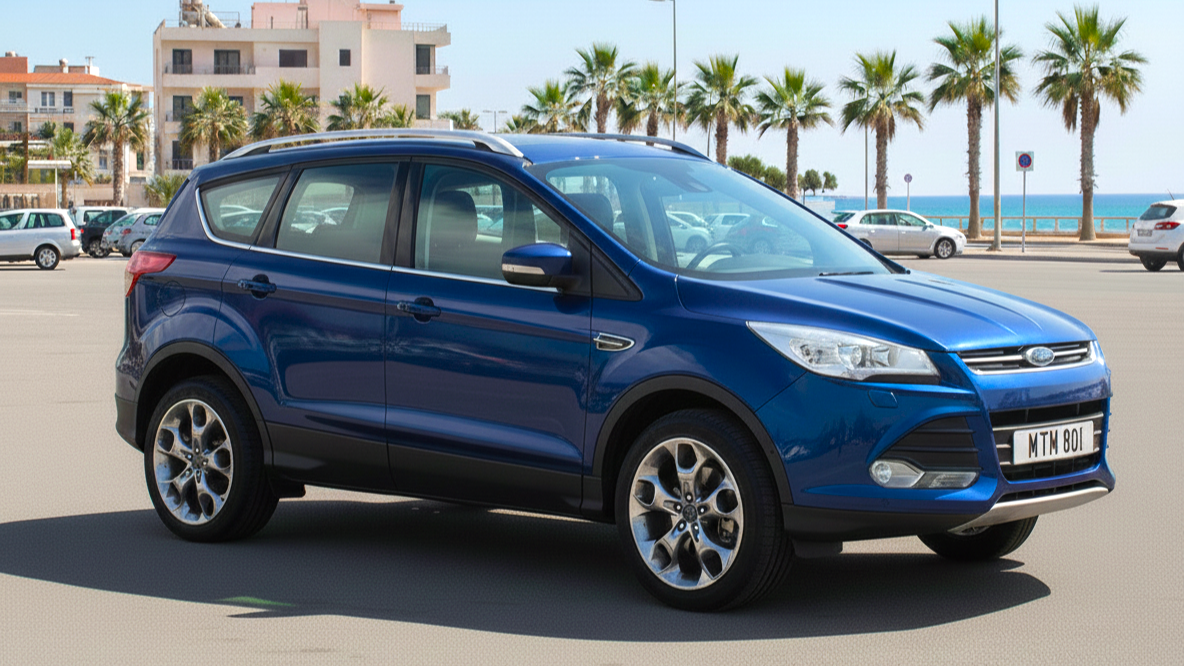
A thief looks not only for a specific model but also for convenient conditions to "work." The probability of theft increases dramatically if you leave your car in certain locations.
A list of high-risk parking spots:
- Residential parking lots: They are often dark at night with few witnesses, giving a criminal plenty of time.
- Large shopping mall parking lots: The high volume of cars and constant flow of people create an environment where no one pays attention–ideal conditions for a relay attack.
- Unsecured street parking and roadsides: A complete lack of monitoring and surveillance.
The most "popular" time for theft is late night and early morning (from 2:00 AM to 6:00 AM). During this time, most owners are asleep, and the streets are empty. Any additional obstacle – an awkwardly parked spot, a bright streetlight, a security camera – can persuade a thief to abandon the target and look for an easier one.
How to Protect Your Car
There is no such thing as 100% protection, but you can make stealing your car so difficult and time-consuming that a criminal will simply give up. You need to build layers of security, combining mechanical and electronic systems.
Protection Level | Examples | Pros | Cons |
Basic (Mechanical) | Steering wheel lock, pedal lock, gearshift lock. | Visually deters amateurs, cannot be scanned, inexpensive. | A professional can defeat it in minutes. |
Intermediate (Electronic) | Alarm with dialog code and a GSM module, immobilizer. | Protects against code grabbers, sends alerts to your phone, engine block. | The GSM signal can be jammed, factory immobilizers can be bypassed. |
Advanced (Comprehensive) | Satellite tracking system, custom security setup, hood lock, OBD port lock. | Multiple layers are hard to bypass, GPS tracking, physical protection of the engine bay. | High cost of installation and subscription fees. |
Practical tips for owners of at-risk cars:
- Store your keyless entry fob in a signal-blocking pouch (a Faraday cage). This blocks the radio signal, making a relay attack impossible.
- Install a lock on the OBD diagnostic port. A simple and inexpensive solution that prevents a thief from quickly programming a new key.
- Install a "kill switch." A hidden toggle switch that interrupts a critical electrical circuit (like the fuel pump) can stump even an experienced thief.
What to Do If Your Car Is Stolen Anyway
If the worst happens, the key is to act quickly and without panic. The first few hours after the theft are the most critical.
- Call the police immediately. Report the make, model, color, license plate number, and any distinguishing features. The faster the information is entered into the system and relayed to patrol units, the higher the chance of finding the car quickly.
- Contact your insurance company. If you have comprehensive coverage (CASCO), report the claim within the timeframe specified in your policy.
- If you have a satellite tracking system, call the operator. They will begin tracking the vehicle and relay its coordinates to a response team and the police.
- Spread the word. Post information on social media and relevant online forums with photos and details of your car. Sometimes, stolen cars are found thanks to tips from casual observers.
Prepare a folder in advance with your car's documents, photos, details about its anti-theft systems, and spare keys.
Conclusion: Knowledge is the Best Defense
Understanding which are the most stolen cars helps you to realistically assess your risks and avoid skimping on security. Any car can become a target, but a comprehensive approach to protection reduces that probability tenfold. Your goal is to make your vehicle an inconvenient and unprofitable target for criminals. Do not neglect even the simplest precautions. Share this article with friends and family – this knowledge might just help them avoid serious trouble and protect their property.

