



Smart Test Driving: What to Check Before You Buy

What is a test drive? It is a practical evaluation of a vehicle in real-world driving conditions, aimed at determining how well a specific model suits the driver in terms of comfort, handling, noise levels, ergonomics, and overall road behavior. A test drive provides information that cannot be fully obtained from reviews, specifications, or promotional materials.
A test drive is one of the key stages in choosing a vehicle, as many characteristics that directly affect daily use become apparent only while driving. Even cars within the same class can differ significantly in seating position, control logic, and driving feel. A properly conducted test drive helps avoid an incorrect purchase decision and reduces the risk of disappointment after buying the vehicle.
Preparing for the Test Drive
The quality of a test drive largely depends on preparation. Without clearly defined goals and evaluation criteria, the drive can easily turn into a formality that does not lead to objective conclusions.
- Defining your needs. Before the test drive, determine the primary usage scenario for the vehicle. For city driving, prioritize visibility, maneuverability, smooth takeoff, and ease of parking. For highway use, focus on stability at speed, noise levels, and confident acceleration. Family use requires attention to cabin space, rear-seat comfort, and cargo capacity. If an active driving style is important, evaluate braking performance, steering response, and suspension behavior.
- Checking conditions with the dealer or seller. Clarify the route, duration of the test drive, and whether it includes different types of roads. It is also important to test exactly the configuration you plan to purchase: engine type, transmission, and trim level. Differences between versions can significantly affect the driving experience.
- Find an assistant. Bringing another person allows you to obtain an additional perspective. A passenger can assess rear-seat comfort, noise levels, and the overall ride quality, while also noticing details the driver may miss while concentrating on driving.
Exterior Inspection Before the Test Drive

Begin the inspection before driving. This helps identify obvious issues early and avoids wasting time test-driving a vehicle that is unsuitable due to its condition.
- Inspect the body. Walk around the vehicle and check the gaps between body panels - they should be even and symmetrical. View the car from different angles and under different lighting conditions. Variations in paint color, surface waves, or localized gloss may indicate repainting or repairs. Pay special attention to the edges of the hood, doors, and fenders, where signs of bodywork are most commonly visible.
- Check the wheels and tires. Inspect the tread on all tires. Wear should be even across the width. Excessive wear on one side may indicate suspension or alignment issues. Check that the tires match in brand and size and inspect the sidewalls for cracks. Differences in tire type or wear level warrant further questions.
- Inspect glass, headlights, and mirrors. Check the windshield for cracks and large chips within the driver’s field of view. Inspect the headlights for clouding or moisture buildup and verify that brightness is consistent. Make sure mirrors are intact, free of looseness, and adjust smoothly.
- Check the doors. Open and close all doors, as well as the hood and trunk. They should operate smoothly, without resistance, misalignment, or unusual noises. Inspect the locks and weather seals - worn seals can lead to noise and water leaks.
Interior and Equipment Inspection
The interior directly affects everyday comfort, so inspect it carefully and without rushing.
- Adjust the driver’s seat. Adjust the seat and steering wheel to your preferred position. Check whether the steering wheel is comfortable to hold, whether you can reach the pedals naturally, and whether your knees contact the dashboard. Evaluate forward and side visibility - wide pillars and high window sills can create blind spots.
- Check the controls. Operate all primary buttons and switches. Ensure that lights, wipers, mirrors, and multimedia controls are intuitive and do not require excessive distraction. Verify that steering wheel controls and touch interfaces are easy to use.
- Test the multimedia system. Connect your smartphone and activate navigation, music, and hands-free calling. Evaluate screen responsiveness, interface clarity, and sound quality. Delays, system lag, or complex menus tend to become more irritating during daily use than they initially appear.
- Check climate control and ventilation. Turn on heating and cooling and adjust the fan speed. Pay attention to noise levels and airflow distribution. Check how quickly the cabin temperature changes and how effectively the windshield is defogged.
- Assess overall interior condition. Inspect seat upholstery, the steering wheel, and pedals. Significant wear combined with low mileage may indicate heavy use. Check for unusual odors—musty or chemical smells often signal ventilation issues or previous damage.
Checking Cargo Space and Passenger Room
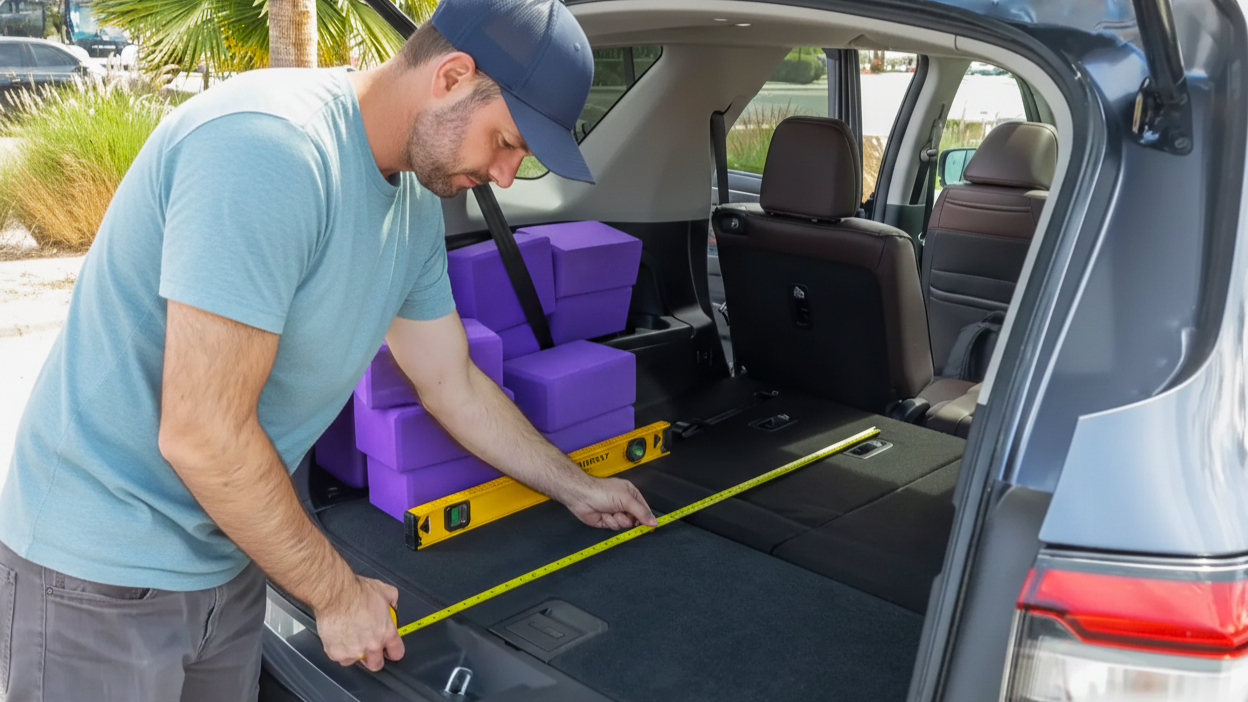
Even if the vehicle feels good to drive, its practicality may not match your needs.
- Evaluate the trunk. Open the trunk and focus on its shape, not just volume. Check the height of the loading sill, as well as the depth and width of the opening. Make sure it is convenient for loading large items and look for additional storage compartments under the floor.
- Check the rear seats. Sit in the rear seat, preferably behind the driver’s seat adjusted to your position. Evaluate legroom, headroom, and ease of entry and exit. If the vehicle is intended for family use, check for child seat anchors and ease of installation.
- Inspect additional amenities. Look for cup holders, door pockets, charging ports, and rear air vents. These features significantly affect comfort on longer trips.
Starting the Test Drive: Initial Movement
The first moments of driving often provide the most honest impression of the vehicle’s condition.
- Start the engine or system. Observe how the engine or system starts - it should be quick and smooth. Listen for unusual noises, vibrations, or unstable idle speed. On a used vehicle, pay particular attention to cold-start behavior.
- Check transmission operation. Begin driving smoothly. Evaluate how the vehicle moves off from a stop and whether there are jerks or delays. With a manual transmission, assess clutch pedal travel and engagement point. With an automatic transmission, focus on shift smoothness.
- Listen for noise and vibration. At idle and during initial movement, check whether vibrations transfer to the steering wheel or seat and whether any unusual sounds occur when turning the wheel or switching on the air conditioning.
Main Test Drive: Driving Evaluation

The goal is not to test maximum speed, but to understand how the vehicle behaves in common driving situations: starting, lane changes, braking, uneven surfaces, and cornering.
Acceleration and Response
Check throttle response - how predictably the vehicle accelerates, whether there is lag, and how easy it is to modulate power. Perform a few accelerations from 40–60 to 80 km/h and one from 80 to 110 km/h if conditions allow. This reveals whether there is sufficient power for overtaking and how comfortably the transmission operates.
Handling, Cornering, and Stability
At speeds of 60–90 km/h, evaluate how well the vehicle maintains its line, whether constant steering corrections are needed, and how it reacts to road ruts and crosswinds. In corners, predictability matters more than sportiness - the car should respond exactly as expected.
Brakes and Suspension on Different Surfaces
Braking should feel progressive and stable, without vibration in the pedal (except during ABS activation). Find a section with uneven pavement - joints, speed bumps, rough asphalt. The suspension should absorb impacts without harshness or excessive body movement.
Maneuverability in City and Highway Conditions
Finish the test drive the same way you started it: by parking. Assess vehicle dimensions, visibility, camera and sensor performance, and mirror usability. On the highway, evaluate noise levels and driver fatigue - how quickly wind noise, road noise, or overly sensitive steering become tiring.
Do not rely on the idea of “getting used to it”. If something is objectively uncomfortable, visibility, seating position, or control logic, adaptation usually means tolerating, not solving, the issue.
Additional Checks

Once basic impressions are clear, proceed with targeted checks.
- Safety systems. Test ABS, cameras, parking sensors, blind-spot warnings (if equipped), and driver assistance features. The key factor is not only availability, but how these systems communicate - clearly and appropriately, without being intrusive.
- Audio and multimedia while driving. Sound quality and hands-free performance change at speed. Check whether the other party is clearly audible and whether volume needs constant adjustment due to road noise.
- Unwanted noises. Interior rattles, wind noise, tire hum, or suspension knocks over small bumps can turn an otherwise acceptable car into one that becomes frustrating to own. On used vehicles, such noises also provide clues about suspension conditions.
Completing the Test Drive
After stopping, take a moment before leaving the vehicle. Observe how the engine or system behaves after load - check for instability, unusual smells, or excessive fan noise. On used cars, look under the vehicle for fresh fluid leaks.
Fuel consumption estimates over a short drive are always approximate, but you can still assess whether maintaining a relaxed driving pace feels natural or requires constant throttle input.
Finally, ask questions while impressions are fresh: what is included in the trim level, warranty or return conditions, service history, and upcoming maintenance requirements—especially important for used vehicles.
Creating a Personal Checklist
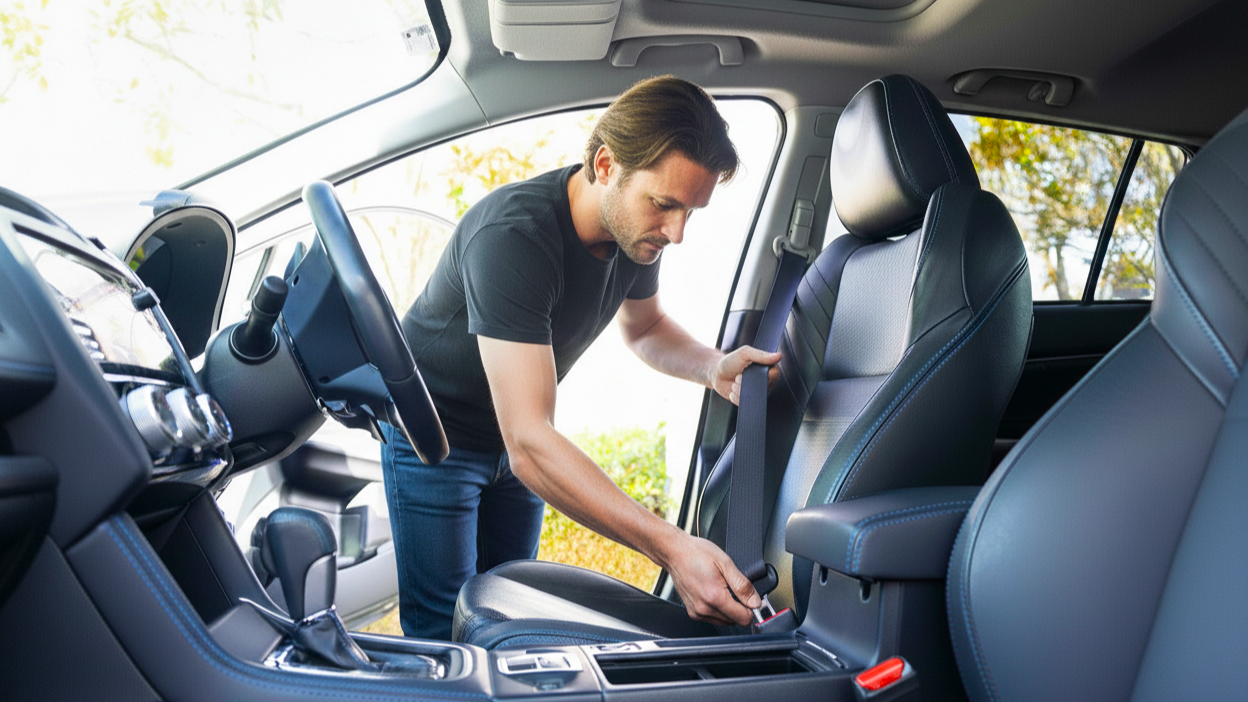
Many buyers finish a test drive with a vague “it seems fine” and later struggle to justify their choice. To make a calm, reasoned decision, impressions should be recorded.
Use a simple one-minute note structure:
- seating position and visibility;
- ride comfort and noise;
- steering and brakes;
- transmission and power delivery;
- interior layout and controls;
- trunk and rear-seat space;
- positives;
- irritations;
- questions for the seller.
When comparing multiple vehicles, drive similar routes on the same day or within a short time frame. This makes differences clearer and prevents memory from filling in gaps. Do not limit yourself to a single drive - repeat test drives often reveal details missed the first time, especially with used cars.
Conclusion
A proper test drive is a brief but precise evaluation of whether a vehicle meets your expectations. It allows you to identify factors that listings cannot show: seating comfort, visibility, noise levels, control logic, and real-world behavior in traffic and at speed. The more structured and methodical your approach, the lower the risk of buying a vehicle that does not truly suit you.
If you want a test drive of a new car to deliver maximum value, decide in advance what to do on a test drive - which scenarios to simulate, which features to test, and which questions to ask. This approach turns the test drive into a clear decision-making tool rather than an emotional guess.

