



What Is ABS? Understanding the Anti-Lock Braking System
Every driver has faced a situation where they had to stop the vehicle abruptly. The car ahead brakes suddenly, a pedestrian steps into the roadway, or the vehicle begins to lose stability on wet pavement. In such moments, the outcome depends not only on the driver’s reaction but also on the capabilities of the braking system.
To clearly understand what is ABS, it is necessary to examine how the system actually works and why it became a mandatory safety feature in modern vehicles.
History and Development of ABS
The history of ABS did not begin in the automotive industry, but in aviation. In the 1930s, engineers encountered the problem of wheel lock during aircraft landings. At high speeds, locked wheels caused tire failure and loss of directional control on the runway. Later, the technology was adapted for automobiles. Initial attempts to introduce similar systems were made in the 1950s and 1960s. However, the electronics of that era were neither compact nor reliable enough for widespread automotive use.
A breakthrough came in 1978, when Bosch, in cooperation with Mercedes-Benz, introduced the first production ABS system for passenger cars. It was an electro-hydraulic design capable of analyzing wheel speed and modulating brake pressure in real time. Initially, ABS was installed only on high-end vehicles due to the high cost of components. As microelectronics advanced and production became more efficient, the system became more affordable.
By the 1990s, the anti-lock braking system began spreading rapidly into the mass market. In the 2000s, many countries made ABS mandatory for new vehicles. Today, it is nearly impossible to imagine a modern car without this technology. The evolution of safety standards also accelerated its adoption. Increasing requirements for vehicle stability and controllability made ABS the foundation for future electronic driver-assistance systems.
Principle of Operation
An anti-lock braking system is designed to prevent wheel lock during heavy braking. Its primary purpose is to maintain vehicle control even in a critical situation. When a wheel locks completely, it stops rotating and begins sliding across the road surface. At that point, tire grip drops sharply. The vehicle loses its ability to change direction, and the driver cannot steer around an obstacle. That is precisely why the anti-lock braking system was developed.
It is important to understand that ABS does not “increase” braking force or make a vehicle unstoppable. It allows the driver to retain control in situations where manual brake modulation would be insufficient.
Main components:
- wheel speed sensors,
- electronic control unit (ECU),
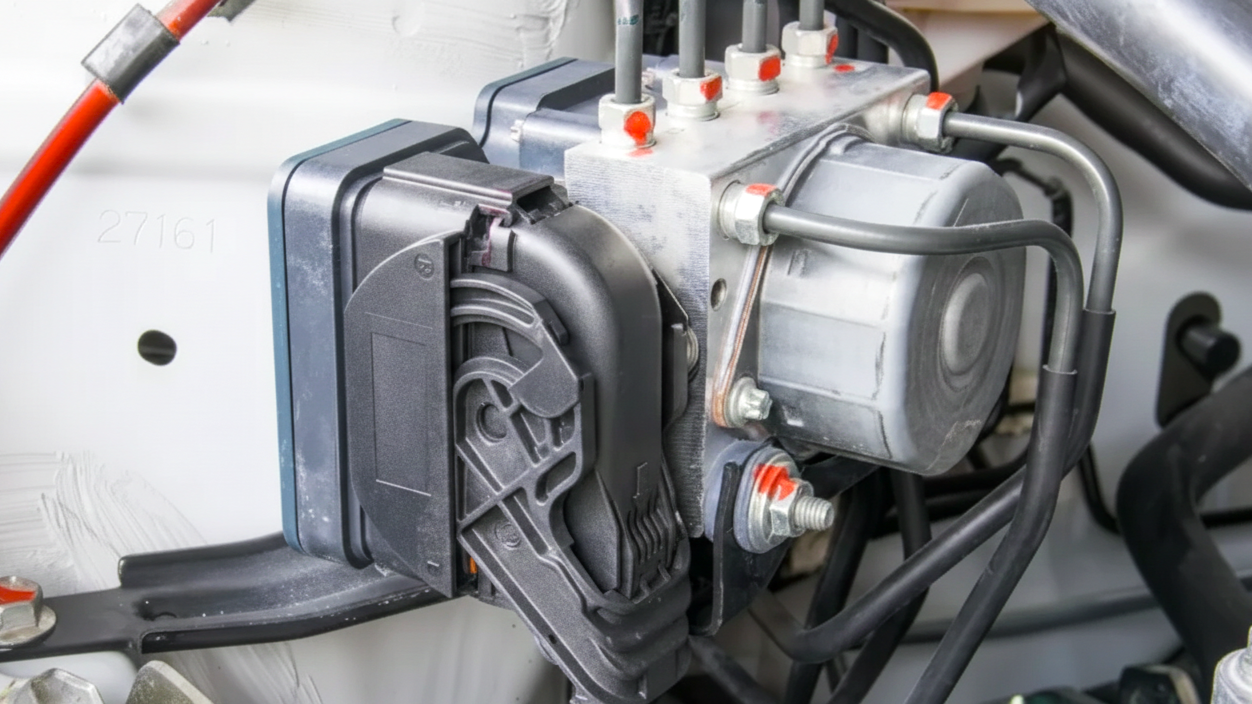
- hydraulic modulator with control valves.
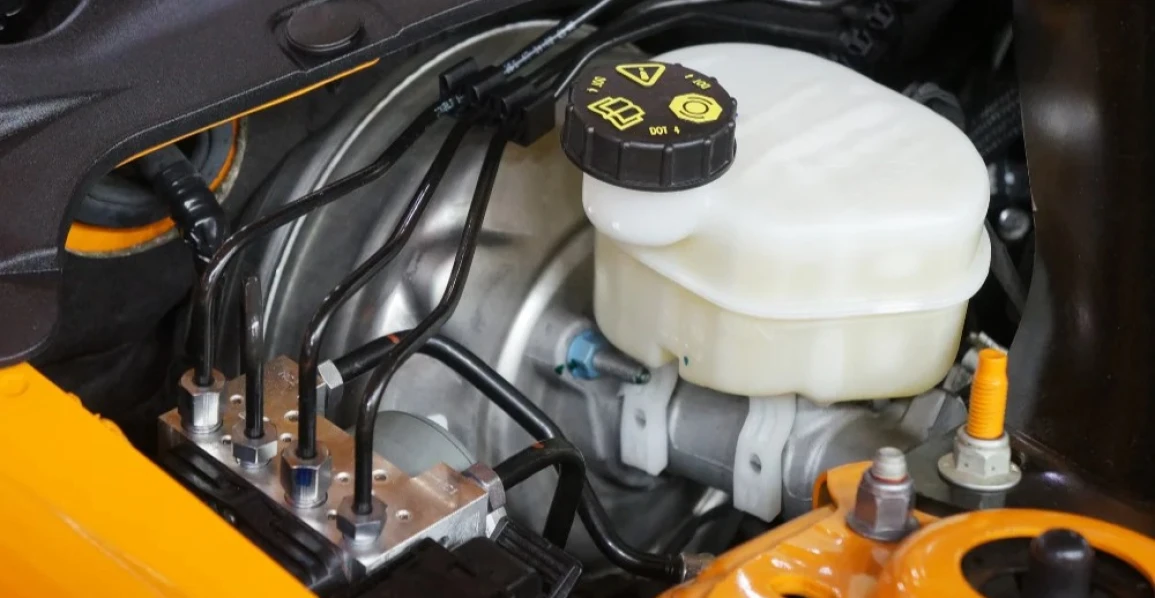
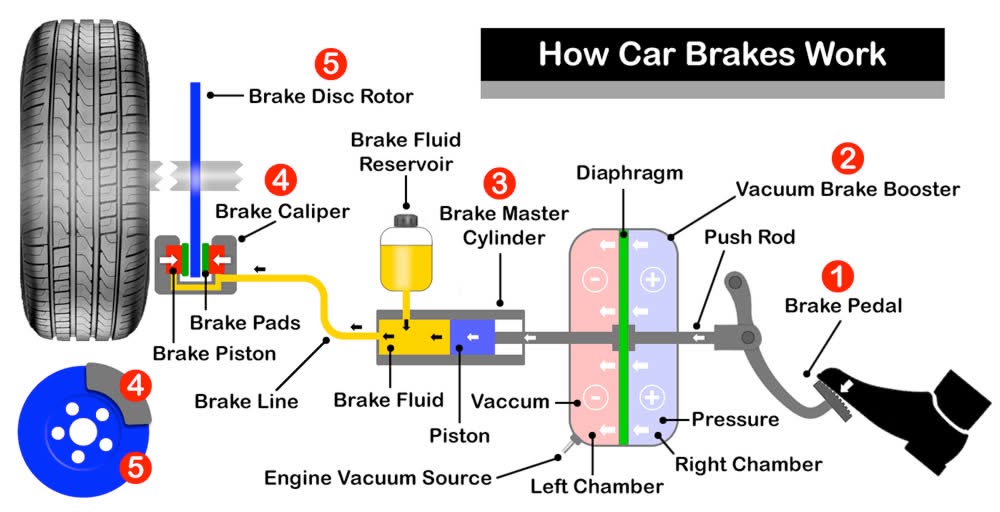
Each wheel is equipped with a sensor that measures rotational speed. This data is transmitted in real time to the ECU. When the driver presses the brake pedal firmly, hydraulic pressure increases. If one wheel slows down too quickly and approaches lock-up, the system detects the risk.
The ECU then commands the hydraulic unit to reduce pressure in that wheel’s circuit. Pressure drops, the wheel resumes rotation, and then pressure increases again. This cycle repeats dozens of times per second. The driver feels this as pulsation or vibration in the brake pedal. Many people mistakenly interpret this as a malfunction, but it is normal system operation.
From an engineering perspective, ABS meaning is the maintenance of an optimal slip ratio between the tire and the road surface. Maximum traction is achieved not at full rolling and not at full lock, but at controlled slip. ABS keeps the wheel operating within that optimal range. Without electronic control, no driver can regulate brake pressure with such speed and precision.
Advantages of ABS for Drivers and Passengers
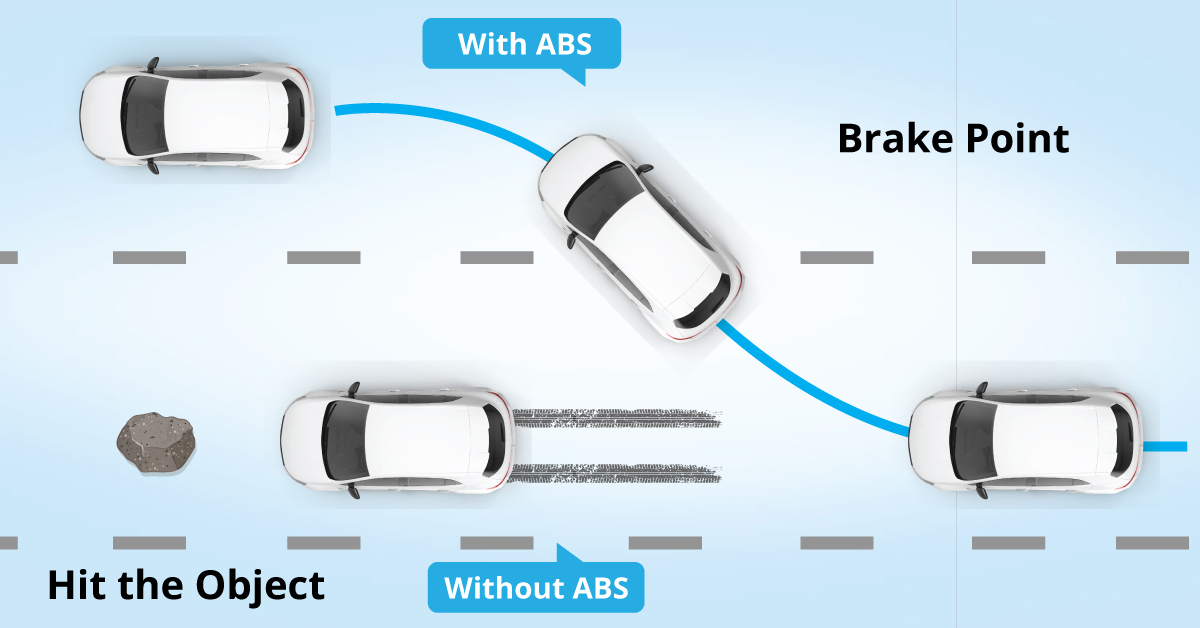
The primary advantage of ABS is maintaining vehicle controllability during hard braking. Real safety is determined by control, not merely by stopping distance. When wheels lock, the vehicle continues moving straight regardless of steering input. A sliding tire cannot effectively transmit lateral forces. In simple terms, if the wheel is not rotating, the vehicle cannot change direction.
ABS allows the wheels to keep rotating under heavy braking. By maintaining controlled slip, the system preserves traction. This enables the driver to brake and maneuver at the same time — for example, to avoid a sudden obstacle or adjust the vehicle’s path in a turn.
Key advantages include:
- Directional control even during emergency braking.
- Reduced risk of spin caused by rear wheel lock.
- Improved stability on wet roads.
- More predictable vehicle behavior on mixed traction surfaces.
It is important to note that stopping distance does not always decrease. On dry pavement, an experienced driver may achieve similar results using threshold braking. However, in real-world conditions — wet asphalt, ice, or gravel — the benefits of ABS become significantly more evident.
The anti-lock braking system is primarily designed to preserve stability and steering control. Its core task is to give the driver the ability to control the vehicle in critical moments when fractions of a second matter.
Types of Anti-Lock Systems
Modern anti-lock systems differ in the number of control channels, operational algorithms, and application.
Passenger Cars
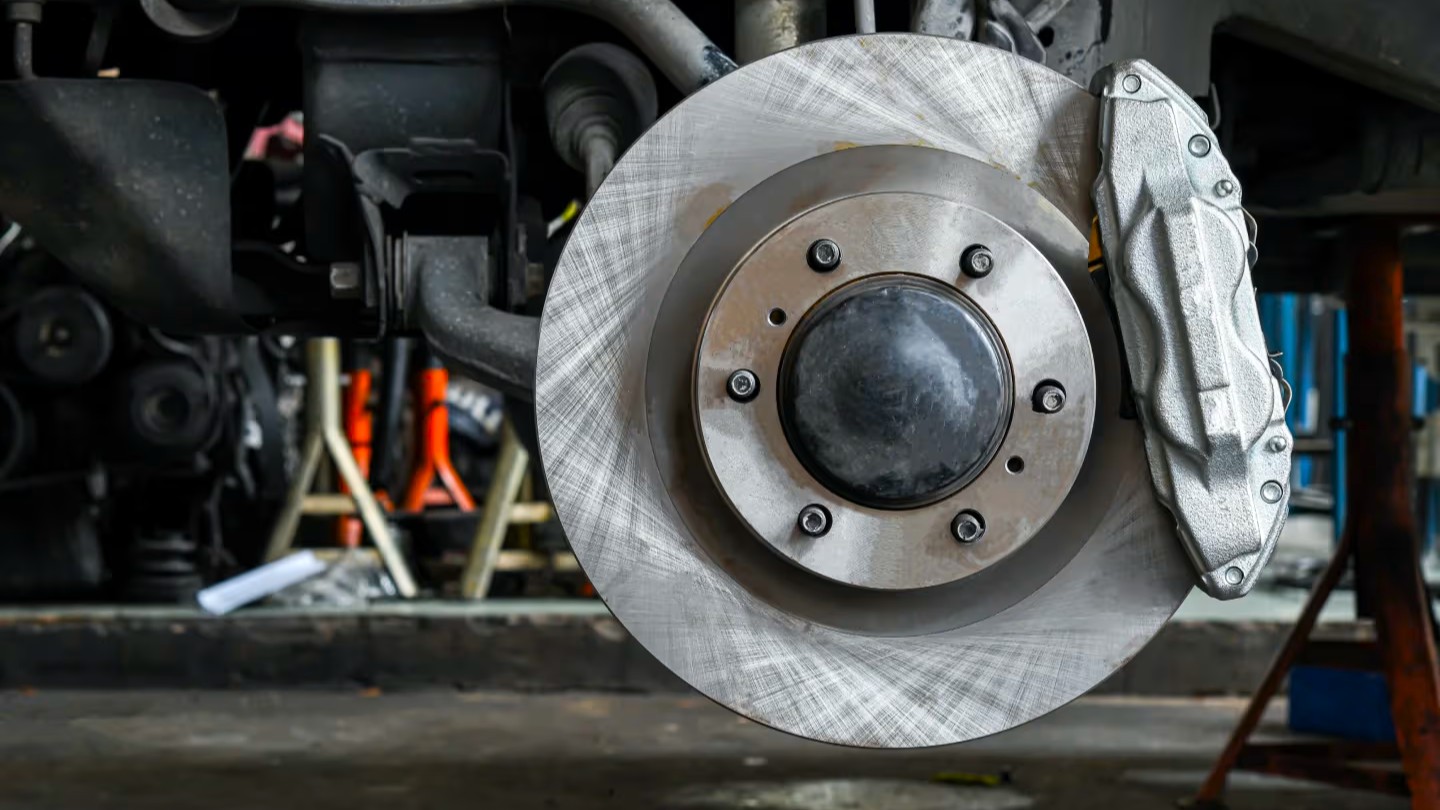
In everyday terms, anti lock brakes refer to systems that prevent wheel lock during braking. The most common configuration in passenger vehicles is a four-channel system. Each wheel is monitored and controlled independently, with its own speed sensor and hydraulic circuit.
If one wheel encounters reduced traction — for example, on wet pavement or sand — the system reduces pressure only in that circuit without affecting the others. This ensures maximum stability during emergency braking. Earlier two- and three-channel systems controlled wheels by axle, but modern safety standards have largely shifted to four-channel systems as the most effective solution.
Trucks and Buses
In commercial vehicles, ABS has a more complex structure. It is integrated with pneumatic braking systems, since heavy vehicles use compressed air rather than hydraulic fluid. Load distribution across axles is also taken into account. A truck’s mass can vary significantly depending on cargo. ABS algorithms adapt accordingly to maintain stability whether the vehicle is fully loaded or empty.
In buses, center-of-gravity shifts and weight transfer during braking are also considered, which is especially important for passenger safety.
Integration with Other Systems
ABS became the foundation for a wide range of active safety technologies:
- EBD (Electronic Brakeforce Distribution) automatically adjusts brake pressure between front and rear axles depending on load and driving conditions.
- ESP (Electronic Stability Program) uses wheel speed data along with yaw and lateral acceleration sensors to prevent skidding. It can selectively brake individual wheels through the ABS hydraulic unit.
- TCS (Traction Control System) also relies on ABS sensors to reduce wheel spin during acceleration.
All of these systems use the sensors and actuators originally developed for ABS. In essence, the anti-lock braking system is the technological platform upon which modern active safety is built. Thus, ABS is not an isolated feature but a core element of a comprehensive vehicle stability and control system.
Proper Use of ABS
%20(1).png?_t=1771590484)
One common mistake drivers make is attempting to “assist” the system. During emergency braking in a vehicle equipped with ABS, the correct approach is:
- Press the brake pedal firmly and fully.
- Maintain steady pressure until the vehicle stops.
- Do not release the pedal when vibration is felt.
Some drivers instinctively ease off the pedal when they feel pulsation. This reduces braking effectiveness.
Snow and Ice
On loose snow, stopping distance may be slightly longer than with fully locked wheels, since locked wheels can dig into the surface. However, full lock eliminates steering control. From a safety standpoint, maintaining maneuverability is more important.
Common Myths
- ABS always shortens stopping distance.
- With ABS, safe following distance is less important.
- Pedal pulsation indicates a fault.
These statements are incorrect. The system helps maintain control but does not override physics.
Modern Technology and Innovation
Today, ABS is part of a complex electronic vehicle architecture. Advanced Driver Assistance Systems (ADAS) use radar, cameras, and sensors to monitor road conditions. If a potential collision is detected, automatic emergency braking may be activated.
In such cases, ABS modulates brake pressure to maintain traction and stability. In simple terms, ABS brakes meaning refers to electronic control of tire-road grip during braking. Without this technology, stability control and automatic braking systems would not function effectively.
Modern algorithms are faster and more precise. They account for vehicle speed, steering angle, and longitudinal and lateral acceleration. ABS is no longer an isolated system — it has become the central element of active vehicle safety.
Conclusion
The anti lock brakes are the result of decades of engineering development aimed at improving road safety. It performs three essential functions:
- prevents wheel lock,
- maintains vehicle controllability,
- serves as the foundation for advanced electronic systems/
Understanding how ABS works allows drivers to react correctly in emergency situations and avoid common mistakes. A modern vehicle without ABS represents a step backward in safety. While the system does not make a driver invulnerable, it significantly increases the chances of maintaining control in critical moments. For this reason, the anti-lock braking system remains one of the most important achievements in active automotive safety.

