



Too Much Oil in Car: Symptoms, Causes, and What to Do

What happens if you put too much oil in your car? Most drivers act with good intentions: they change the oil, add a little extra “just in case,” or top it off before a long trip. The logic seems sound—oil protects the engine, so more must be better. But an engine doesn’t work that way.
The problem is that an overfill isn’t always obvious right away. The car starts, the oil pressure light stays off, and at first everything seems normal. But after some time, the driver may notice odd changes: smoke from the exhaust, rough idling, fresh oil seepage around seals, or even a burning smell after shutting the engine off. These signs don’t always mean overfilling, but if they show up, the first thing to do is check the oil level.
What Is the Normal Oil Level?
The correct oil level is between the MIN and MAX marks on the dipstick. The manufacturer designs the crankcase volume so there is enough oil for stable pump operation and a protective film on engine parts, but not so much that it comes into contact with rotating components. This range isn’t a suggestion—it’s part of how the engine is engineered.
In most passenger cars, the distance between MIN and MAX represents roughly one quart (about one liter), though the exact amount depends on the engine. That means even a small visual overage can equal an extra 200–400 milliliters. On the dipstick it may look minor, but for the engine it’s already meaningful. That’s why topping off “by eye” or dumping in a large amount at once is risky—you may think you added only a little, but you’ve actually crossed the safe limit.
Check the oil under consistent conditions: the car should be on level ground, the engine off, and you should wait a few minutes for oil to drain back into the pan. Wipe the dipstick clean, reinsert it fully, then read the level from a clear mark. If you measure on an incline or immediately after driving, the reading can be misleading.
Being close to MAX is fine. But if the oil is clearly above the upper mark, that’s an overfill, not “extra protection.” At that point the oil is working outside the conditions the engine was designed for, and it’s better to fix it immediately rather than wait for symptoms.
What Happens When You Overfill Engine Oil
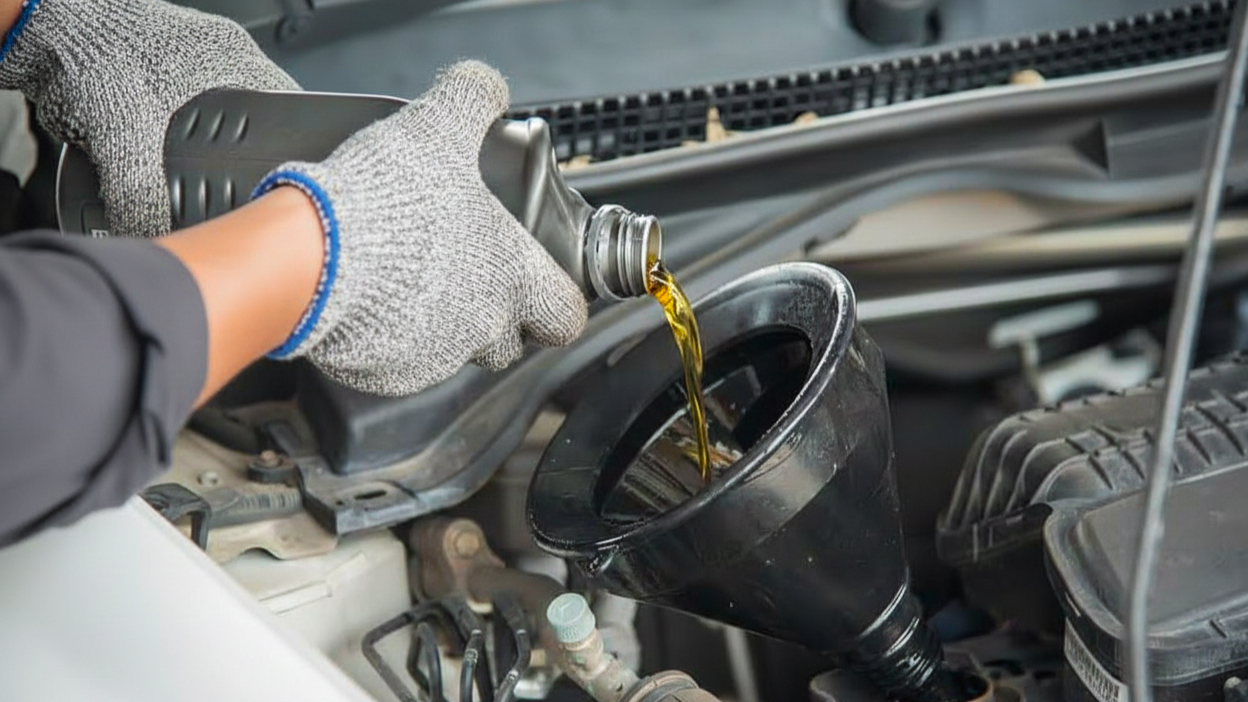
The main issue isn’t simply that there’s “more oil”. The problem is that the oil starts behaving differently. As the level rises, the crankshaft and counterweights sit closer to the oil surface. At speed, they can strike the oil and whip it like a mixer, which leads to aeration—oil mixed with air. That may sound harmless, but it matters. The oil pump is designed to move liquid, not foam. Foam compresses, moves differently through oil passages, and makes the oil film on friction surfaces less stable. Parts that depend on steady lubrication—crankshaft bearings, camshafts, and turbochargers—end up less protected. A driver might not see an immediate failure, but the engine can start wearing faster.
The second issue is rising crankcase pressure. There are always crankcase gases (a small amount of combustion gases gets past the rings), and the PCV system is meant to vent them. When there’s too much oil, there’s less free space in the crankcase, so pressure builds more quickly. The ventilation system works harder, and excess oil is more easily carried into the intake—where it doesn’t belong.
The third issue is oil getting into the combustion chamber. This usually happens through the crankcase ventilation system and intake rather than directly through the cylinder walls. The oil then burns along with fuel. At that stage, the problem becomes obvious: smoke appears, there’s a distinctive smell, and in some cases you may get misfires or faster fouling of spark plugs and the throttle body.
Too Much Oil in Car: Symptoms
The easiest way to spot an overfill is when the car starts acting differently right after an oil change or top-up. The engine used to run smoothly, start normally, and not smoke—then warning signs appear. The most obvious symptom is blue or bluish-gray exhaust smoke. It happens because excess oil is getting into the combustion process and burning.
Most often, you’ll notice the smoke:
- at startup;
- after extended idling;
- during hard acceleration.
At those moments, more oil mist can be pulled into the intake, and the exhaust becomes visibly smokier. It’s important to distinguish this from white vapor in cold weather, which is usually condensation. Blue-tinted smoke with an oily smell is a red flag. Another common symptom is an unstable idle. The engine may shake slightly, idle unevenly, or feel less responsive. This doesn’t happen in every case, but if it shows up immediately after adding oil, it’s rarely a coincidence.
A third symptom is fresh oil traces on the outside of the engine. With overfilling, crankcase pressure rises and weak points start weeping first—gaskets, seals, joints, and areas around covers. This is especially noticeable if the engine used to be dry and new seepage appears after service. Sometimes oil reaches hot surfaces and you’ll get a burning smell. You might notice it after a drive when you step out of the car, or inside the cabin with the heater running if oil is burning off near hot components.
Another indirect sign is unexpectedly higher oil consumption in the first few hundred miles after an oil change: the level drops faster than usual even though you don’t see obvious leaks. That can happen when some of the excess oil is burning along with fuel. Keep in mind: any single symptom can have other causes, but if they appear specifically after topping up or servicing, checking the oil level is the quickest and most logical first step.
Why Overfilling Is Dangerous
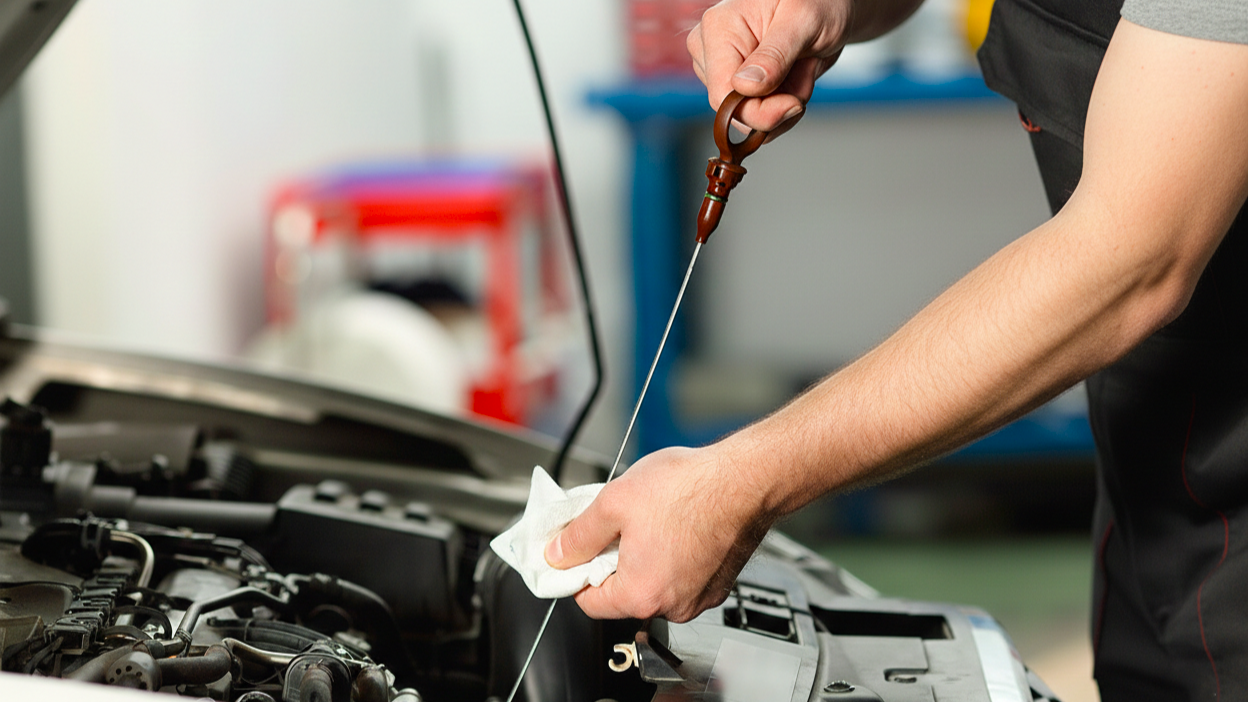
The biggest risk is that the consequences are often delayed and cumulative. You might drive for a week thinking everything is fine, then discover leaks, increased oil consumption, exhaust problems, or a catalyst efficiency warning. The catalytic converter suffers because burning oil creates ash deposits. Those deposits collect in the honeycomb structure and reduce its effectiveness. The more oil that burns, the faster the catalyst clogs.
Seals and gaskets suffer from increased pressure and from oil moving more aggressively through areas that previously saw less flow. Even after correcting the level, leaks may not disappear because the sealing material may already be distorted or pushed out of position.
Turbocharged engines deserve a special note. A turbocharger is highly sensitive to oil quality and lubrication stability. Oil aeration and oil being carried into the intake create a double risk: lubrication becomes less stable, and there’s more oil mist in the airflow. That’s why the question of what happens if i put too much oil in my car is especially relevant for turbocharged engines—the effects can show up sooner.
Common Causes of Overfilling
The most frequent cause is human error: adding the “book” capacity without accounting for residual old oil that never fully drained. Some oil almost always remains in the engine. This is especially common when the oil is drained cold or the drain time is too short. In that situation, if you pour in the full listed capacity, the new level can easily end up above MAX. A similar situation happens when someone drains oil quickly—opens the plug, waits a couple of minutes, closes it—and a noticeable amount of old oil stays inside.
Another common mistake is topping up to “MAX” in large increments. Many people add 300–500 milliliters at once. But the oil level doesn’t always show the final reading immediately: some oil clings to the filler neck, coats surfaces, and sits in passages before draining into the pan. After 10–15 minutes or a short drive, the level rises beyond what you expected, and you end up with an overfill even though it felt controlled at the time.
Another cause is confusion about the correct oil capacity. The same engine family can have different variants with different oil pan designs, oil cooling setups, or turbocharging, which changes the capacity. There’s also a difference between an oil change “with filter” and “without filter”: a new filter holds oil, and if you don’t account for it, it’s easy to miscalculate. Finally, many people rely on online figures or advice that applies to a different engine version or a different service procedure. The result is pouring in the wrong number and ending up above the safe level.
What to Do If You Overfilled the Oil
First, measure the level correctly. Keep it simple:
- park on level ground;
- shut the engine off;
- give the oil time to drain into the pan.
If you check immediately after shutdown, some oil is still in passages and the reading can be inaccurate.
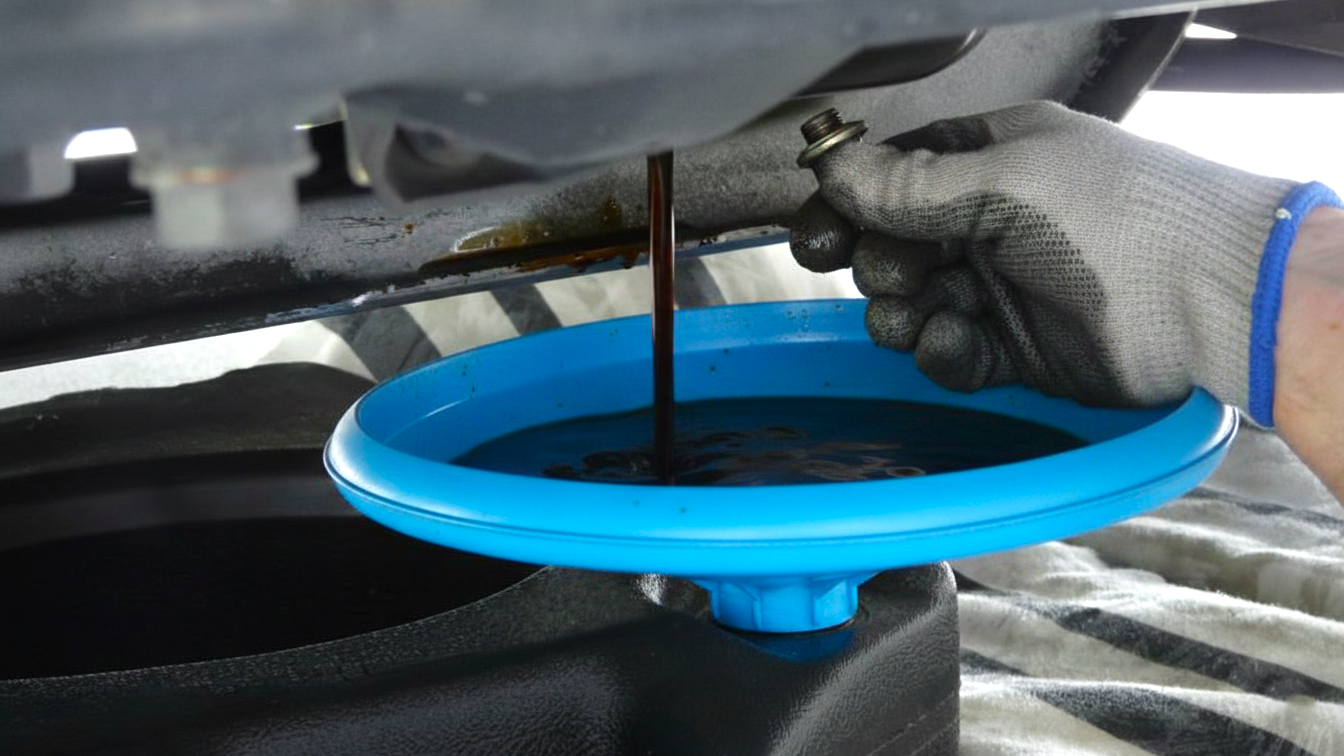
If the level is above MAX, don’t delay. The excess needs to be removed. Practically, there are two straightforward ways to do it:
- extract oil through the dipstick tube (carefully, using clean tools);
- partially drain oil through the drain plug.
Which method is easier depends on your tools and situation, but the goal is the same: bring the level back into the normal operating range. Why not wait? Because overfilling triggers a chain reaction: aeration → unstable lubrication → rising crankcase pressure → oil entering the intake → smoke and contamination → risk to the catalyst and seals. The longer you drive, the greater the chance it stops being “an oil level issue” and turns into “repairing the consequences”.
Overfill vs. Underfill
Both are unacceptable, but they do harm in different ways. Low oil is dangerous because under hard driving, on slopes, or during sharp acceleration, the oil pickup can draw air—then oil pressure truly drops. Overfilling is dangerous because pressure may look normal while lubrication quality gets worse due to aeration and excessive crankcase pressure.
In practice, a slight underfill closer to the middle of the range is often less critical than a significant overfill. But the correct takeaway is simple: the engine is designed for normal levels, not extremes. The best approach is to keep the oil consistently between the marks.
How to Avoid Overfilling in the Future
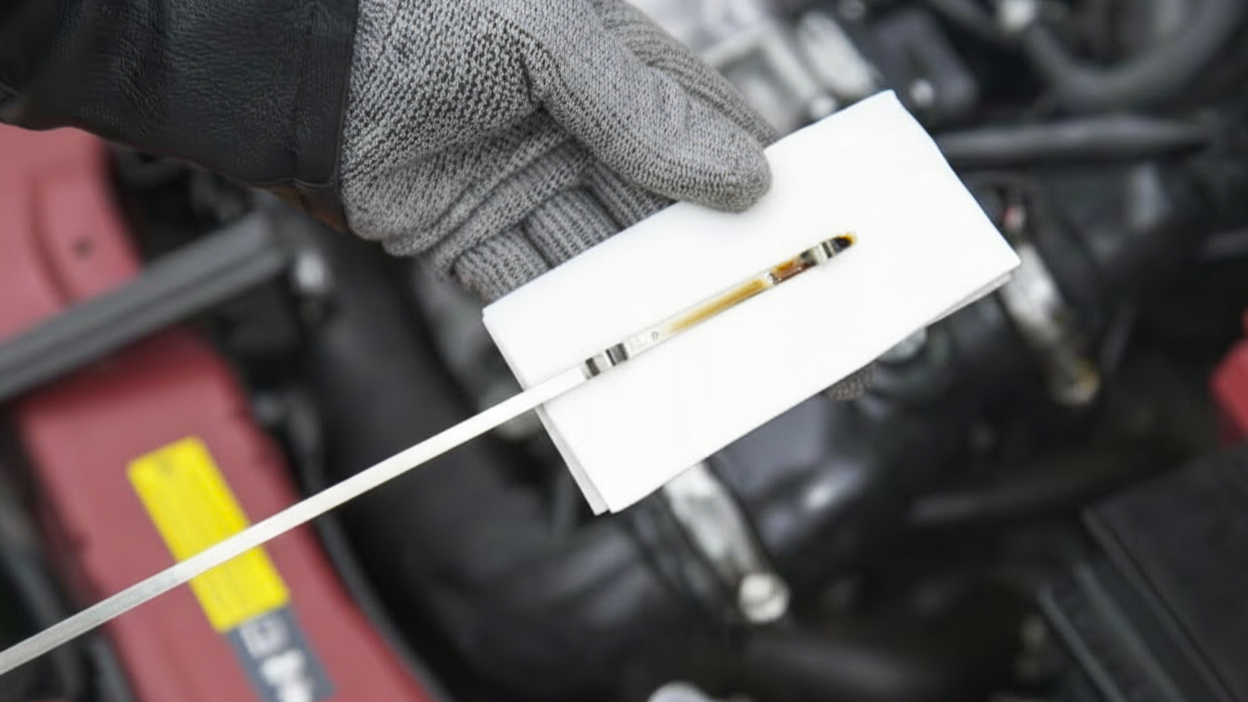
The best habit is regular checks and measured top-ups. If you add oil, do it in small amounts, let it drain, and recheck the dipstick. During an oil change, remember that the listed capacity is a guideline, not a guarantee—the final authority is the dipstick reading after the engine has run briefly and you’ve allowed a short drain-back period.
One more point that people often underestimate: proper maintenance is a direct investment in engine life. Checking the oil takes minutes and can prevent unpleasant surprises.
Conclusion
Too much oil in car? Overfilling disrupts proper lubrication: the oil can foam, crankcase pressure rises, oil is pushed into the intake and starts burning, seals and gaskets are stressed, and over time the catalytic converter and engine life can suffer. This is a serious issue that often starts quietly and only shows symptoms after several drives.
The most sensible thing any driver can do is keep the oil level within the specified range and check it regularly. Consistent checks and careful maintenance reduce the risk of what happens if you put too much oil in your car and help the engine run smoothly, reliably, and safely for the long term.

