



Why Are My Brakes Squeaking? Main Causes of Squeaky Brakes and How to Fix Them
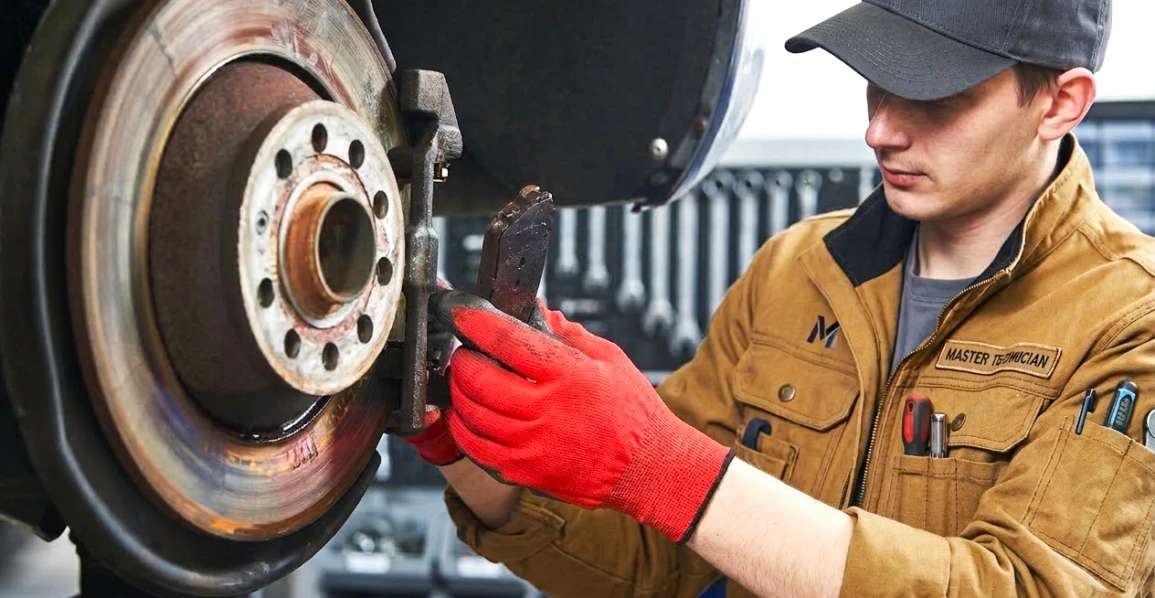
You press the brake pedal, and suddenly, a terrible screech pierces the air. It's annoying, distracting, and makes you question the health of your car. While a squeak doesn't always signal a breakdown, it nearly always means that components are operating on the edge of comfort. It is important for a driver to clearly understand the answer to the question, why are my brakes squeaking, and how to quickly and safely eliminate the source of the noise without compromising braking force or shortening the life of the parts.
A squeak is generated through several scenarios. The brake pad vibrates at high frequencies and transmits these oscillations to the caliper and rotor. The sound is influenced by the composition of the friction layer, the condition of the surfaces, temperature, moisture, dust, and even your braking style. In city driving with frequent, short stops, the rotors don't have time to heat up evenly, leading to uneven material transfer, the formation of micro-ridges, and a whistle with a light touch of the pedal. On the highway, overheating works the other way: the friction layer glazes over, and the noises return as a persistent screech.
Why Brakes Squeak – The Main Causes
Let's start with the harmless situations. In the morning, after rain or a car wash, a thin film of moisture and surface corrosion forms on the rotor. The first two or three brake applications remove this layer, and the sound disappears. It's also normal for new brake pads to emit a light whistle for the first few hundred kilometers—they need to bed in with your rotor and braking style. A brief screech can also be caused by road dust: fine particles get trapped between the pad and the rotor, creating an abrasive bond and high-frequency vibration that vanishes after cleaning.
Dangerous causes work differently. A worn-out friction layer exposes the metal backing plate, resulting in a grinding noise and the risk of cutting grooves into the rotor. A non-parallel or warped rotor amplifies vibrations and "whistling" at low speeds. Overheated pads lose their coefficient of friction, start to slip, and "squeal" even with moderate force. Dry or sticking caliper guide pins prevent the pad from retracting from the rotor, leading to a squeal after releasing the pedal and localized overheating.
A separate group of causes involves the materials themselves. Harder compounds with a high metal content last longer but are more prone to high-frequency noise. Softer compounds are quieter but produce more dust and wear out faster. Manufacturers usually balance the formula for the type of vehicle: installing "sport" pads on a family sedan increases the likelihood of squealing.
How to Identify the Sound Source Without Disassembly
A systematic approach saves time. Ask yourself four questions: where, when, for how long, and with what force does it screech. Localize the circuit (front or rear) by feel and by listening to the wheel's response when spun by hand after a short trip. Pay attention to patterns—does it only squeak in wet weather, only at low speed, only on the first stop after parking, or consistently on hot brakes? This will narrow down the list of potential causes to a couple of likely scenarios without tools or a lift.
If the noise disappears after a few firm stops from 60–20 km/h, it's almost always surface rust or dust. If it gets worse as the brakes warm up, look for signs of a glazed pad or a warped rotor. A rhythmic "squeak-squeak" at low speed often points to a localized buildup of material on the rotor or a foreign particle stuck in the edge of the pad. A sharp metallic grinding is an alarming sign of metal-on-metal contact and a reason to stop immediately.
Finally, listen to the pedal. A spongy, "soft" feel combined with a squeal suggests overheating and a faded friction layer. A firm but vibrating pedal along with the sound indicates a warped rotor or thick "hot spots" of material transfer. If your car squeaking when braking is a new issue, this analysis is your first step.
What You Can Do Yourself If Your Car Squeaks When Braking
Start with safe, simple actions. The goal is to eliminate dirt, moisture, and dry guide pins without altering the geometry or disassembling components without experience.
Rinse the brake mechanisms with a strong jet of water, but don't overdo it to avoid forcing water into the dust boots and bearings. After rinsing, perform a series of moderate stops to gently heat the rotors-this will help the moisture evaporate evenly.
Inspect the edges of the brake pads through the caliper windows. Sometimes a small stone gets stuck in a groove, causing a constant squeak on one wheel. Remove the particle with tweezers or compressed air.
Assess the condition of the rotor through the wheel rim: if you see obvious radial grooves, further driving will only make the sound worse—it's better to plan for a replacement of the "rotor+pads" pair.
If you have experience with removal, use anti-squeal shims and a quality high-temperature lubricant on the back of the pads and where they contact the caliper bracket. The lubricant does not go on the working surfaces and does not reduce friction—it dampens the micro-vibrations that create the squeal.
When You Must Go to a Service Center and What the Check Will Reveal
There is a set of signs where "waiting it out" means increasing the repair bill.
- The squeak doesn't go away after two or three days, despite cleaning and warming up.
- A grinding noise, pedal vibration, or the car pulling to one side during braking appears.
- A burning smell from a wheel, one rotor being significantly hotter than the others, or rapid dusting of the wheels with a dark residue.
- The friction material thickness is visually close to the minimum, or the wear indicator is already touching the rotor.
At the workshop, they will measure rotor runout, thickness, and parallelism; check caliper movement, the condition of the guide pins, and the presence of lubricant. They will also assess the pad material: if the pad is glazed, it can sometimes be chamfered and re-bedded to a scuffed rotor, but it's often more cost-effective to replace the set. For rotors with material buildup, a light machining may suffice, but if they are at their minimum thickness, only replacement is an option.
Prevention: How to Make Squeaky Brakes a Rare Exception
Proper habits reduce the likelihood of squealing without expensive "tuning." Maintain cleanliness: wash your wheels and brake mechanisms regularly, especially in winter and after rainy periods. Bed in your brakes correctly after washing – a couple of moderate slowdowns will dry the rotor and pad without overheating them. Avoid a series of hard stops in a row in the city-overheating reduces the coefficient of friction and provokes noise.
Install pads from trusted brands with a compound recommended for your vehicle class. Hard "sport" pads on a city car often squeal during light applications. Replace springs and anti-noise shims along with the pads—fatigued components lose their tension and no longer dampen vibrations. Lubricate guide pins at every replacement, and change dust boots at the first sign of cracking. A true rotor is a quiet system: monitor for runout and don't delay replacement when the minimum thickness is reached. This is the best way to avoid the question, why do my brakes squeak.
How to Distinguish Normal Whistle from Dangerous Squeal and Avoid Overpaying
Normal is a brief sound, tied to weather or the first stop, which disappears after a few firm slowdowns. A faint "whistle" in the cold from new pads in the first few weeks of use is also normal. Dangerous is a persistent sound, especially a metallic one, that gets worse after warming up and is accompanied by vibration or the car pulling to one side. If the squeal is heard with just a light touch of the pedal and is localized to one wheel, there is a high probability of a local issue: a foreign body, a sticking guide pin, or uneven wear.
Don't chase after a "magic" lubricant. Lubrication is applied not to the friction surface, but to contact points, and only with suitable compounds—high-temperature, rubber-compatible, and non-melting. Any grease on the working surfaces will reduce friction and increase your stopping distance.
Common Misconceptions and Their Cost
"The squeak will go away on its own" – sometimes it does, but if the cause is wear or runout, the sound is just a warning of future expenses. "I'll get the hardest pads—they last longer"—for city driving, this often results in constant squealing and accelerated rotor wear. "I'll spray some WD-40—that will quiet it down"—a short-term effect with long-term friction problems. Ultimately, the "savings" turn into double the expense: rotors, pads, and labor. The issue of brake pads squeaking requires a more thoughtful approach.
Home Diagnostics: A Short Checklist Without Disassembly
Consciously determine where the noise is coming from: a short drive in a quiet area, window slightly open, listening to each side. Check the cleanliness of the rotors and look for grooves. Assess if the sound changes with humidity and after a thorough wash. If the squeak is combined with a slight pedal pulsation, the rotor is likely warped. If the squeal only occurs at very low speeds and disappears at 40–60 km/h, it's more often a question of materials and a light chamfering of the pad edges.
Conclusion
Squeaky brakes are not uncommon in city driving, but that is no reason to tolerate the noise. Understanding the processes and practicing smart prevention helps restore silence and maintain effectiveness. If your car squeaks when braking only due to moisture or dust, a gentle cleaning and a couple of firm slowdowns are sufficient. When brake pads squeak due to wear, overheating, or rotor runout, a diagnosis and correct repair are needed.
And if you are looking for an answer to the question of why your brakes are squeaking, follow a simple logic: first, rule out the safe factors, then check the mechanics and materials. This way, you will solve the problem without a flurry of replacements and without unnecessary expense, preserving the most important thing—consistent deceleration and predictability at the pedal.

