



Understanding Distracted Driving: The Hidden Dangers of Using a Phone Behind the Wheel
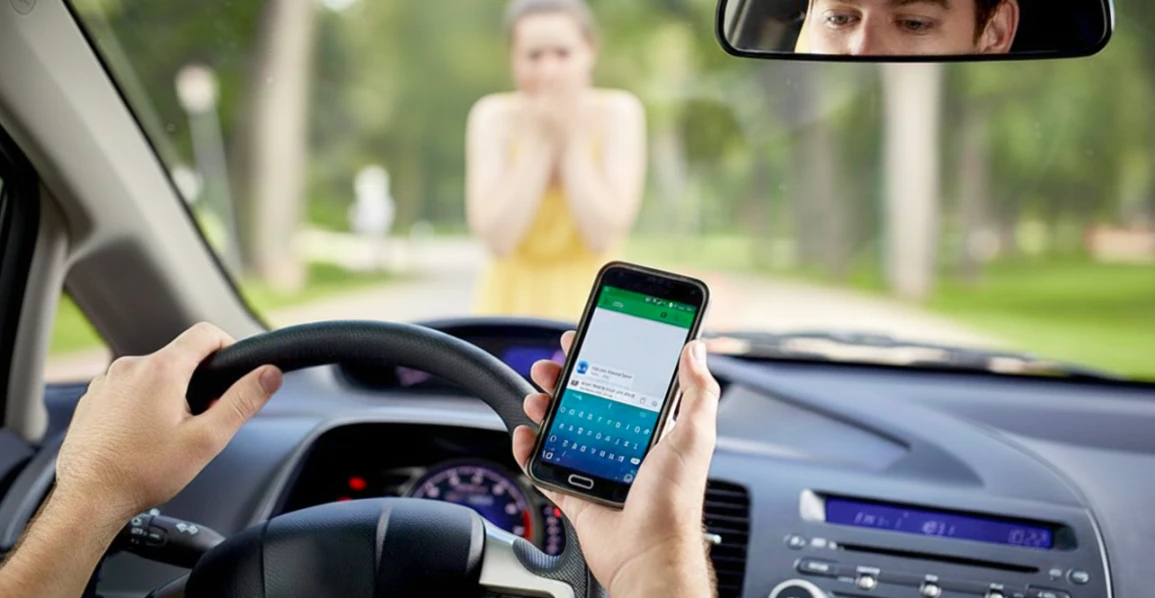
Distracted driving is one of the most serious — and at the same time most underestimated — threats on the road. Many drivers believe they can stay in control even while glancing at their phone or quickly replying to a message. However, these seemingly minor distractions are often the cause of severe crashes.
In this article, we will explain what distracted driving is, which behaviors increase the risk of accidents, and why even a few seconds of inattention can change everything.
What Is Distracted Driving
Distracted driving refers to operating a vehicle while not fully focused on the road. In simple terms, it is a situation where a driver is physically behind the wheel, but their attention is partially or completely directed elsewhere. This is not just an inconvenience or a minor lapse in discipline — it is a real safety hazard. A vehicle continues moving every second, and even a brief loss of focus can mean failing to notice sudden braking ahead, a pedestrian crossing, or a changing traffic signal.
There are three main types of distraction:
- Visual distraction - taking your eyes off the road. Example: reading a message or looking for a button on the dashboard.
- Manual distraction - removing your hands from the wheel. Example: typing a text, eating, or picking up a dropped phone.
- Cognitive distraction - your mind is not focused on driving. Example: an emotional conversation, stress, or deep thought.
Why doesn’t multitasking work behind the wheel? Because attention is not divided — it switches. When someone reads a message or engages in an intense conversation, the brain temporarily reduces its processing of road information. A driver may be “looking” at the road but not actually seeing it.
Texting while driving is especially dangerous because it combines all three types of distraction at once: eyes on the screen, hands on the phone, and mind focused on the message. This is why texting dramatically increases crash risk compared to other distractions.
The Most Common Sources of Distraction
In practice, distracted driving is often linked to everyday habits. The danger lies in how harmless and “quick” these actions seem — yet they frequently lead to reduced concentration.
- The smartphone remains the primary risk factor. Calls, pop-up notifications, texting, scrolling through social media, or even briefly checking the screen create visual and cognitive distraction. National safety organizations, including NHTSA, consistently emphasize that phone use is a leading cause of crashes related to attention loss.
- Navigation systems and multimedia controls also contribute. Entering an address into GPS, adjusting a route, or searching for a radio station requires looking at a screen and taking attention away from traffic conditions.
- Passengers can also distract drivers. Emotional discussions, complex conversations, or attending to children in the back seat reduce cognitive focus. A driver may still be looking forward but processing information less effectively.
- Eating and drinking occupy at least one hand and often require looking down. During those moments, vehicle control weakens.
- Fatigue and “autopilot mode” are equally dangerous. When drivers are tired or traveling familiar routes, attention decreases. Reaction time slows, and the brain begins operating in the background rather than actively monitoring hazards.
All these sources share one key characteristic: they compete with the road for the driver’s attention.
The Danger of Using a Phone While Driving
Using a phone while driving remains one of the most dangerous forms of distracted driving. The reason is simple: a smartphone simultaneously engages multiple channels of attention — sight, hands, and thinking. That is why texting and social media are more dangerous than voice calls alone.
When a driver types a message, they look at the screen (visual distraction), hold the device (manual distraction), and formulate a response (cognitive distraction). This combination severely limits situational awareness. Texting while driving brings together all three distraction types at once — making it particularly risky.
Many drivers say, “I’ll just look for a second.” But even a short glance can last 4–5 seconds. At about 55 mph (90 km/h), a vehicle travels the length of a football field in that time — without full control. Within those seconds, traffic can stop suddenly, a pedestrian may step into the road, or the vehicle may drift out of its lane.
Some assume hands-free calls are safe. However, “hands-free” does not mean “risk-free.” Even if both hands remain on the wheel, the brain shifts focus to the conversation. Emotional or complex dialogue reduces reaction speed and hazard recognition. Studies show that cognitive distraction alone significantly slows decision-making.
The practical rule is simple: if the call is important, pull over. Park safely and respond only after stopping. No message or call is worth risking a life — yours or someone else’s.
Statistics and Real-World Consequences
Distracted driving remains a leading cause of fatal crashes, particularly in countries with high smartphone use. According to preliminary 2025 estimates in the United States, approximately 3,200–3,300 people were killed in crashes involving distracted drivers, accounting for roughly 8% of all fatal traffic accidents nationwide. That equates to about nine deaths every day.
- Importantly, not only drivers are affected. Among the fatalities are passengers, pedestrians, and cyclists. Recent confirmed data show that more than 600 of those killed were people outside the vehicle. This highlights that distracted driving extends far beyond personal risk.
- The true scale of the problem may be even higher. Distracted driving statistics are widely considered underreported. Proving phone use at the moment of a crash is difficult. Drivers may not admit to texting, and access to device data is not always available. Cognitive distraction — such as emotional conversations — is even harder to document.
Common crash scenarios include delayed braking, lane departures, running red lights, and failing to notice pedestrians. In each case, attention was directed away from the road.
Legal Consequences of Distracted Driving
Distracted driving is not only a safety risk but also a legal violation. In the United States, texting while driving is banned in 49 states, the District of Columbia, and several territories, demonstrating that this is not a localized initiative but a nationwide policy priority.
Violations can result in fines, penalty points, and a permanent record in a driver’s history. During national enforcement campaigns, law enforcement agencies often increase monitoring for phone use behind the wheel.
Insurance implications are also significant. A citation related to distracted driving may increase a driver’s risk profile. Depending on the insurer and jurisdiction, this can lead to higher premiums or stricter policy terms.
If distracted driving results in serious injury or death, consequences may extend beyond administrative penalties. Depending on jurisdiction and case specifics, criminal charges may apply. Legal outcomes vary, but courts in many regions are taking a stricter approach to such offenses.
The Psychology of Distraction: Why Drivers Keep Taking the Risk
Despite awareness campaigns and stricter laws, many drivers continue risky behavior. The reasons lie in human psychology.
- The first factor is the illusion of control. Drivers believe they can “handle it” or that their experience compensates for the risk. People tend to overestimate their abilities and underestimate the likelihood of negative outcomes — especially if nothing bad has happened before.
- The second factor is habit and instant gratification. Notifications create a behavioral loop: alert, reaction, small reward. Smartphones become automatic triggers, and the brain responds almost reflexively — even while driving.
- The third factor is risk underestimation due to lack of consequences. If someone has texted while driving multiple times without crashing, they may interpret that as proof of safety.
- Research also highlights a gap between beliefs and behavior. Many drivers acknowledge that texting while driving is dangerous — yet some still do it. This contradiction reflects a mix of habit, overconfidence, and distorted risk perception.
How to Reduce the Risk of Distracted Driving
Reducing distracted driving risk does not require extreme measures — only preparation.
First, enable Do Not Disturb or Driving Focus mode before starting the trip. Most smartphones can silence notifications and send automatic replies. Safety organizations recommend avoiding multitasking behind the wheel.
Second, set navigation and music before departure. Enter the address, review the route, and select your playlist in advance.
Third, follow the pull-over rule. If a call or message is truly important, park safely before responding.
Fourth, assign a passenger the role of “operator” — handling calls or navigation adjustments.
Finally, use a simple 10-second pre-drive checklist: phone secured, route ready, drink sealed, essentials within reach, full attention on the road.
The Role of Technology in Preventing Distraction
Modern vehicles increasingly feature driver-monitoring systems. Cameras and sensors track head position and eye direction, alerting drivers to signs of inattention. These systems help — but they do not replace responsibility.
Lane Departure Warning (LDW) and Lane Keeping Assist (LKA) act as safeguards during brief attention lapses. Automatic Emergency Braking (AEB) can reduce the severity of delayed reactions.
Smartphones also offer driving modes that limit notifications and messaging functions.
However, no technology guarantees safety if a driver consciously chooses to ignore risks.
Conclusion
Distracted driving is one of the most preventable causes of road crashes. Unlike weather conditions or mechanical failures, this risk depends entirely on human behavior. A few seconds of inattention can determine whether a driver notices danger in time.
Safety begins with simple decisions: put the phone away, activate driving mode, and pull over if communication is necessary. Using a phone while driving is not a harmless habit — it is a conscious risk that can easily be avoided. Full attention behind the wheel remains the most effective way to protect yourself and everyone around you.

