



The World’s Rarest Cars: What Makes a Car Truly Unique
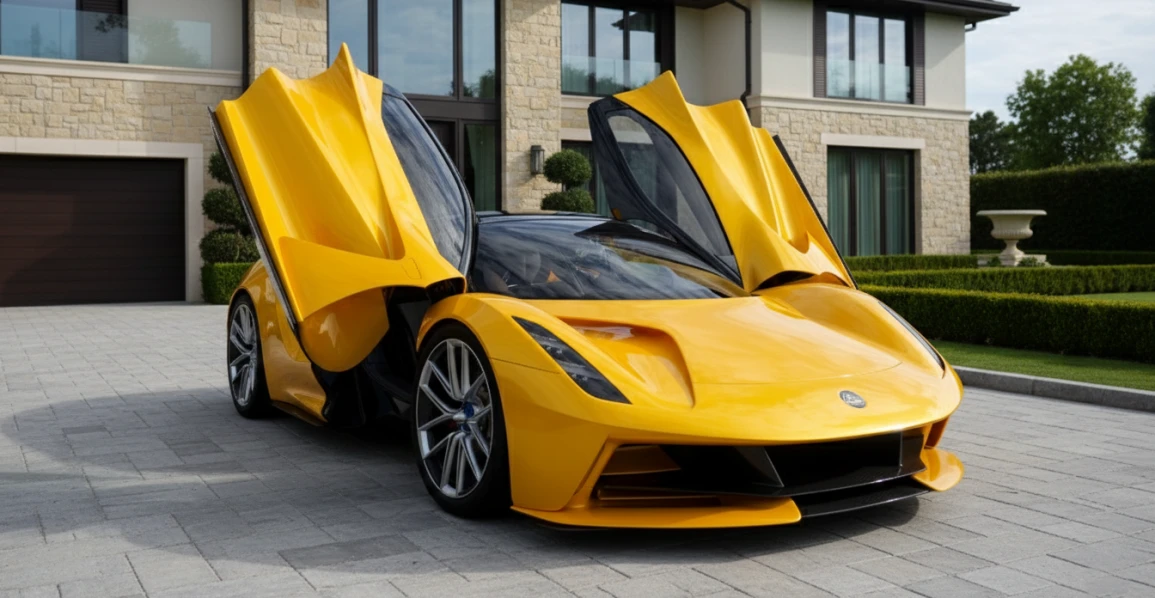
Among the billions of automobiles traversing the roads, there exists a special category—unique specimens that have transcended the boundary between a mere means of transport and a true work of art. These machines are not simply feats of engineering; they are living legends, witnesses to entire epochs.
Rare automobiles provoke such intense interest primarily because of their exclusivity. Often, their production run is counted in single units or, in some cases, even a sole example. Their appeal is enriched by their history—a saturated racing or cultural background, affiliation with celebrated personalities, or participation in iconic events. Their collectible attractiveness is underpinned by the constant growth of their investment value and the status they confer as a symbol of wealth and refined taste.
They have become the gold standard for the world’s most demanding collectors, transforming auctions into genuine gladiatorial battles for the right of possession. In this article, we will examine the criteria by which a car achieves cult status and explore the most compelling models that collectors dream of, ranging from classic racing bolides to contemporary electric hypercars.
What Makes a Car Rare?
The rarity of an automobile is not always a simple matter of age but, rather, a confluence of circumstances that have influenced its production run, construction, or destiny.
Limited Production (Limited Series)
This is the most obvious and crucial factor. Manufacturers intentionally restrict the number of units released to maintain exclusivity and a high price point. If a vehicle is produced in a run of, for example, 77, 9, or even 3 examples, it automatically becomes rare, and its value multiplies many times over even before its official market launch.
Unique Technology or Design
Certain cars achieve rarity because they embody pioneering, and sometimes controversial, technologies or radical design solutions of their time. Such models were frequently released in limited numbers because they served as a "showcase" for the company's capabilities or were not designed for mass-market demand. Examples include the utilization of jet engines or futuristic materials.
Historical Significance
Automobiles that belonged to famous individuals (such as Steve McQueen or crowned heads) or that participated in iconic events (victories at Le Mans, filming of legendary movies) acquire incalculable historical and emotional value. In this scenario, even if the model itself is not a limited edition, that specific, particular specimen becomes unique.
Prototypes and Concept Cars Not Released into Mass Production
These machines exist in only one or a few examples and are the pure embodiment of ideas never intended for the production line. They demonstrate a company's technical vision for future decades. Upon falling into the hands of a private collector, such a prototype becomes a true treasure, reflecting unrealized potential.
A Selection of the Rarest Cars in the World
We now consider the most outstanding and expensive examples whose rarity has rendered them objects of reverence.
Classic Rarities
Ferrari 250 GTO
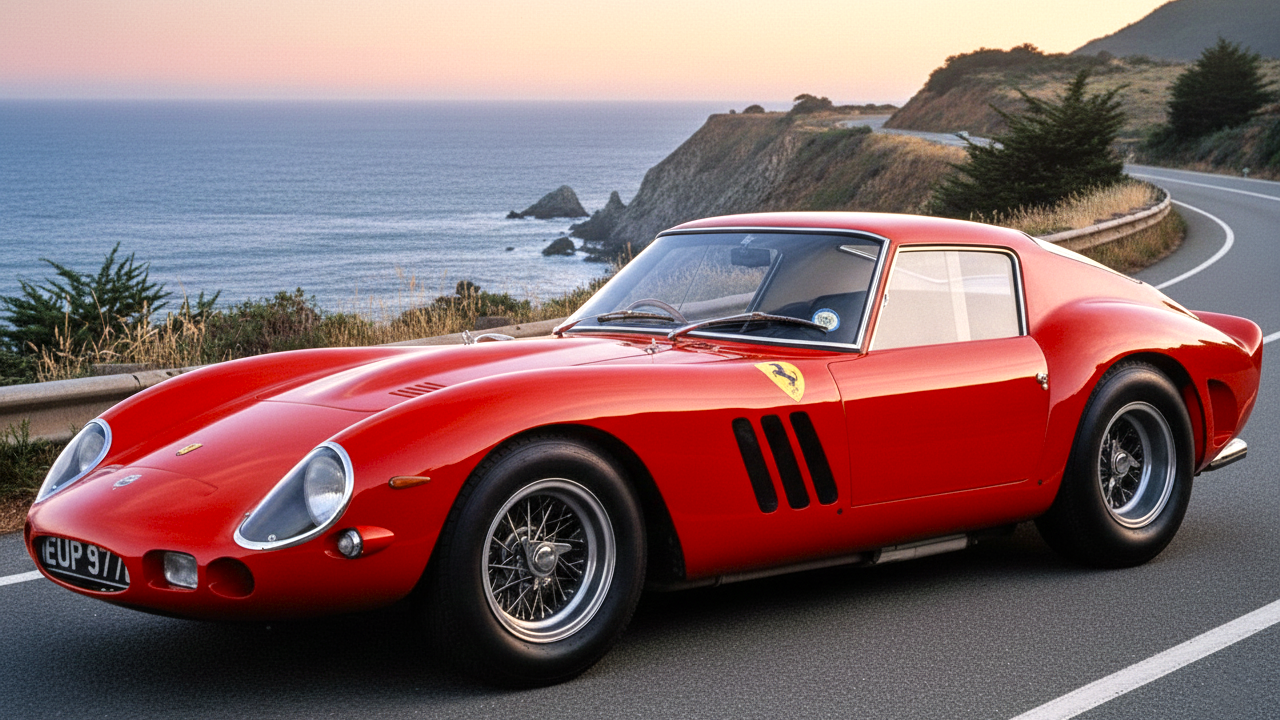
- History of Creation: a GT-class racing car manufactured by Ferrari from 1962 to 1964 for participation in FIA Group 3 Grand Touring races. The index 250 denotes the volume of each cylinder in cubic centimeters. GTO stands for Gran Turismo Omologata (“Homologated Grand Tourer”).
- Number of Examples Produced: if total of 36 (or 39, including three 330 GTOs with increased engine capacity) examples were produced, making it one of the lowest-production and most successful racing cars in history.
- Interesting Facts: this was the very last Ferrari model that the great Enzo Ferrari personally approved. The 250 GTO’s success in racing made it an instant legend. At the time, potential buyers were personally approved by Enzo Ferrari himself or his representative, which further elevated the model's prestige.
- Approximate Current Value: it regularly breaks records. Private sales have reached over $70 million.
Mercedes-Benz 300 SLR Uhlenhaut Coupé
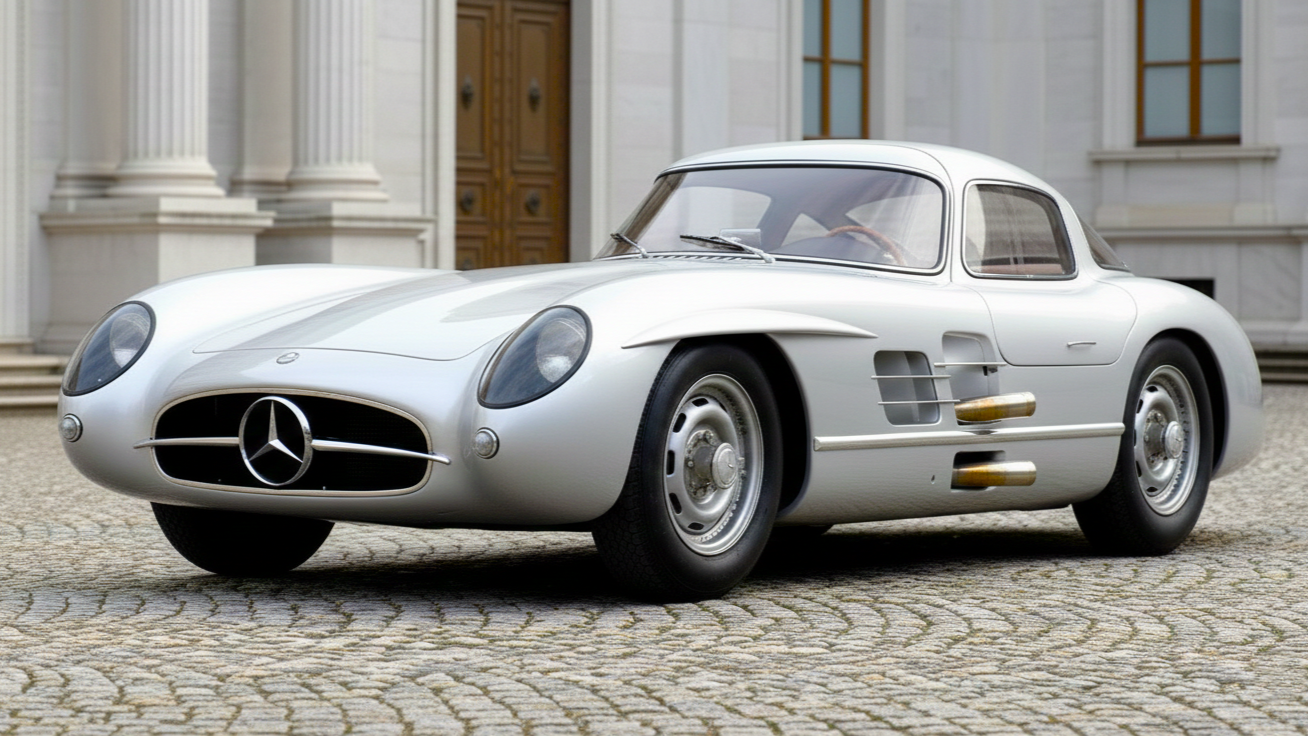
- History of Creation: in 1955, Mercedes-Benz built two closed coupés based on the 300 SLR racing bolide (Stirling Moss). They were created for testing as a closed-cockpit version of the race car and for the personal use of the company’s chief engineer, Rudolf Uhlenhaut. These cars, essentially road versions of the racing machine, are known as the “Uhlenhaut Coupé.”
- Number of Examples Produced: 2 prototypes. One remained with the company; the second was sold in 2022.
- Interesting Facts: due to its rarity and status (as the personal car of its creator), it was long considered priceless. It is equipped with a 3-litre inline 8-cylinder engine capable of reaching 290 km/h (180 mph), which made it one of the fastest road cars in the world in the 1950s.
- Approximate Current Value: €135 million (about $142.9 million), sold at auction in May 2022, becoming the most expensive car ever sold at auction.
Rare Supercars
Lamborghini Veneno

- History of Creation: introduced in 2013 to celebrate the 50th anniversary of the Lamborghini brand. It was created on the basis of the Aventador but with a radically redeveloped aerodynamic and futuristic design.
- Number of Examples Produced: 4 coupés (one for the factory museum, three for buyers) and 9 roadsters.
- Interesting Facts: the name is given in honour of a famous fighting bull, consistent with all Lamborghini hypercars. All coupé examples were sold before the official presentation at a price of over €3 million.
- Approximate Current Value: in private transactions, it can exceed $8–11 million.
Bugatti La Voiture Noire
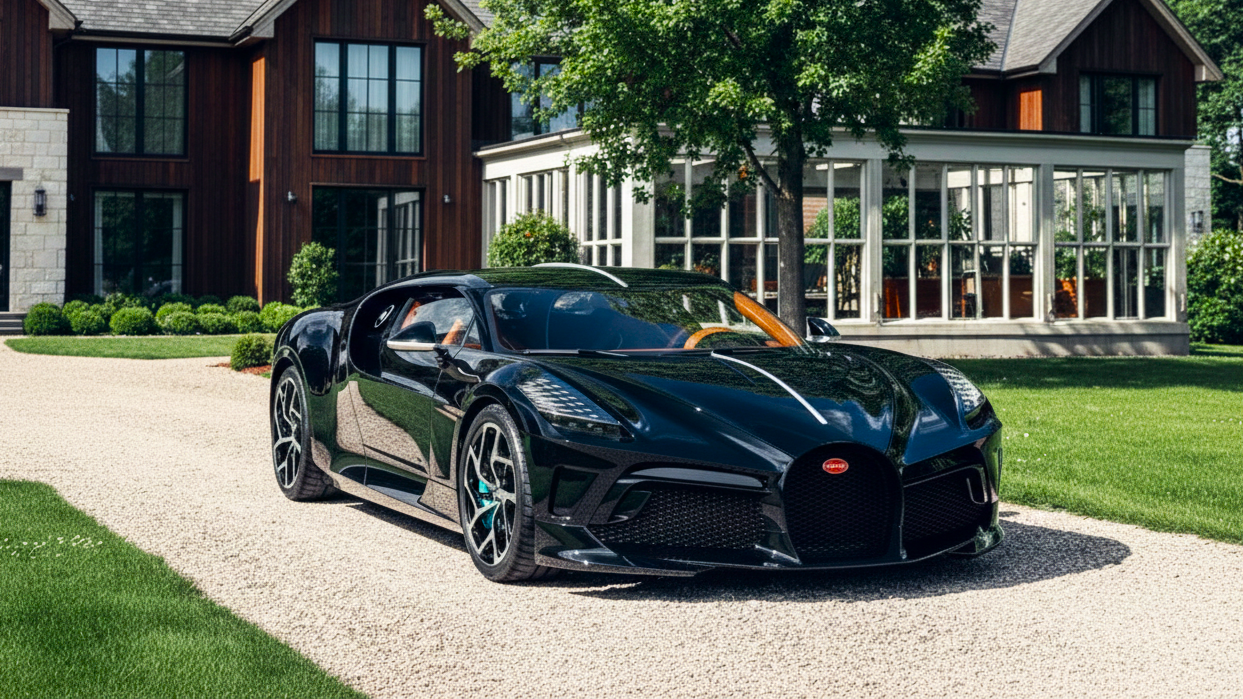
- History of Creation: presented in 2019 as an homage to the legendary Bugatti Type 57 SC Atlantic, which was lost during World War II. This is a modern interpretation of the "black car" (La Voiture Noire).
- Number of Examples Produced: 1 single example (one-off).
- Interesting Facts: at the moment of its debut, it was the most expensive new car in the world. The car is hand-built on the Chiron platform with an exclusive carbon fibre body.
- Approximate Current Value: sold for €11 million excluding taxes (about $18.7 million with taxes).
Unique Limited Models
Aston Martin One-77

- History of Creation: presented in 2009 as the pinnacle of Aston Martin's engineering and design mastery. The goal was to create the most beautiful and powerful car of the brand.
- Number of Examples Produced: 77 units.
- Interesting Facts: it is equipped with the world's most powerful naturally aspirated V12 engine (at the time of release), with a 7.3-litre capacity and 760 hp. The body is constructed from a carbon fibre monocoque.
- Approximate Current Value: around $2–4 million, depending on condition and history.
Pagani Zonda HP Barchetta
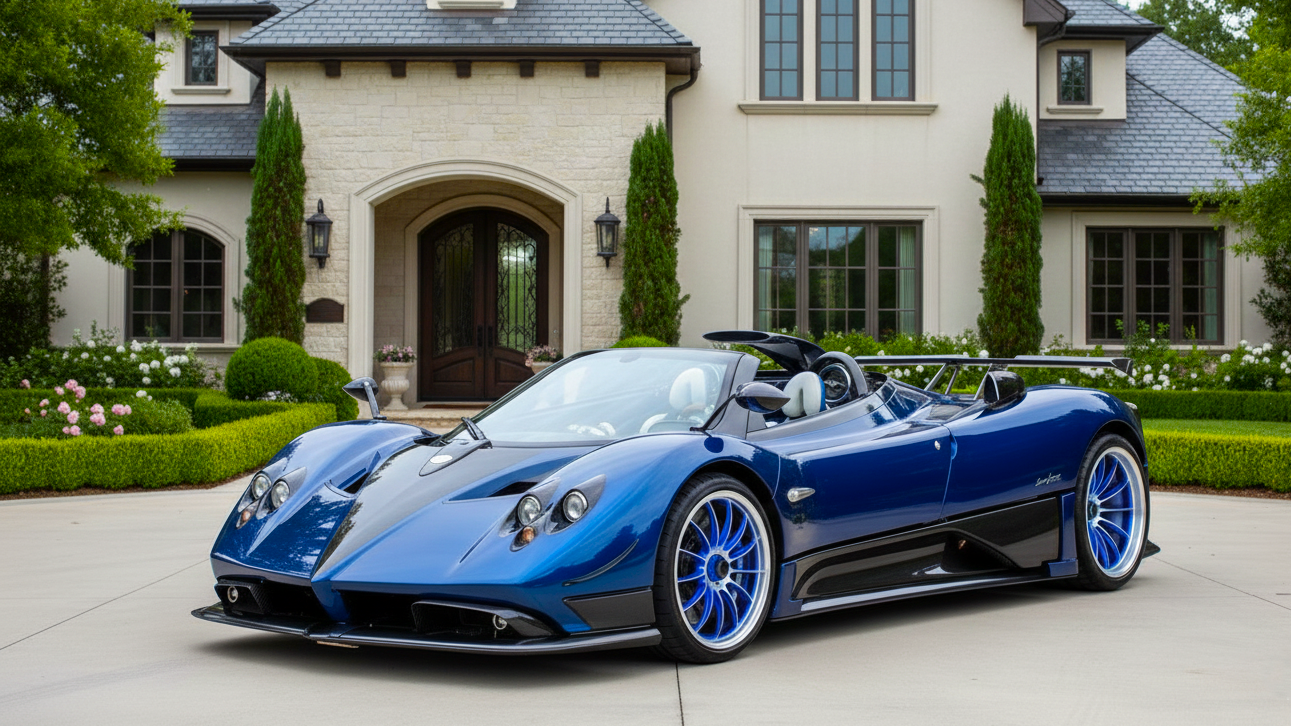
- History of Creation: an exclusive version of the legendary Zonda model, created in 2018 as a gift for the company's founder, Horacio Pagani (HP), and two of his chosen clients.
- Number of Examples Produced: 3 examples.
- Interesting Facts: it is distinguished by a radically lowered windscreen and the absence of a roof, giving it the appearance of a racing barchetta. It utilizes unique carbon-titanium alloys.
- Approximate Current Value: at the moment of its debut, it was estimated at €15 million, making it one of the most expensive new cars. Today, the value is likely higher.
Rare Concepts and Prototypes
General Motors Firebird I (1953)
.png?_t=1765573369)
- History of Creation: the first in the series of GM Firebird concept cars, presented in 1953 as a radical experiment with jet aviation technology. It was intended to demonstrate the possibilities of gas turbine engines in automotive engineering.
- Number of Examples Produced: 1 prototype.
- Interesting Facts: it looked like a real wingless aircraft, complete with a tail stabilizer and air intakes. It was a test vehicle that initiated the entire concept of jet cars.
- Approximate Current Value: not for sale; it resides in the GM Heritage Center collection. Priceless as a museum exhibit.
Jaguar XKSS
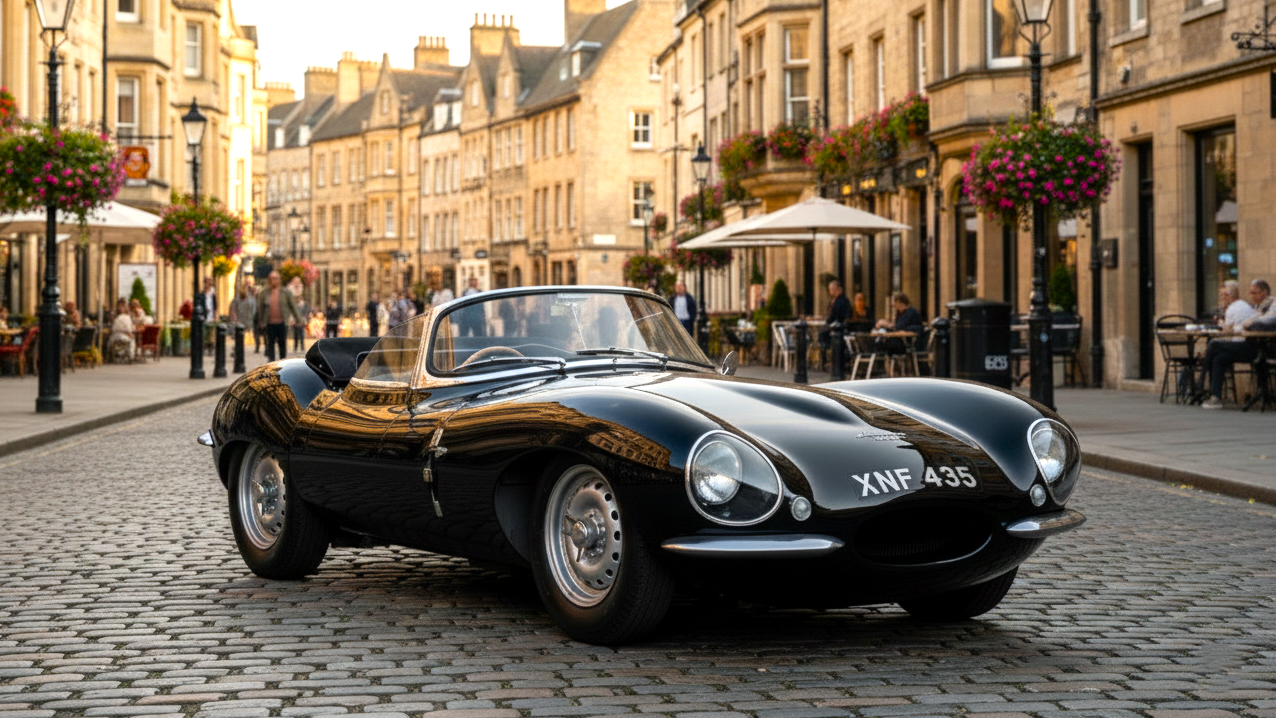
- History of Creation: the road-going version of the legendary Jaguar D-Type racing car. In 1957, Jaguar decided to convert 25 unsold D-Types for road use.
- Number of Examples Produced: initially 16 examples were released. 9 cars were destroyed in a major fire at the Browns Lane factory in 1957. In 2016, Jaguar Classic manufactured the missing 9 examples using original technologies and chassis numbers.
- Interesting Facts: one of the original owners was the actor Steve McQueen. The nine resurrected examples from 2016 are considered a "continuation" of the original series and were sold for over $1.5 million each.
- Approximate Current Value: the original 16 cars are worth tens of millions of dollars.
Why Collectors Hunt for Rare Cars
The chase for a rare automobile goes far beyond mere practicality. It is a multi-layered process that combines economics, prestige, and aesthetics.
Investment Value
Rare automobiles, especially classic racing legends like the Ferrari 250 GTO or Mercedes 300 SLR, demonstrate one of the highest rates of return among all alternative assets (alongside art and fine wines). Their value is insulated from stock market fluctuations and only grows over the years, as supply is strictly limited and demand from wealthy collectors is constantly increasing. Purchasing such a car is not an expense but a preservation and multiplication of capital.
Prestige and Status
Possession of a car that exists in a handful of units not only confirms the owner's financial standing but also their refined taste, deep knowledge of history, and belonging to the narrow circle of the global elite. Rare automobiles serve as a pass to the most exclusive events—from prestigious Concours d’Elegance exhibitions to closed rallies.
The Automobile as a Work of Art
For many collectors, a rare car is a moving sculpture. It is a masterpiece of industrial design, embodying the ideals of its epoch, be it the aerodynamic aggression of the 1960s or the futuristic carbon aesthetics of the 21st century. They value the hand craftsmanship, ingenious engineering solutions, and the history that each automobile holds within it, much like a painting or a statue.
The Most Expensive Auction Deals
Auction houses, such as RM Sotheby’s, Gooding & Company, and Christie's, are the battlegrounds where world value records are established.
Mercedes-Benz 300 SLR Uhlenhaut Coupé: The New Absolute Record
In May 2022, an absolute record was set in automotive history. One of the two 1955 Mercedes-Benz 300 SLR Uhlenhaut Coupé prototypes was sold at a closed auction, conducted by RM Sotheby’s in conjunction with Mercedes-Benz, for a colossal €135 million (about $142.9 million). This figure almost tripled the previous record. The sale had a philanthropic purpose—the proceeds went towards establishing the beVisioneers foundation to support young specialists in ecology and decarbonization.
Ferrari 250 GTO, Sold for Tens of Millions of Dollars
Prior to the Uhlenhaut Coupé record, the Ferrari 250 GTO had long been the most expensive car sold at auction. In 2018, a 1962 250 GTO specimen, which had belonged to former Ferrari racer Fabrizio Violati, was sold at an RM Sotheby’s auction for $48.4 million. In private deals, in the same year 2018, another 250 GTO example was sold to collector David MacNeil for about $70 million, confirming its status as the most expensive car in the world.
Records of Sotheby’s, Christie’s, and Other Auction Houses
.png?_t=1765573369)
These auctions consistently record multi-million dollar sales, demonstrating the sustained growth in prices for automotive classics:
- The Ferrari 335 S Spider (1957) was sold for $35.7 million in 2016.
- The Jaguar D-Type (1955), a Le Mans winner, fetched $21.78 million in 2016.
- The Aston Martin DBR1 (1956)—the most expensive British car—was sold for $22.55 million in 2017.
Contemporary Rarities
The collecting of rare automobiles has not frozen in the past; it is actively developing, adapting to modern technologies.
Limited-Series Electric Hypercars
Replacing the gasoline-powered monsters are electric hypercars that instantly become objects of collection due to their limited availability and record-breaking power:
- Rimac Nevera: a Croatian hypercar with four electric motors, developing nearly 2,000 hp. The declared production run is 150 examples. Its uniqueness lies in setting new standards for speed and handling in electric vehicles.
- Lotus Evija: a British electric hypercar with over 2,000 hp and a run of only 130 units. It represents the "revival" of the legendary Lotus brand in the electric era.
These models are typically sold out long before production and represent an investment in the future of automotive engineering.
Individual Custom-Ordered Projects
Lately, there has been a rise in demand for unique cars created as single examples on individual order (the so-called one-off). Many manufacturers, such as Ferrari (through the Special Projects program), Lamborghini, or Rolls-Royce (through the Coachbuild program), create cars that exist in one example, representing the pinnacle of luxury and exclusivity.
The Future of Collecting: Rare Cars in the Era of Electric Vehicles and Web3
The future of collecting promises to be exciting:
- A Shift Towards EV Classics: as gasoline engines disappear, the value of unique and limited electric hypercars will only increase, transforming them into the "classics of tomorrow."
- Digital Twins and NFT Certificates: Web3 technologies, particularly Non-Fungible Tokens (NFTs), are beginning to play a role in confirming the authenticity, ownership history, and uniqueness of rare automobiles. An NFT can act as a digital twin of the physical car, guaranteeing its provenance and excluding counterfeits, which is critical in multi-million dollar transactions. This represents a new level of transparency and reliability in collecting.
Conclusion
Rare automobiles are not just assets or transport. These machines embody technical perfection, design artistry, and the spirit of their time. They play a substantial role in the industry's history—often they are pioneers of technology, triumphant racers on the track, and ultimate symbols of luxury.
From the graceful lines of the Ferrari 250 GTO speeding across the tracks of the 1960s to the futuristic, almost cosmic aesthetics of the Bugatti La Voiture Noire, every rare car tells its own story of human ingenuity and the relentless pursuit of perfection.

