



Premium Gas vs Regular Gas: What You Need to Know
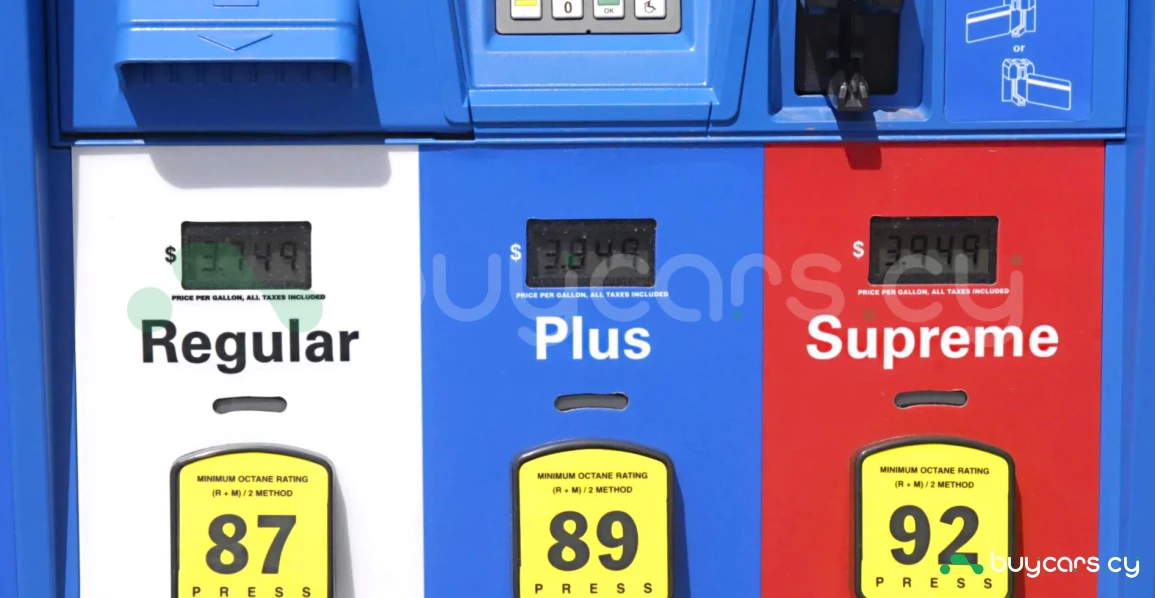
The choice between regular and premium gas has been debated for years because drivers want to know whether the more expensive fuel offers any real advantage. It is important to understand whether regular gas is unleaded and how premium differs from regular gas in practice, because the extra cost is far from justified for every vehicle.
What Regular and Premium Actually Mean
The main technical difference between regular and premium gas is the octane rating. In the United States, gas pumps usually display the Anti-Knock Index, or AKI. For regular gas, this is most often 87 AKI, while premium is usually 91 or 93 AKI. A higher octane rating does not mean the gasoline contains more energy. It means the fuel is more resistant to premature ignition and engine knocking under high pressure.
This is exactly where many myths begin. People often confuse octane with “fuel quality”. In reality, octane is more of a compatibility indicator: it shows how well the fuel can withstand compression without igniting too early. Higher-octane gasoline is only useful when the engine is designed or tuned to take advantage of it.
What Is Unleaded Gas?
What is unleaded gas? Simply put, it is gasoline without tetraethyl lead. Lead used to be added to increase octane, but that practice began to disappear in the 1980s, and leaded gasoline for on-road vehicles was banned in the United States as of January 1, 1996. This happened because lead is dangerous to human health and damages emissions-control components, including catalytic converters and oxygen sensors.
Is Regular Gas Unleaded?
Yes, if we are talking about the modern U.S. fuel market, the answer to whether regular gas is unleaded is generally yes. Regular gasoline for passenger cars is unleaded. Premium gasoline for passenger cars is also unleaded. The words “regular” and “premium” refer to octane grade, while “unleaded” means the absence of lead additive. These are different fuel characteristics.
The Real Difference Between Premium and Regular
The key engineering difference is resistance to engine knock. Knock occurs when the air-fuel mixture ignites too early or burns uncontrollably under high pressure. Higher-octane fuel helps prevent that. If an engine is designed for premium, using regular gas may force the ignition system to retard timing, reduce power, and in some cases cause persistent heavy knocking. If the engine is designed for regular, premium usually changes very little.
There is also the question of additives, but this is where drivers often draw conclusions that are too broad. All gasoline sold in the United States must meet EPA detergent requirements. That means regular gas is not automatically “dirty” fuel. Some brands and standards, especially TOP TIER, require stronger detergency, but those standards apply to all octane grades sold at participating stations. In practice, this means the standard and brand of fuel often matter more than premium versus regular alone.
Regular and Premium: A Quick Comparison
Parameter | Regular | Premium |
Typical AKI | 87 | 91–93 |
Main purpose | Basic knock resistance | Higher knock resistance |
More energy per gallon? | No | No obvious advantage |
Needed by most vehicles? | Yes | No |
Best suited for | Engines designed for 87 | Engines that need or benefit from higher octane |
This table reflects the main conclusion: premium is a specialized tool, not a universal upgrade.
What the Vehicle Manufacturer Recommends
If you remember only one rule from this article, let it be this: the owner’s manual matters more than myths at the pump. The FTC has long warned that consumers waste money when they buy gasoline with a higher octane rating than their vehicle requires. The agency also noted that a car usually does not benefit from fuel with a higher octane rating than the manufacturer recommends.
Here is how to read the wording you may see in the manual or on the fuel door:
- Premium required — premium is necessary. The engine is tuned for higher octane.
- Premium recommended — the engine can often run on lower octane, but some power or smoothness may be lost.
- Regular unleaded — use regular unleaded gasoline unless the manual says otherwise.
Real manuals show this distinction clearly. One Honda manual says, “Unleaded gasoline with a pump octane number of 87 or higher required,” which is a direct instruction to use regular unleaded. In one Toyota manual, the wording is softer: 87 octane and higher is allowed, but for better performance, premium unleaded 91 or higher is recommended.
The difference between “recommended” and “required” is not just wording. It directly shows whether premium is a necessity or simply a possible optimization.
Does Premium Improve Fuel Economy?
This is where the question of whether premium gas lasts longer usually comes from. In reality, people want to know whether premium provides better fuel economy and offsets its higher price. For vehicles designed for regular gas, the answer is usually no. Controlled AAA testing found no significant difference in fuel economy when premium was used in vehicles designed for regular.
So, does premium gas last longer? For most vehicles designed for regular, no, at least not enough to justify the added cost. Premium does not magically contain more useful energy per gallon. If your engine does not need a higher octane rating, you should not expect a meaningful improvement in mileage.
Exceptions are possible, but they are much narrower than advertising suggests:
- Some turbocharged or high-compression engines can optimize ignition timing more accurately on premium.
- Some vehicles labeled “premium recommended” may show a slight fuel economy gain under load.
- Heat, towing, mountain driving, and aggressive acceleration make an engine’s sensitivity to octane more noticeable.
Even in those cases, the main question is not emotional but financial: does the possible gain in fuel economy outweigh the higher price per gallon? Very often, it does not.
Does Premium Improve Engine Performance?
For vehicles designed for regular gas, AAA found no consistent increase in maximum horsepower when switching to premium. This directly disproves the myth that premium makes every car faster.
For vehicles originally designed for higher octane fuel, the situation can be different. Engines with turbocharging, aggressive ignition timing, or high compression ratios may deliver their intended performance more consistently on premium. In that case, premium is not “extra” power but the fuel that allows the engine to operate the way its engineers intended.
Premium may make sense if you notice:
- Repeated knocking under load.
- Reduced pulling power in hot weather.
- Towing or hauling with a turbocharged engine.
- A direct recommendation for premium in the owner’s manual.
Still, that does not mean every older car or every naturally aspirated engine will suddenly feel transformed on premium. In many everyday vehicles, the difference is either minimal or not noticeable at all.
Can Premium Extend Engine Life?
This is one of the most persistent arguments, and the answer requires precision. Premium can help protect the engine only if the engine actually needs higher octane fuel. If an engine knocks on regular but is designed for premium, continuously using the wrong fuel may reduce performance and possibly increase long-term stress on engine components. In that case, premium is not a luxury but a normal operating requirement.
But for a vehicle designed for regular, premium is not a universal engine-life extender. The discussion about “engine cleanliness” has more to do with detergent additives and fuel standards than with octane itself. The EPA requires detergent additives in all gasoline, and the TOP TIER standard goes beyond the minimum. At the same time, this standard applies to all octane grades sold at participating stations, and AAA has noted that TOP TIER gasoline leaves significantly fewer engine deposits than lower-quality fuel.
If you are genuinely concerned about long-term engine cleanliness, it is more useful to follow this logic:
- First, use the octane rating required by the manufacturer.
- Then choose reputable fuel brands.
- If possible, prefer TOP TIER instead of assuming premium is automatically cleaner.
This is a much more accurate engine-care strategy than the rule “always buy premium”.
When Premium Is Actually Worth the Money
Premium is justified in specific cases, not in every situation. Premium is usually worth the extra cost if:
- The fuel door or owner’s manual says premium required.
- The vehicle has a turbocharged or high-compression engine designed for premium.
- The manual says premium recommended, and maximum performance matters to you.
- You often tow, carry heavy loads, or drive in consistently hot conditions where knock resistance matters more.
- You hear persistent knocking at the minimum allowed octane, and the manual permits a higher grade.
A practical Toyota example is very telling here: some configurations allow 87 octane but recommend 91 for better performance. This is a typical “recommended, not required” case. The car can run on regular, but premium may be beneficial under certain loads.
When Premium Is a Waste of Money
Premium often turns out to be an unnecessary expense in the following situations:
- Ordinary naturally aspirated vehicles designed for 87 AKI.
- City cars used for calm everyday driving.
- Vehicles whose manuals specify regular unleaded.
- Situations where the driver expects a noticeable fuel economy improvement from premium in an engine designed for regular.
That is exactly why the FTC has warned that drivers may waste money by buying higher-octane fuel than their vehicle actually needs. For most cars on the road, regular remains the rational default choice.
Common Myths About Premium
- Myth: Premium makes every car faster.Fact: AAA found no consistent power increase in vehicles designed for regular.
- Myth: Premium is always cleaner.Fact: All gasoline in the U.S. must meet detergent requirements. Greater cleanliness depends more on the fuel standard and brand, such as TOP TIER, than on octane rating.
- Myth: Premium always improves fuel economy.Fact: For vehicles designed for regular, AAA found no significant improvement in fuel economy.
- Myth: Premium is better for every vehicle.Fact: Premium is useful only when the engine design or manufacturer recommendation calls for it.
How to Choose the Right Gas for Your Car
When you are standing at the pump, use a simple decision process.
Quick Checklist
- Open the owner’s manual.
- Check whether a minimum octane rating is listed on the fuel door.
- Distinguish between required and recommended.
- If the vehicle is designed for regular, do not assume premium is an automatic upgrade.
- If engine cleanliness matters, choose reputable brands and TOP TIER fuel.
- If persistent knock occurs at the correct octane, look for the cause instead of guessing at the pump.
A Simple Rule of Thumb
For most drivers, the decision looks like this:
- If the manual says regular, use regular.
- If the manual says premium recommended, premium may help in demanding conditions, but the benefit may be modest.
- If the manual says premium required, use premium.
This is not the flashiest advice, but it is accurate and usually cheaper than following fuel myths.
Conclusion
Premium is not a universally better gasoline. It is fuel for engines that actually need a higher octane rating. For most vehicles, regular remains the sensible and cost-effective option, and the main guide at the pump should always be the manufacturer’s recommendation. In short, does premium gas last longer? Not enough to usually justify the extra cost.

