



Best Cars to Buy in 2026: Complete Guide to Top Rated SUVs and Cars
The automotive landscape in 2026 has arrived at a critical inflection point in its history. We are witnessing far more than mere evolution; it is a full-scale revolution where traditional internal combustion engines (ICE) are reaching the absolute zenith of their thermal efficiency, hybrid powertrains have shifted from niche alternatives to the mass-market standard, and electric vehicles (EVs) have largely overcome their initial "teething problems," such as range anxiety and charging speed limitations. Amidst this unprecedented diversity of powertrains and technologies, the selection process has become more complex than ever before. To definitively identify the best cars 2026 has to offer, it is no longer sufficient to merely evaluate horsepower figures or exterior design language.
Why 2026 Marked an Important Stage for the Automotive Industry
By the 2026 model year, many global automakers have completed the arduous transition to next-generation modular platforms. These architectures were designed from the outset to accommodate both advanced electrification and sophisticated autonomous driving systems without compromising packaging. The market has matured significantly: the initial euphoria surrounding early electric vehicles has been replaced by pragmatic consumer demand for verifiable real-world range and ultra-fast charging capabilities. Simultaneously, the implementation of stringent emissions regulations, such as Euro 7 (and analogous standards globally), has forced engineers to extract maximum efficiency from combustion engines, resulting in powerplants that are incredibly economical yet technically complex.
What Trends Define the Best Cars of 2026
We have identified three pivotal trends that are shaping the best cars to buy in the current landscape:
- The Rise of "Software-Defined Vehicles" (SDV): The modern automobile has transitioned into a sophisticated IoT device on wheels. Over-the-Air (OTA) updates are no longer just for infotainment maps; they can now optimize suspension calibration, unlock increased battery range, or introduce entirely new active safety functionalities long after the initial point of purchase.
- The Renaissance of Ergonomics: Following several years of an industry-wide obsession with total touch-screen interfaces, leading manufacturers (such as Volkswagen and BMW) are strategically reintroducing physical buttons and haptic controls to steering wheels and center consoles. There is a renewed realization that tactile intuition and driving safety supersede sterile "clean design."
- Universal Hybridization: "Mild" hybrid systems (MHEV), typically 48-volt architectures, have become the de facto standard even in the budget segment, providing essential torque-fill and smoothing start-stop operations. Meanwhile, Plug-in Hybrids (PHEVs) have evolved to offer substantial real-world electric ranges of 80-100 km (50-62 miles), effectively covering daily commuting needs for the majority of urban populations without burning gasoline.
Below, we will conduct a granular analysis of the models that do not merely follow these trends but define them, offering the superior combination of technology, comfort, and practicality within their respective classes.
By What Criteria Were the Best Cars of 2026 Chosen?
To compile an objective list that could be considered a definitive top 10 auto ranking or to highlight segment leaders, we utilize a comprehensive evaluation methodology that transcends standard test-drive impressions.
Reliability and Build Quality
In 2026, reliability is no longer defined solely by engine longevity. It encompasses the stability of complex software stacks and the durability of intricate electronics. We analyze long-term failure statistics, design complexity (e.g., avoiding known problematic dry-clutch transmissions or overly complex air suspensions in budget segments where maintenance costs are prohibitive), and the manufacturer's reputation for warranty support. Interior material quality is assessed not just for showroom appeal but for wear resistance over a projected 3-5 year ownership cycle.
Technology and Safety Systems
A contender for the title of "best car" must possess an advanced Advanced Driver Assistance System (ADAS) suite at the L2+ level, ideally as standard or in mid-tier trims. This signifies more than simple adaptive cruise control; it requires robust lane-centering capability, automatic emergency braking with junction assist (detecting cross-traffic), and blind-spot monitoring with active steering intervention. The performance of matrix LED or laser headlights and seamless smartphone integration (wireless Apple CarPlay/Android Auto) are also critical factors.
Comfort and Practicality
Our evaluation extends beyond measuring cargo capacity in liters. We assess the geometry of the cargo bay, liftover height, and the utility of under-floor storage. Comfort is viewed as an aggregate of NVH (Noise, Vibration, and Harshness) mitigation—including the presence of acoustic laminated glass—seat profile ergonomics (availability of massage functions, effective ventilation, and extendable thigh support), and the suspension's energy absorption capabilities on substandard road surfaces.
Economy and Ecology
Official fuel consumption figures (like WLTP or EPA estimates) are often divorced from reality. We rely on independent real-world mixed-cycle consumption tests. For electric vehicles, energy efficiency (measured in kWh per 100 km or miles per kWh) is paramount, as is the actual charging curve—specifically, how long the battery can sustain peak charging power before throttling down.
Best City Cars of 2026
The urban runabout of 2026 is no longer a basic "econobox." It has evolved into a high-tech capsule of comfort, engineered to navigate congested environments with ease.
- Compact Dimensions and Maneuverability. The primary weapon in the metropolis is a footprint ideally under 4 meters in length combined with an exceptionally tight turning radius. Electric power steering systems with variable assistance ratios make tight parking maneuvers effortless.
- Economical Fuel Consumption. In this segment, full hybrids (HEVs) reign supreme. Their regenerative braking capabilities allow them to operate in electric mode for up to 50% of the time in stop-and-go city traffic, without ever requiring a plug.
Segment Leader: Toyota Yaris Hybrid (2025 Refresh)
The updated Yaris benefits from a more potent fifth-generation hybrid powertrain (now offering around 130 hp in higher trims), which addresses the primary criticism of its predecessor: lackluster highway dynamics. In urban environments, it remains incredibly frugal, achieving real-world consumption figures in the range of 3.5-4.0 liters per 100 km. Add Toyota's legendary reliability and significantly improved sound insulation, and you have the quintessential urban dweller.
- Modern Multimedia Systems. Even in the subcompact class, digital instrument clusters spanning 10-12 inches and advanced natural voice assistants are becoming the standard expectation.
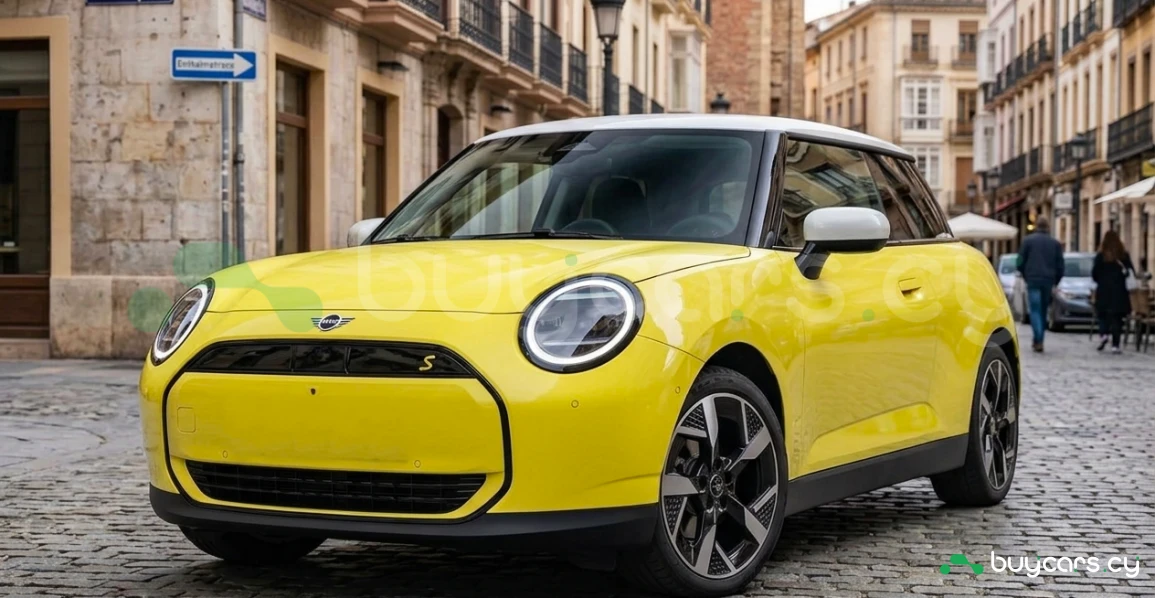
Alternative: The New Electric MINI Cooper SE
For those ready to embrace urban electromobility, the new MINI is compelling. It retains the brand's signature "go-kart feeling" handling characteristics but gains a larger capacity battery (enabling a real-world urban range approaching 300 km). The interior is a revolution in minimalism, dominated by a stunning, large circular OLED display in the center console that serves as the primary interface.
Best Family Cars of 2026
Families are the most demanding automotive clientele. A family vehicle must simultaneously serve as a fortress on wheels, a cargo hauler, and a mobile entertainment hub.
- Spacious Interior and Trunk. Critical factors include second-row legroom (accounting for bulky rear-facing child seats) and cabin width sufficient to accommodate three child seats abreast. The cargo area must swallow a full-size stroller without requiring disassembly.
- High Level of Safety. There can be no compromise here: only vehicles achieving 5-star ratings in Euro NCAP or Top Safety Pick+ status from the IIHS are considered. Essential features include center airbags between the driver and front passenger to prevent head-clash during side impacts, and full-length curtain airbags protecting all rows.
Segment Leader: Skoda Superb Combi (New Generation)
The Czech engineers have triumphed again. The new Superb estate is the benchmark for practicality in its class. The trunk capacity has grown to an immense 690 liters. Rear passenger legroom exceeds that of many executive sedans costing twice as much. For 2025, the model gains advanced matrix headlights and the new DCC Pro adaptive chassis control with dual-valve dampers, elevating ride comfort to near-premium levels.
- Comfort on Long Journeys. A family car must facilitate 1,000-km road trips without driver back pain or passenger complaints. This necessitates ergonomic seating (preferably with AGR certification or equivalent), three-zone climate control, and an abundance of USB-C ports for rear-seat device charging.
Alternative for Large Families: Hyundai Palisade / Kia Telluride (Refreshed)
When seven or eight usable seats are a requirement, these Korean corporate cousins remain unrivaled in their value proposition. Offering powerful naturally aspirated V6 engines (in appropriate markets) or torque-rich diesels, cavernous interiors, and available second-row captain's chairs with heating and ventilation, they are the ultimate long-distance cruisers for larger broods.
Best Crossovers and SUVs of 2026
This is the most hotly contested segment in the industry. It is here that intense competition breeds the top rated suv 2026 contenders and versatile urban crossovers.
- Versatility for City and Highway. A modern SUV must handle with the precision of a passenger car, resisting excessive body roll in corners, yet possess enough suspension compliance so as not to jar occupants over speed bumps or potholes. Chassis tuning balance is the key criterion.
- Increased Clearance and Driver Assistance Systems. An honest 180-200 mm of ground clearance is expected. Furthermore, an intelligent all-wheel-drive system capable of preemptively transferring torque to the rear axle before wheel slip occurs is mandatory for range-toppers. Off-road driving modes ("Snow," "Sand," "Mud") that alter engine mapping, transmission shift points, and traction control thresholds are highly desirable.
Segment Leader (Compact/Mid-size SUV): Hyundai Tucson / Kia Sportage
These platform-sharing siblings continue to dominate due to the sheer breadth of their powertrain options: gasoline, diesel, mild hybrid, full hybrid, and plug-in hybrid variants are available globally. For the 2025 model year, they received significant interior updates, featuring unified curved display clusters and improved material quality that pushes them toward premium territory. Their Highway Driving Assist (HDA 2) systems are among the most competent in the class.
Segment Leader (Driver-Focused): Mazda CX-50
For those who prioritize driving dynamics and aesthetics, the CX-50 is a standout. It offers perhaps the best interior execution in its price bracket and chassis tuning designed for engagement. The use of a traditional multi-speed automatic transmission (rather than a CVT) and a capable, predictive i-Activ AWD system makes it an excellent choice for active drivers seeking one of the best cars to buy with genuine character.
Comparative Table of Popular 2026 SUVs:
Model | Drivetrain Type | Ground Clearance (mm) | Cargo Volume (L) | Primary Advantage |
Hyundai Tucson Hybrid | AWD (Electronic/Mech) | 181 | 616 | Technology and Efficiency |
Mazda CX-50 | AWD (Clutch-based) | 210 | 456 | Handling and Rugged Design |
Toyota RAV4 Prime (PHEV) | AWD (E-Four electronic) | 190 | 520 | Power (300+ hp) and Proven Reliability |
Best Electric Vehicles of 2026
Electric vehicles have graduated from the "early adopter/gadget" phase into the category of rational, mainstream choices.
- Range and Charging Speed. In 2026, the "gold standard" for a premium EV is a battery capacity between 75-100 kWh, providing a verifiable real-world highway range of 450-500 km. Crucially, an 800-volt electrical architecture is becoming the benchmark, allowing for ultra-fast charging capabilities—typically 10% to 80% state-of-charge in just 18-20 minutes at compatible DC fast chargers.
- Innovative Technologies. Essential features now include highly efficient heat pumps for cabin heating in winter without catastrophic range loss, Vehicle-to-Load (V2L) capability (allowing the car to power external appliances), and sophisticated autonomous driving hardware stacks.
Segment Leader: Tesla Model 3 (Highland Version, 2026 MY)
The comprehensively updated "Highland" Model 3 successfully addressed the primary historical criticisms regarding build quality and cabin noise insulation. It is now a remarkably quiet, incredibly efficient vehicle backed by the industry's most reliable charging infrastructure (the Supercharger network) and class-leading software. The Long Range iterations offer an ideal balance of blistering performance and real-world range exceeding 550 km in mixed driving.
- Ecology and Low Operating Costs. The elimination of routine maintenance items such as oil changes, spark plugs, and timing belts, combined with the low cost of "refueling" with electricity (especially utilizing off-peak home residential rates), makes EV ownership highly economical over the long term.
Premium Alternative: Porsche Macan Electric
The first electric Porsche SUV built on the new PPE (Premium Platform Electric) architecture sets new standards for EV handling dynamics, thanks to rear-axle steering and advanced air suspension. Its 800-volt system ensures lightning-fast charging, while build quality remains true to the high standards expected of Porsche.
Best Hybrid Vehicles of 2026
In 2026, hybrids represent the most pragmatic choice for those seeking maximum efficiency without the dependency on public charging infrastructure for long-distance travel.
- Balance Between Fuel Economy and Dynamics. Electric motors provide instant torque right from idle, effectively masking the turbo-lag inherent in modern internal combustion engines, while the gasoline engine operates in its most efficient RPM range during highway cruising.
Segment Leader (PHEV): Mercedes-Benz C 300 e
This sedan (also available as an estate) features a battery with a capacity that is immense for a hybrid application (25.4 kWh). This yields a genuine, usable electric-only range exceeding 100 km. Most owners find they can operate as a pure EV throughout the workweek and embark on long weekend journeys using the gasoline engine without a second thought about charging logistics. It is an impressive engineering achievement and easily secures a spot on any top 10 auto list for technological integration.
- Convenience for Daily Use and Long Trips. Hybrids require no change in driver behavior. Refueling is done at standard gasoline stations. Meanwhile, regenerative braking systems significantly extend the life of friction brake pads, and the ICE operates under less stress, potentially increasing the vehicle's overall longevity.
Segment Leader (HEV): Toyota Prius (New Generation)
The Prius is no longer a dull "econobox." The latest generation features stunning design language, excellent handling courtesy of the low-slung TNGA platform, and yet continues to deliver miraculous fuel economy figures (real-world 4.0-4.5 L/100 km), remaining the industry benchmark for powertrain reliability.
Best Premium Cars of 2026
In the premium sector in 2026, the battle is fought not just with horsepower, but with artificial intelligence and sensory experiences.
- High Level of Comfort and Finish. Premium interiors now see natural Nappa leather contrasting with high-quality sustainable vegan materials and open-pore wood veneers. Multi-contour seats offering "hot stone" massage variants, integrated cabin fragrance and ionization systems, and active noise cancellation delivered through the audio system speakers define true luxury.
- Advanced Driver Assistance and Image. A premium vehicle must project status while simultaneously relieving the driver of maximum strain during traffic congestion and highway cruising via sophisticated assistance systems.
Segment Leader: Mercedes-Benz E-Class (W214)
The new E-Class serves as a bridge between traditional ICE luxury and the electric future. Its cabin, featuring the optional "MBUX Superscreen" (three displays spanning the entire dashboard width), is awe-inspiring. Airmatic air suspension provides the signature "wafting" ride quality, and the sophistication of its driver assistance systems borders on Level 3 autonomy (where regulation permits).
Best Sports Cars of 2026
Even in the era of electrification, the passion for driving remains undiminished. The sports cars of 2026 have become faster, sharper, and more intelligent.
- Dynamics, Handling, and Emotion. The 0-100 km/h sprint time is no longer the primary metric of a sports car (high-performance EVs have largely democratized straight-line speed). Far more important is how the machine negotiates corners, the quality of steering feedback, and the auditory drama of the exhaust note (in the case of ICE vehicles).
Segment Leader: BMW M2 (G87)
Perhaps the last "honest" M-car. It adheres to the sacred formula: rear-wheel drive, a powerful turbocharged inline-six engine producing 460+ hp, and, crucially, the availability of a manual transmission. It is an adrenaline generator designed for driving purists, rightfully earning its place among the best cars 2026.
How to Choose the Best Car in 2026
Selecting a vehicle is a complex equation with numerous variables.
- For City, Family, or Travel. Define your usage scenario for 80% of the time. Do not purchase a body-on-frame SUV if you only encounter a dirt road once a year. Conversely, do not buy an electric vehicle if you reside in a high-rise apartment without dedicated charging and frequently travel 600 km for business.
- New vs. Used Car. In 2026, the secondary market is flush with fresh 2022-2023 model-year vehicles with low mileage. However, new cars offer the latest software architecture, full factory warranty protection, and often more attractive financing or leasing rates. If you are considering a complex plug-in hybrid or a pure electric vehicle, purchasing new provides greater peace of mind regarding battery health.
- Budget and Total Cost of Ownership (TCO). Do not focus solely on the sticker price in the showroom. Calculate the Total Cost of Ownership (TCO) over a 3-5 year period: insurance premiums (comprehensive coverage on some high-theft or high-performance models can be exorbitant), taxes, scheduled maintenance costs, tire replacement, and, critically, depreciation. Often, a vehicle with a higher initial purchase price (such as a Toyota or certain premium brands) proves more economical over the long term due to superior resale value.
Conclusion
Summarizing our extensive analysis, it can be stated with confidence that 2026 offers an incredible diversity of automotive choices. Never before have vehicles been so safe, efficient, and intelligent. The best cars 2026 has to offer are no longer mere means of transportation; they are highly integrated technological partners in your digital life.
The market has segmented clearly, with indisputable leaders in each category. From ultra-efficient urban hybrids to luxurious electric SUVs and the final iterations of analog sports cars—the choice depends entirely on your specific priorities and budget.
Do not rely solely on reviews and specification sheets. Explore the comprehensive catalog of vehicles on our website, utilize our comparison tools, and, most importantly, schedule test drives. Only personal experience behind the wheel will help you definitively select the best cars to buy in 2026 to match your goals and lifestyle.

