



How Long Should a Car Battery Last and What Affects Its Life?
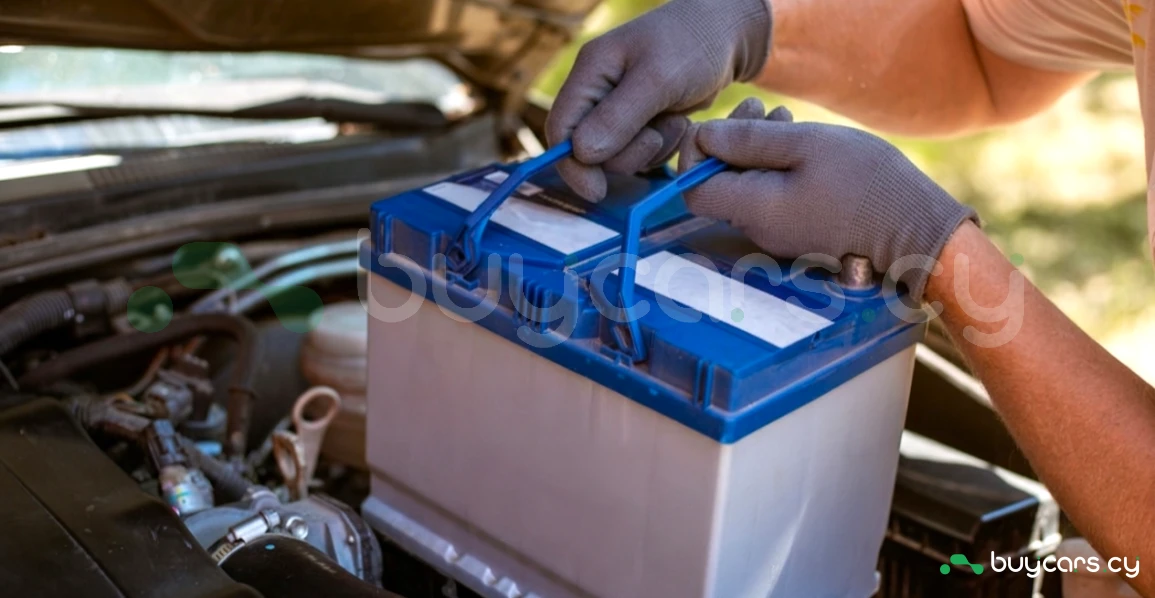
A dead battery remains one of the leading causes of unexpected breakdowns on the road. Many drivers wonder how long car batteries last, but there is no single exact answer, since battery life depends on many factors, from climate to driving habits.
In this article, we will look at how long car batteries last, how to recognize the signs of imminent failure, and what measures can help avoid the situation where your car refuses to start far from home.
Average Car Battery Lifespan
Most manufacturers and automotive experts agree on a range of 3 to 5 years. That is the average service life of a standard lead-acid battery under moderate operating conditions. When considering how long a car battery lasts, it is important to take the battery type into account:
- Conventional WET batteries (serviceable and maintenance-free). They usually last around 3–5 years. This is the most common type and the most sensitive to deep discharges and temperature fluctuations. In maintenance-free versions, the design does not allow topping up distilled water, which can lead to irreversible damage if the battery overheats.
- EFB (Enhanced Flooded Battery) batteries. These are designed to last 5–7 years. They are an improved version of conventional flooded batteries: the plates are enclosed in special envelopes, which increases resistance to cyclic loads. These batteries are most often installed in vehicles with entry-level start-stop systems.
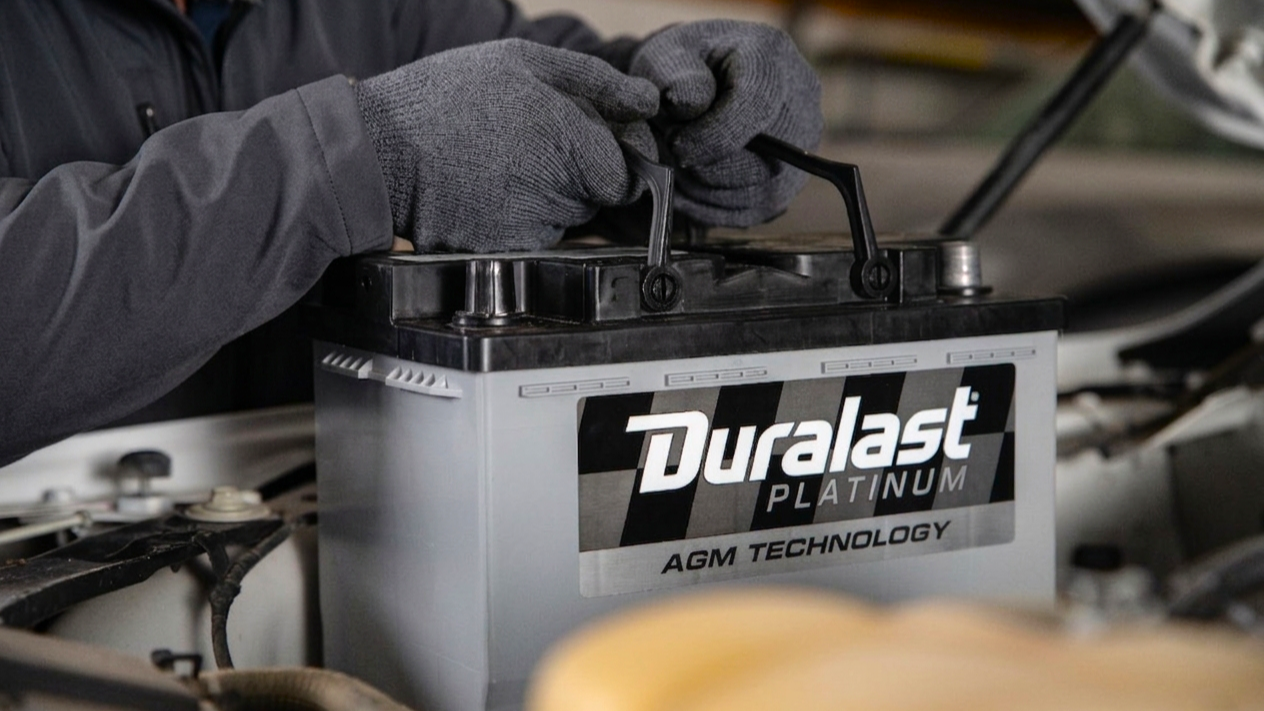
- AGM (Absorbent Glass Mat) batteries. These are the most durable. Their service life can reach 7–10 years. The electrolyte is absorbed in microporous fiberglass separators, which prevents fluid evaporation and makes the battery highly resistant to vibration. AGM batteries have two to three times greater cycle life than conventional ones.
It is impossible to name one exact figure for all vehicles, since battery life is always a compromise between build quality, operating conditions, and regular maintenance. In addition, battery longevity is affected by how correctly the vehicle’s electrical system works: even the most expensive AGM battery can fail in just a year or a year and a half if the alternator supplies unstable voltage.
What Affects Battery Life

The service life of a car battery depends on five factors:
- Climate. Paradoxically, heat is more damaging to a battery than frost. At temperatures above +25°C, the rate of positive plate corrosion doubles, and the electrolyte evaporates more actively. In southern regions, batteries rarely last more than four years, while in moderate climates, with proper care, they can serve for five or even six years.
- Driving style. Aggressive driving with sudden acceleration and braking creates peak loads on the alternator and battery. Constant fluctuations in engine speed lead to unstable charging voltage, which negatively affects the condition of the plates.
- Trip frequency. Short trips are a battery’s main enemy. Starting the engine consumes from 300 to 800 amps, depending on engine size and temperature, and if a trip lasts only 5–10 minutes, the alternator simply does not have enough time to restore that charge. The battery remains in a constant state of undercharge, which leads to plate sulfation — the formation of large lead sulfate crystals that do not break down during normal charging and irreversibly reduce capacity.
- Electrical system condition. A faulty alternator, a loose drive belt, poor ground contacts, or parasitic current drains can kill even a new battery within a few months. Leakage currents caused by improperly connected alarm systems or aftermarket head units are especially dangerous.
- Manufacturing quality. Products from well-known brands such as Bosch, Varta, Mutlu, Banner, and Exide traditionally demonstrate more stable performance than cheap alternatives. High-quality batteries use purer lead, thicker plates, and more reliable separators, all of which directly affect service life.
How to Tell That a Battery Is About to Fail
You can identify battery problems by several common symptoms:
- Slow engine cranking. This is the first and clearest sign of capacity loss. If the engine starts with noticeable difficulty at an air temperature of around 0°C, the battery has already lost at least 30–40% of its rated capacity.
- Dim headlights. With the engine off, the headlights become noticeably dimmer, and when you press the accelerator while driving and engine speed rises, the brightness may temporarily increase.
- Warning signals. In modern cars, the battery icon may light up on the dashboard while driving, indicating charging problems, or a “Low battery” message may appear. In some models, when the voltage drops below a certain threshold, comfort features such as heated mirrors, seat ventilation, and later even the multimedia system are automatically disabled.
- Frequent need for jump-starting. If you increasingly rely on external power sources, the battery is no longer holding its rated capacity. It is also worth noting that regular use of jumper cables puts additional stress on the battery: the high currents involved accelerate plate degradation.
What Happens When a Battery Ages
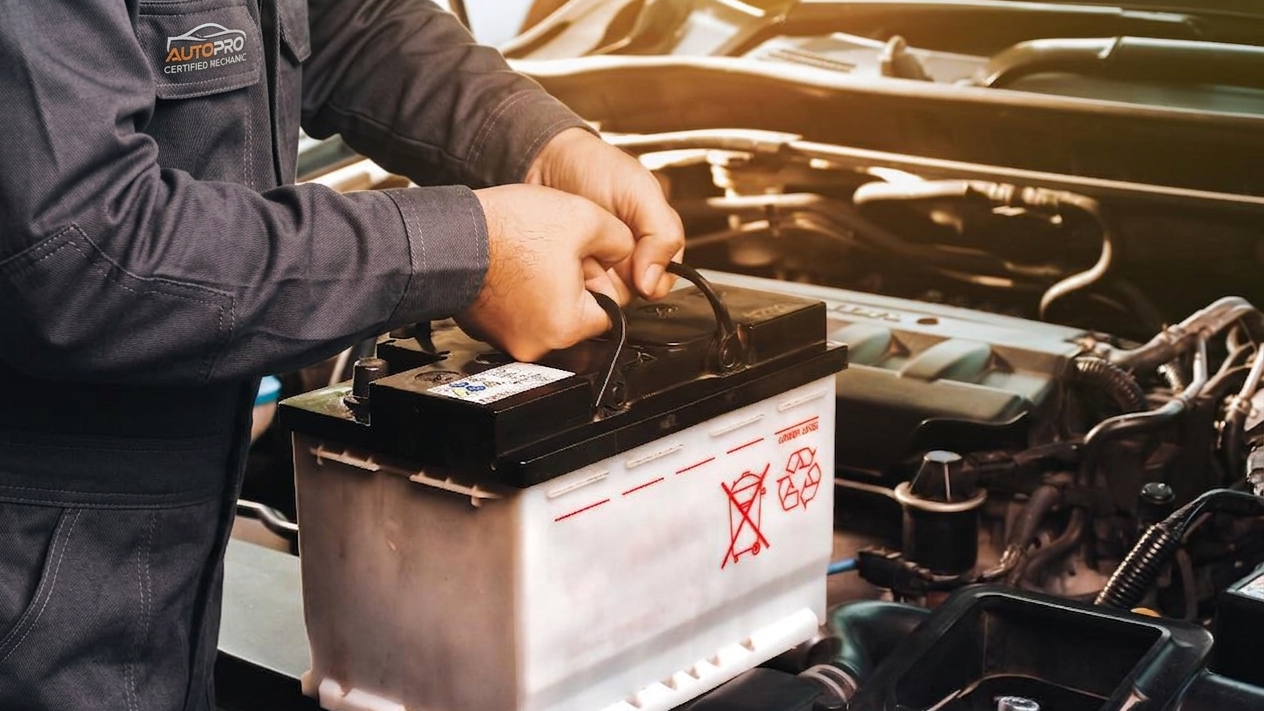
When a car battery nears the end of its service life, irreversible chemical processes begin inside it. The lead plates become covered with a layer of lead sulfate — large crystals that do not dissolve during normal charging. This process is called sulfation. In the early stage, it can be reversed with special chargers that have a desulfation mode, but in the later stages the battery can no longer be saved.
At the same time, the active material on the plates begins to shed. In serviceable batteries, this is seen as cloudy electrolyte and dark sediment at the bottom of the cells. When the shed material reaches the lower edge of the plates, an internal short circuit occurs: voltage drops to 10 volts or less, and the battery stops accepting a charge.
A reduced ability to hold a charge also affects the operation of the vehicle’s onboard electronics. At insufficient voltage, engine control units, automatic transmissions, and multimedia systems may function incorrectly. In some vehicles, when the voltage is low, control units lose their adaptation settings, and after battery replacement a relearning or adaptation procedure is required.
How to Extend Car Battery Life
We have looked at how long a car battery lasts. Its lifespan is affected by a whole range of negative factors. To extend battery life, you should follow several simple recommendations:
- Take regular longer drives. Try not to limit yourself to short trips only. Once a week, take a drive lasting at least 30–40 minutes at moderate engine speed above 2000 rpm so the battery can fully recharge. If the vehicle is used only in city traffic with short trips, it is advisable to recharge the battery with an external charger every 2–3 months.
- Check the terminals and contacts. Oxidized terminals create additional resistance, making both charging and power delivery more difficult. White or greenish deposits on the terminals are a sign of oxidation. Periodically clean the terminals with fine sandpaper and treat them with technical petroleum jelly, silicone grease, or a special terminal spray.
- Avoid deep discharge. Even one deep discharge, for example if you forget to turn off the parking lights or leave the ignition on for several hours, can reduce the life of a new battery by 30–50%. Deep discharge is especially critical for AGM batteries — if the voltage drops below 10.5 volts, they may lose capacity completely.
- Turn off power consumers before starting. Before starting the engine, switch off all major electrical consumers: headlights, the heater fan, rear window defroster, and seat heating. This reduces starting load and allows the battery to deliver maximum power to the starter.
- Perform timely diagnostics. Check the charge level with a multimeter every six months. The voltage at the terminals with the engine off should not be lower than 12.5–12.7 volts. In serviceable batteries, monitor the electrolyte level: the plates should be fully covered with liquid. If the level drops, add only distilled water, not electrolyte.
Does Climate Affect Battery Life?
There is a stereotype that the worst thing for a battery is a Russian winter. However, professional auto electricians say that heat is more harmful than cold. At temperatures above +25°C, the rate of positive plate corrosion doubles with every 10–15 degrees of temperature increase. In hot weather, the electrolyte evaporates more actively, exposing the plates, which leads to their destruction and short circuits.
Frost acts more as a catalyst. Cold itself does not kill a healthy battery. At low temperatures, cranking power decreases because the oil thickens and the chemical reactions inside the battery slow down. If the battery already had an undercharge or capacity loss, winter will reveal this problem immediately. That is why the peak in service visits for battery replacement occurs during the first severe frosts: drivers see that the battery has “died,” although in reality it exhausted its service life back in the summer.
When to Replace a Battery
Waiting for a complete failure, when the engine no longer starts at all, is not a wise strategy. This can happen in an inconvenient place and at the worst possible time. You should decide to replace the battery in three cases:
- By age. If the battery is more than 4–5 years old and has started showing signs of weakness, it is better to replace it proactively rather than wait for an emergency. This is especially important before winter.
- By symptoms. Persistent warning signs such as slow cranking, dim lights, or the smell of hydrogen sulfide in the cabin after a full charge mean that the battery has reached the end of its life and cannot be restored.
- By diagnostic results. If, during a load test, the voltage drops below 9 volts under load, with the load corresponding to half of the cold cranking current, the battery is no longer fit for use. A short circuit in one of the cells is also grounds for replacement; this can be identified by localized heating of the case or by terminal voltage of 10–10.5 volts after a full charge.
How to Choose a New Battery
The choice of a new power source should be based on the vehicle manufacturer’s requirements. The main parameters are:
- Type. If the vehicle has a start-stop system or a powerful audio system with an amplifier, a conventional battery will fail very quickly — within 6–12 months. In such cases, using AGM or EFB is not just a recommendation but a strict requirement.
- Capacity and cold cranking amps. It is not recommended to install a battery with a lower capacity than the factory specification, for example 50 Ah instead of 60 Ah. The cold cranking current can be higher than the factory rating — this will make winter starts easier and will not harm the electronics. However, you should not choose a battery with significantly higher capacity than the original one if the vehicle was not designed for it, since the alternator may not fully charge such a battery during short trips.
- Dimensions and terminal layout. Before buying, make sure the new battery matches the battery tray size and terminal arrangement, whether left-hand or right-hand polarity. Even a slight mismatch in height can prevent the hood from closing properly or cause a short circuit against metal body parts.
Common Myths About Car Batteries
There are many misconceptions in the automotive world that prevent proper battery care:
- A battery always lasts 5 years. In urban driving conditions with frequent traffic jams and short trips, it may die within 2–3 years. A five-year lifespan is achievable only with mostly highway use and long drives.
- If the car is rarely driven, that is better for the battery. Long periods of inactivity lead to self-discharge and deep sulfation. If the vehicle will sit for more than two weeks, it is advisable to disconnect the terminal or use a maintenance charger. Even in a disconnected state, any battery loses 5–15% of its charge per month.
- Any battery will do. Using the wrong type, for example a conventional battery instead of an AGM, will lead to premature failure of either the alternator or the battery itself. Energy recuperation systems and start-stop technology require batteries that can withstand frequent charge-discharge cycles.
- Batteries fail most often in winter. They actually fail in summer because of heat and electrolyte evaporation, but this becomes obvious in winter when the engine requires maximum cranking current. Sales statistics confirm that purchases peak in December and January, but the real death of the battery usually occurs 3–6 months earlier.
What to Do If the Battery Is Dead
If the problem still happens, the course of action depends on the tools available.
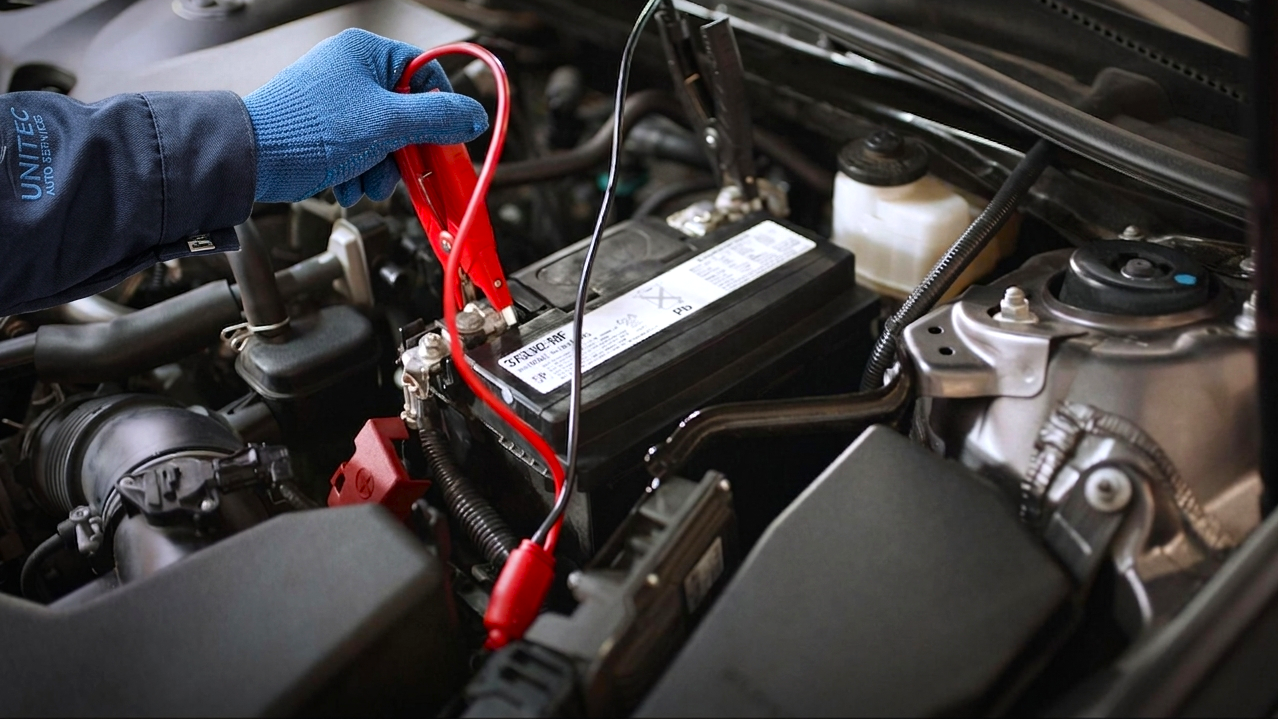
- How to jump-start a car. Use quality jumper cables with sufficient cross-section, copper, at least 16–25 mm². Observe the correct polarity: the red cable goes to positive, the black cable to negative. First connect positive to positive, then connect the donor’s negative to the recipient’s negative, or to the recipient vehicle’s engine ground to avoid sparking at the terminal. Start the donor vehicle, let it run for 5–10 minutes at moderate engine speed, then try to start your own car. Do not switch off the donor engine while starting your vehicle.
- Using a booster pack. Modern portable lithium-polymer jump starters are a safe alternative to using jumper cables. They allow you to start the engine without the help of another vehicle. It is important to choose a booster with starting current appropriate for the engine size: for a gasoline engine up to 2.0 liters, 400–600 amps is enough; for a diesel engine, at least 800 amps is required.
Conclusion
Battery life depends not only on its type and quality, but also on operating conditions, climate, and the owner’s attentiveness. You need not only to know how long a car battery should last, but also to learn how to use and maintain it properly in order to maximize its service life and avoid the unpleasant situation where the car will not start at the worst possible moment.

