



Essential Guide to Towing a Car Without Damage
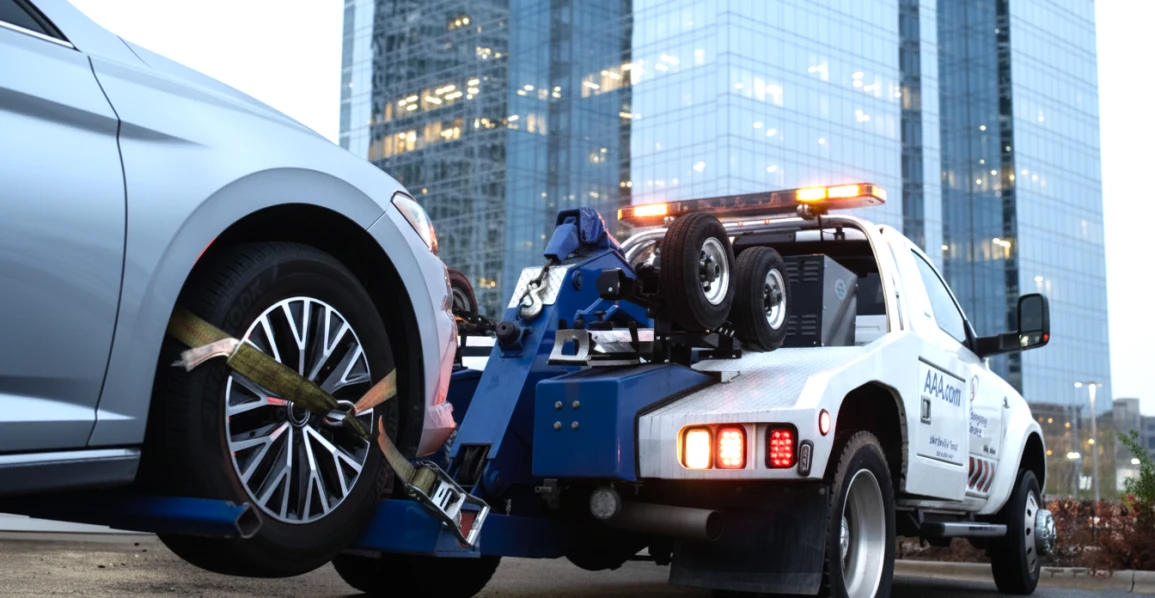
The engine stalls at a traffic light, the battery dies far from home, or smoke starts pouring from under the hood—any of these situations turns a vehicle from a means of transport into immobile property. When a car is stranded, a driver has two options: call a tow truck or get help from another vehicle. Towing a car is a basic skill that can save you time and money.
However, improper towing is a direct path to even more serious problems. A damaged automatic transmission, a torn-off bumper, police fines, or worst of all, an accident, can result from neglecting the rules. In this guide, we will detail how to safely and correctly tow a vehicle, what limitations exist, and how to avoid typical mistakes.
When Towing is Allowed and Prohibited
The first question you need to answer is: can I tow a car in my specific situation? Not every malfunction and not every vehicle allows for towing with a rope.
Towing is permissible if:
- The engine won't start, but other systems are functional.
- You have run out of fuel.
- There is an electronic failure unrelated to steering or brakes.
It is strictly forbidden to tow a vehicle on a flexible hitch (rope) if:
- The steering is faulty. The car becomes uncontrollable and presents a lethal danger.
- The braking system is faulty. The driver of the towed vehicle will not be able to slow down, inevitably leading to a collision.
- In icy conditions. On slippery roads, the risk of skidding and a pile-up increases manifold.
Traffic regulations also prohibit towing more than one vehicle at a time and towing with motorcycles without a sidecar.
Types of Forced Movement
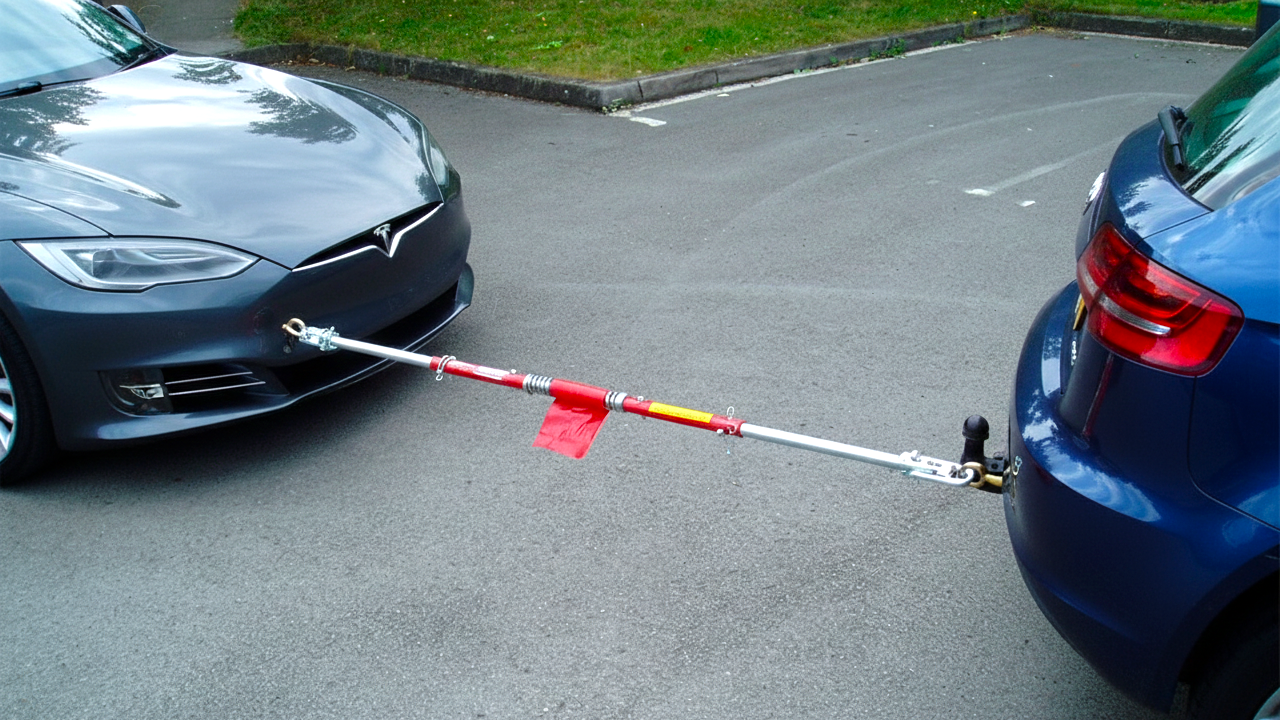
There are three main methods for moving a disabled vehicle. The choice depends on the type of failure, the vehicle's design, and the available equipment.
- Flexible Hitch (Rope Towing). The most common and accessible method of car towing. It requires only a strong rope. The main drawback is the need for constant synchronization between the two drivers. The rope must always be kept taut to avoid jerks and impacts.
- Rigid Hitch. Uses a metal structure (a bar or A-frame) that rigidly connects the two vehicles. This method is much safer as it eliminates jerking and maintains a constant distance. It requires both vehicles to have proper towing setups and is mainly used for commercial vehicles.
- Partial Lift Method. The front or rear axle of the disabled vehicle is placed on a special dolly or tow truck platform. This is the only correct method for most cars with automatic transmissions, all-wheel drive, and for all electric vehicles.
Towing Methods Comparison Table
Hitch Type | Advantages | Disadvantages | Suitable Vehicles |
Flexible (Rope) | Accessible, compact | Requires high coordination, risk of jerking | Only for manual cars with working brakes/steering |
Rigid (Bar) | Safe, constant distance | Requires special equipment, difficult maneuvering | Mainly for trucks; rare for passenger cars |
Partial Lift | Safe for transmission | Requires a tow truck or dolly | Automatic, CVT, 4WD, Electric Vehicles |
What to Prepare Before Towing
Proper preparation is 90% of success. Before you start moving, ensure you have completed several mandatory steps.
A Checklist of Preparatory Actions:
- Prepare the tow rope. It must be free of visible damage, knots, or fraying. According to regulations, its length should be between 4 and 6 meters (13 to 20 feet). The rope should be equipped with reliable carabiners or hooks.
- Locate and prepare the towing eyes. On most modern cars, the front towing eye screws into a special socket in the bumper. Find it in your tool kit and screw it in all the way. The rear eye is usually a fixed loop under the bumper.
- Agree on the route and signals. Drivers must agree in advance on the route (avoiding busy streets and complex interchanges) and a signaling system. For example, a single flash of high beams could mean "Attention, preparing to brake," and the horn could signal an "Emergency stop."
- Prepare the towed vehicle. The driver must sit in their seat, insert the key into the ignition lock, and turn it to the "ON" position (without starting the engine). This is necessary to unlock the steering wheel and, on many models, to ensure the operation of the vacuum brake booster and power steering.
The Art of Towing: Synchronization and Anticipation
The process of moving two vehicles in a hitch is a dance where both drivers must feel each other and the road. Success depends on coordinated actions and an understanding of the physics of the process. This section explains exactly how to tow a car safely.
Attaching the Rope: Finding the Right Points
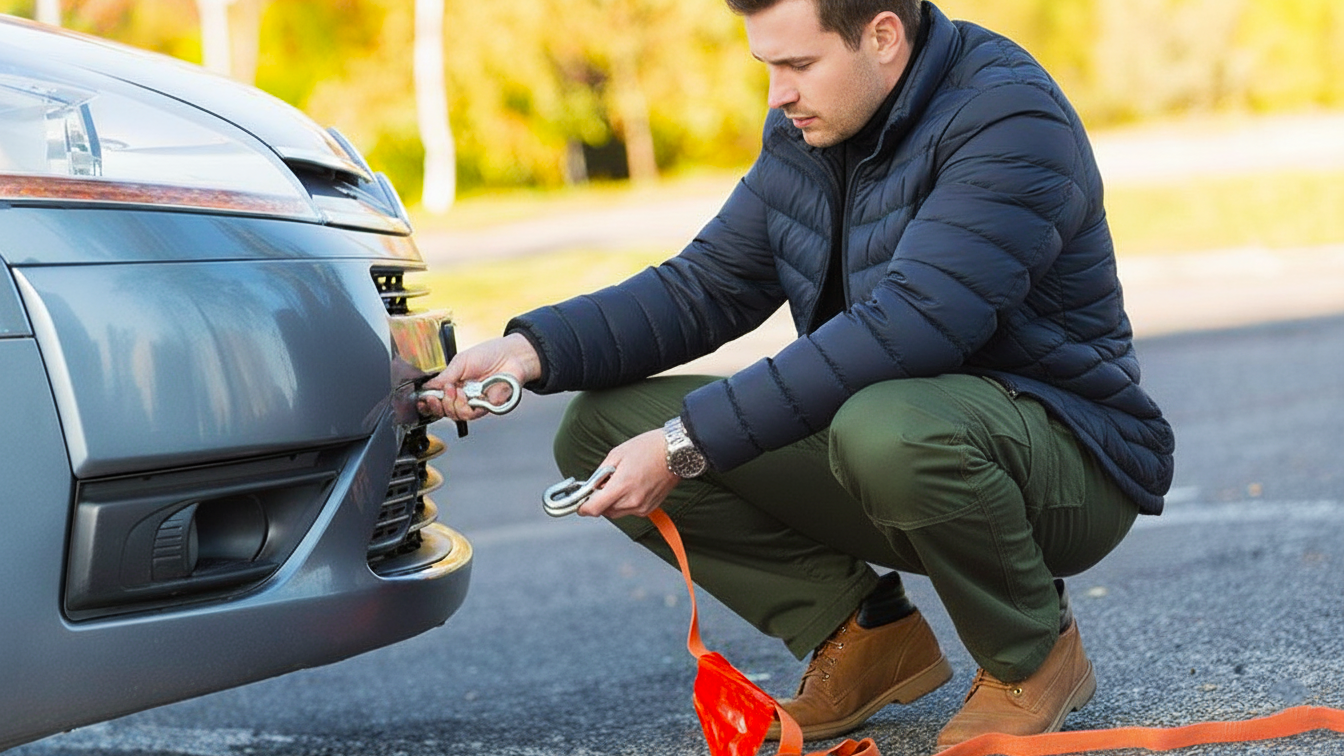
Before connecting the vehicles, ensure the rope is laid out flat and has no knots. Attach hooks or shackles exclusively to the designated towing eyes. Never attach the rope to the bumper, suspension components, or a tow ball not designed for such loads—you risk ripping them off. A little-known nuance: if possible, attach the rope diagonally (e.g., from the right eye of the towing vehicle to the left eye of the towed vehicle). This attachment helps smooth out jerks during turns and helps stabilize both vehicles.
Starting Off: Smoothness is Key
The first few meters are the most critical. The towing driver's task is not to jerk, but to smoothly tension the rope. Start moving in first gear with minimal throttle, as if starting on a very steep hill. The driver of the towed car should be ready to release the brake slightly at this moment. Once you feel the rope is taut and the towed vehicle has started moving, you can add a little more power.
Moving in Sync: Maintaining Tension
The main secret to safe rope towing is maintaining constant tension. A slack rope causes severe jerks that can damage the vehicles or snap the rope itself. The rear driver's job is to act as "active ballast." They must constantly monitor tension, braking very gently and briefly when necessary. It is especially important to do this on descents to avoid rear-ending the tow vehicle. Drive at a speed no higher than 40 km/h—this gives you more reaction time.
Visual Communication on the Road
A towing combination is a non-standard road user that must be highly visible to others. Traffic laws clearly regulate lighting for such cases. The driver of the towing vehicle must turn on their low beam headlights to identify themselves as the lead vehicle, even during the day. The disabled vehicle moving behind must have its hazard lights constantly activated. They signal a non-standard situation to other drivers and urge them to exercise extra caution. If the towed car's electrical system is dead and the hazards don't work, the law requires an alternative solution: a warning triangle must be securely attached to the rear of the vehicle body.
Maneuvering: Thinking for Two
The towing driver must realize they are now controlling a combination nearly 10 meters long. All maneuvers—lane changes and turns—must be executed in the widest possible arc so the rear vehicle doesn't "cut" the corner and hit a curb or adjacent car. Warn of braking in advance by tapping the brake pedal a few times to flash the brake lights. The driver of the towed car must follow the leader's trajectory and be ready to brake simultaneously, sometimes even slightly earlier, to keep the rope taut.
Specifics of Towing AT, 4WD, and Electric Vehicles
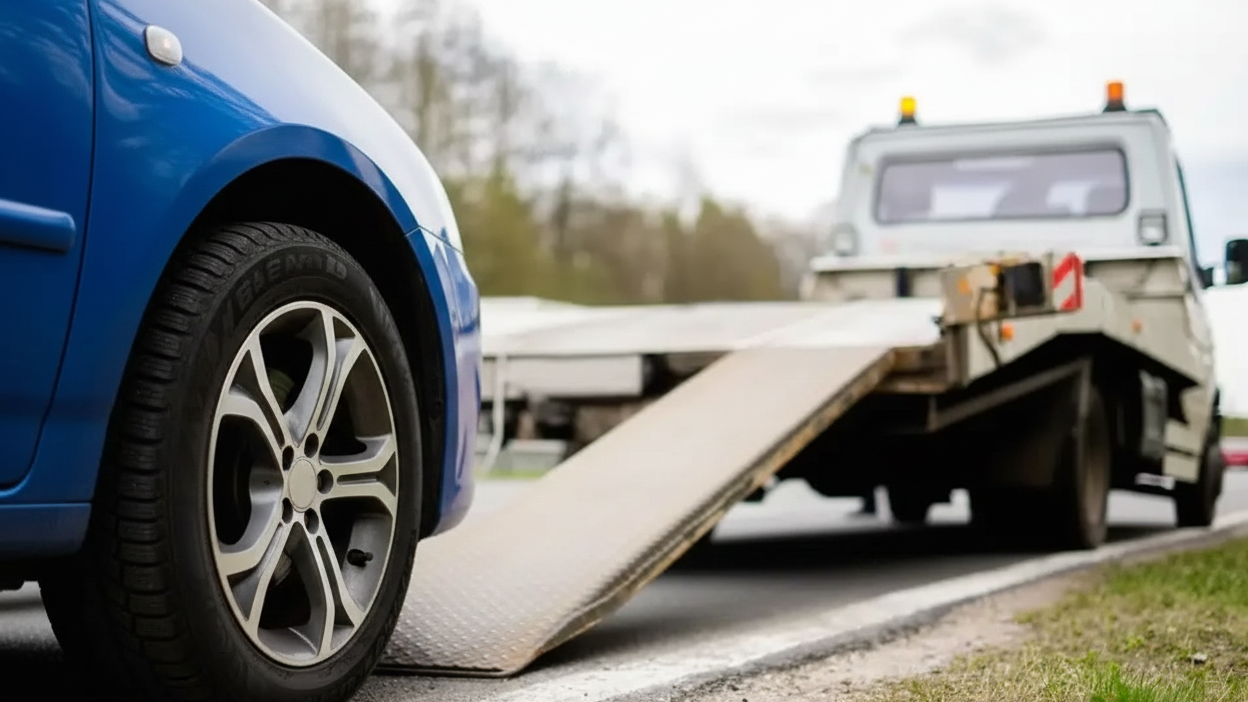
Improper towing of a vehicle with an automatic transmission or all-wheel drive can lead to its complete failure.
- Cars with Automatic/CVT/Robot Transmissions. In these cars, the gearbox oil pump does not work when the engine is off. Parts rotate "dry," leading to rapid overheating and destruction. Towing is only permissible in "N" (Neutral) for a distance of no more than 40–50 km and at a speed no higher than 40 km/h. The best and only truly correct solution is calling a tow truck.
- All-Wheel Drive (4WD) Vehicles. Rope towing is prohibited for most AWD cars as it can damage the transfer case or center differential. The permissible method is only partial lift, where one axle is on a platform.
- Electric Vehicles and Hybrids. Rope towing is strictly forbidden. Wheel rotation can engage the electric motors in generation mode, which, without control electronics, can destroy the high-voltage battery or inverter. Only a full flatbed tow truck should be used.
Common Towing Mistakes
A List of Errors Leading to Breakdowns and Accidents:
- Attaching the rope to suspension elements or the bumper. This leads to their deformation or detachment. The rope must only be attached to the factory towing eyes.
- Sharp jerks when starting. Can lead to a snapped rope or damaged mounting points.
- Allowing rope slack. The driver of the towed car doesn't brake in time, and the rope gets under the wheels, which can lead to it snapping or a sudden, violent jerk.
The Alternative – A Tow Truck
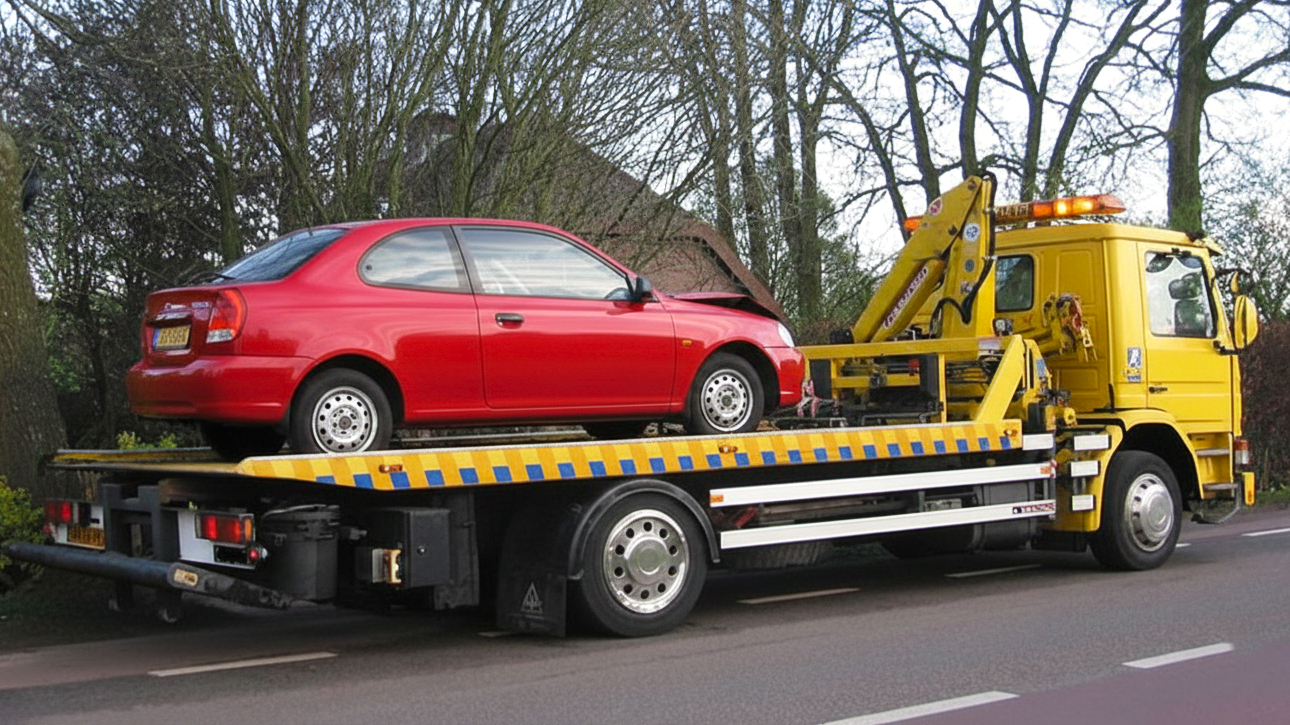
In many situations, calling a tow truck is not only the safest but ultimately the cheapest option. If you have a car with an automatic transmission, faulty brakes or steering, or you are simply unsure of your abilities, do not risk it. The advantages of a tow truck are obvious: complete safety for your vehicle and zero risk on the road.
Conclusion: Care and Knowledge of the Rules
Proper towing is a procedure that requires knowledge, care, and coordinated actions. Understanding the limitations and strictly following the rules will help you safely get a disabled car to a repair shop without aggravating the breakdown or creating an emergency situation.
If you act calmly and follow our guide, even a breakdown on the road won't turn into stress. The main thing is not to rush and remember that caution is your best tool on the road.

