



How to Check Tire Pressure Correctly for Safety and Fuel Efficiency
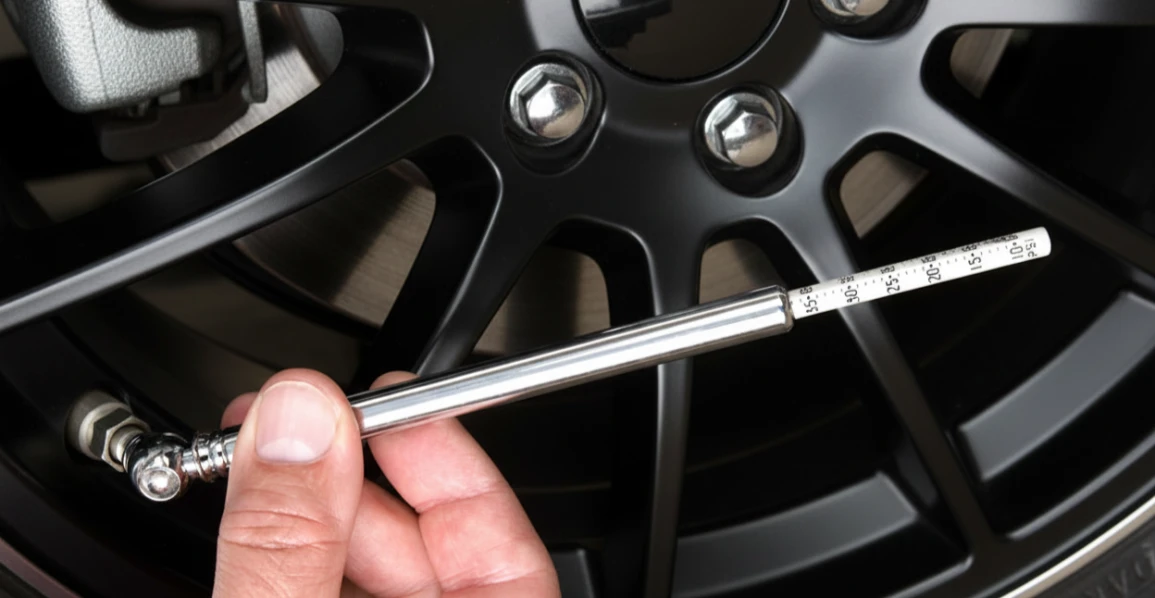
Tire pressure is a parameter that most drivers only think about twice a year during seasonal tire changes, or when the ominous yellow indicator lights up on the dashboard. Many perceive it as a minor detail not requiring regular attention. However, this seemingly insignificant figure directly affects the three pillars of safe and economical driving: handling, fuel consumption, and tire lifespan.
Improper inflation turns even the most expensive and technologically advanced tires into an inefficient and dangerous component. Monitoring this parameter is not a formality but a fundamental part of responsible car ownership. In this guide, we will detail why pressure is so important, what the consequences of deviation from the norm are, and how to measure it correctly to make every trip predictable and safe. You will learn how to check tire pressure and turn this procedure into a beneficial habit.
What is Tire Pressure and How Does It Work?
Simply put, tire pressure is the amount of air pumped into a sealed tire. It is this compressed air that allows the tire to maintain its shape, support the vehicle's weight, and form the contact patch—the small area of the tread that is in direct contact with the road. The size and shape of this contact patch determine the tire's grip, handling, and braking distance.
Thinking that a pressure of "two atmospheres" is suitable for all passenger cars is a dangerous misconception. Every vehicle requires an individual approach. When designing a car, the manufacturer determines the exact pressure value that provides the best balance between handling, comfort, and wear. To understand how to know how much air to put in tires, you don't need to guess or ask on forums. Simply open the driver's door and look for the information placard on the door jamb. This is typically where you'll find a sticker with the recommended figures in bar or PSI. Alternative locations include the fuel filler door and the owner's manual.
Why Is the Correct Inflation Level Important?

A deviation from the norm of even 0.2–0.3 bar (3-4 PSI) can critically alter the behavior of the tire and the car as a whole.
Underinflation (Low Pressure):
- Poor Handling. The tire becomes too soft and "rolls" in corners. Steering responses become vague and delayed.
- Increased Fuel Consumption. The contact patch enlarges, and with it, the rolling resistance. The engine has to work harder (and use more fuel) to maintain speed. A 20% drop in pressure can increase fuel consumption by 5–10%.
- Overheating and Failure. The sidewalls of the tire flex excessively and overheat. During prolonged high-speed driving, this can lead to carcass separation and a blowout.
- Accelerated Wear. The main load falls on the edges of the tread (the shoulders), which wear out much faster than the center.
Overinflation (High Pressure):
- Reduced Grip. The tire becomes too rigid and "hard." The contact patch shrinks to a narrow strip down the center. Grip, especially on wet asphalt, deteriorates sharply.
- Increased Braking Distance. Due to the smaller contact area, braking efficiency is reduced.
- Increased Center Tread Wear. The load is concentrated on the center of the tread, which wears out much faster than the edges.
- Reduced Comfort. A rigid tire absorbs minor road imperfections poorly, transmitting all impacts to the suspension and body.
Consequences of Improper Pressure Table
Parameter | Underinflation | Overinflation |
Handling | Sluggish, "spongy," poor steering response | Harsh, nervous, prone to skidding |
Grip | Worsens in corners | Worsens on straightaways, especially when wet |
Tire Wear | Wears on the edges (shoulders) | Wears in the center |
Fuel Consumption | Increases | May slightly decrease, but at the cost of safety |
Comfort | Smoother ride, but risk of rim damage | Low, harsh ride |
How Often to Check Pressure
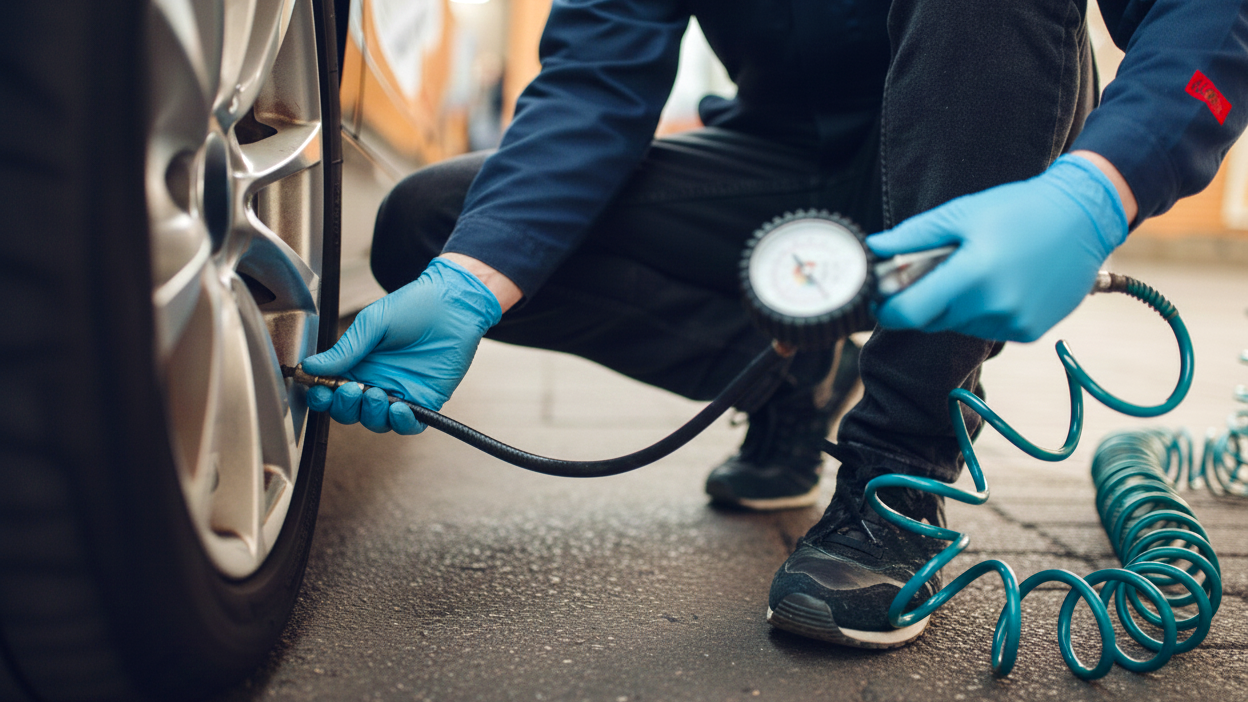
Even perfectly serviceable tires gradually lose pressure over time — air slowly escapes through microscopic pores in the rubber. This process is invisible but continuous. In addition, tire pressure is highly affected by ambient temperature: it decreases in cold weather and may increase during sudden warming. That is why checking tire pressure should be a regular habit rather than an occasional formality.
The optimal checking frequency is once every two weeks. This interval allows you to detect deviations from the recommended level in time, maintain proper vehicle handling, and prevent excessive tire wear. It is especially important to check pressure when the tires are “cold” — before starting a trip or several hours after the vehicle has been parked.
Be sure to check tire pressure in the following situations:
Before every long-distance trip. When the vehicle is fully loaded and driven at higher speeds, correctly inflated tires directly affect stability, braking distance, and fuel consumption. Incorrect pressure increases the risk of tire overheating and reduces overall road safety.
- During sudden weather changes. Even a temperature change of 8–10 degrees can significantly affect tire pressure. In colder conditions, pressure usually drops, requiring the tires to be inflated. During warmer periods, pressure may become excessive, which negatively impacts road grip and driving comfort.
- After seasonal tire changes. New or stored tires almost always require pressure adjustment. During storage, pressure can change, and after installation, it rarely matches the manufacturer’s recommended values. Checking tire pressure after a tire change is an essential step in preparing the vehicle for the season.
- Additional tip: the recommended tire pressure for your vehicle can be found in the owner’s manual or on the sticker located in the driver’s door jamb. Regularly checking pressure according to these values helps extend tire life, improve handling, and increase safety on every journey.
The Physics in the Wheel: The Impact of Temperature
The inflation in your tires is not a constant value. It is directly dependent on the ambient air temperature, following Charles's Law. A simple rule of thumb states that for every 10°C (about 18°F) change in temperature, tire pressure changes by approximately 0.1 bar or 1.5 PSI. This is a key detail to remember when considering when should tire pressure be checked.
The Rules of Checking
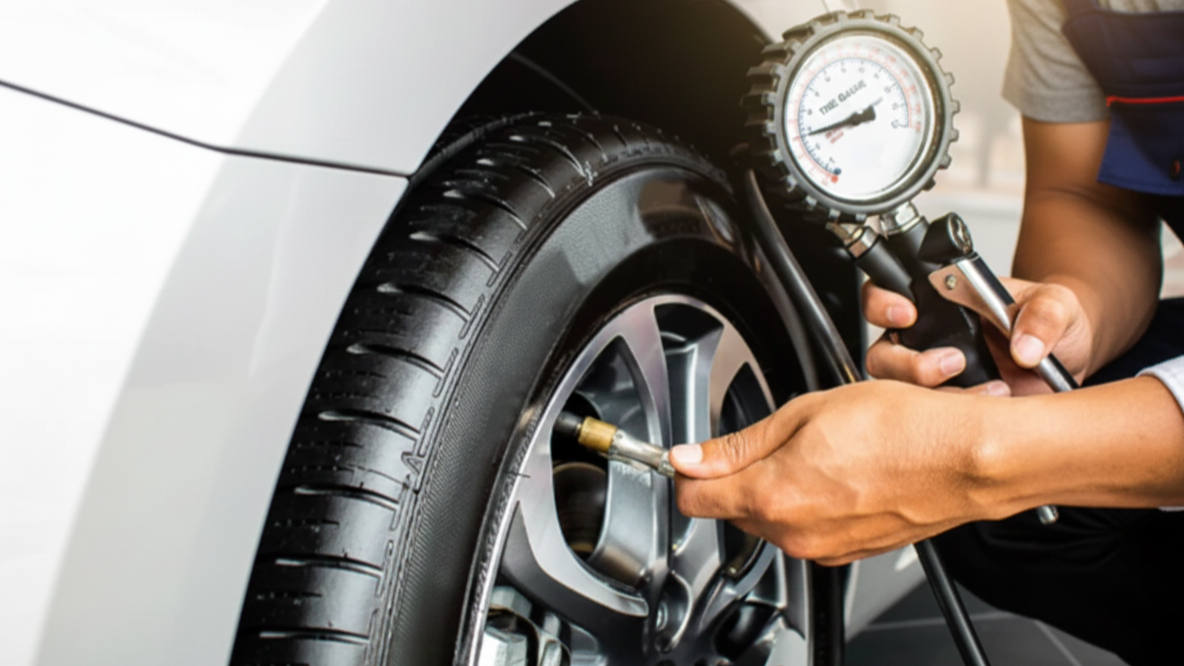
The procedure takes no more than five minutes but requires adherence to a few important rules. The answer to the question of when to check tire pressure is unequivocal: only on "cold" tires.
A Step-by-Step Guide to Measuring Pressure:
- Preparation. The measurement should be taken in the morning before driving, or after the car has been parked for at least 3-4 hours. As you drive, the tires heat up, and the pressure inside them increases. A "hot" reading will be inflated and inaccurate.
- Use an Accurate Gauge. Do not trust the built-in gauges on cheap compressors at gas stations. It's best to have your own digital or high-quality analog gauge.
- The Measurement Process. Unscrew the cap from the valve stem. Press the gauge firmly onto the valve stem until the hissing sound stops. Note the reading.
- Comparison and Correction. Compare the reading to the manufacturer's recommendation. If the pressure is low, add air with a compressor. If it's high, gently press the pin inside the valve stem to release excess air.
- Check All Wheels. Repeat the procedure for all four tires, and don't forget the spare.
Can You Rely Solely on the Tire Pressure Monitoring System (TPMS)?
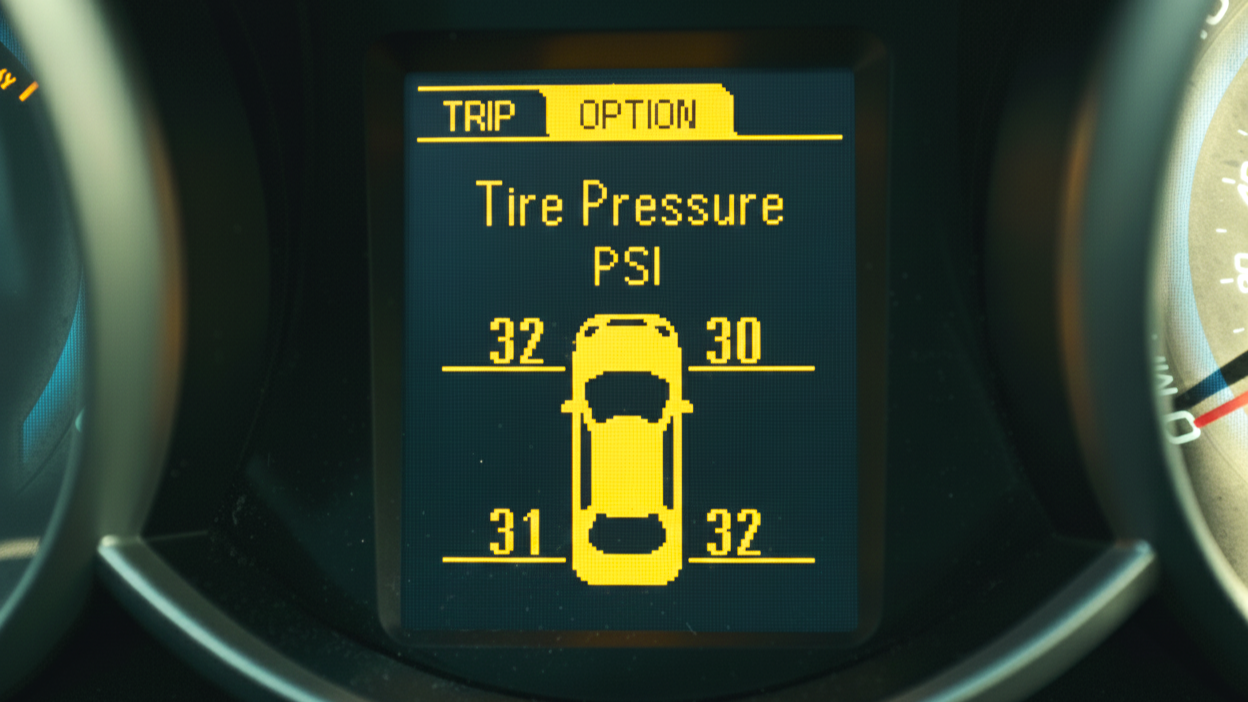
Many modern vehicles are equipped with a Tire Pressure Monitoring System (TPMS), which helps drivers keep track of their tires’ condition. When tire pressure drops, the system alerts the driver via a warning light on the dashboard, drawing attention to a potential issue. While this is a useful tool—especially on the road—it should not be considered a complete replacement for regular tire pressure checks. It is important to understand that there are two types of TPMS—indirect and direct—and each comes with its own limitations.
- Indirect TPMS. Indirect systems operate using ABS sensors and do not measure tire pressure directly. Instead, they monitor wheel rotation speed and only trigger a warning when the difference in pressure becomes significant—typically more than 20–25%. As a result, a moderate but already unsafe drop in pressure may go unnoticed for a long time.
- Direct TPMS. Direct systems use sensors installed inside the wheels to measure pressure more accurately. However, even these systems are not completely free from inaccuracies. Readings can be affected by temperature fluctuations, depleted sensor batteries, or system-specific characteristics. In addition, TPMS sensors require maintenance and may fail over time.
Why a pressure gauge is still essential
Even with TPMS, the most reliable way to monitor tire pressure remains a manual check using a pressure gauge. This method allows you to detect deviations from the recommended levels in time, adjust pressure accurately, and ensure that all tires are evenly inflated.
TPMS is a convenient assistant and an additional layer of safety, but it is not a full substitute for regular tire pressure checks. The best approach is to combine automatic monitoring with periodic manual checks using a pressure gauge. This helps extend tire life, improve vehicle handling, and make every journey safer.
Advantages of Correct Tire Pressure
A List of Key Benefits:
- Maximum Safety. The car behaves predictably in corners, brakes effectively, and is stable on straightaways.
- Financial Savings. Fuel consumption is reduced, and the lifespan of the tires, which wear evenly, is extended.
- Comfort. Properly inflated tires optimally absorb road imperfections, making the ride smoother and quieter.
Common Driver Mistakes

Many drivers make the same mistakes that negate the benefits of checking. The biggest mistake is the "visual check." It is virtually impossible to visually detect a deviation of 0.3-0.5 bar. Other common errors include forgetting to check the rear tires or measuring the pressure immediately after a long drive, resulting in incorrect data.
Conclusion: A Small Habit That Saves Money and Lives
Regularly checking your tire pressure is a simple but critically important procedure. It takes only a few minutes but ensures your safety, saves you money, and gives you confidence on the road. The answer to the question of when to check tire pressure should become reflexive for you—regularly and before every important trip. Let monitoring your tires become a beneficial habit. A car always responds to attention to detail with reliability, and correct tire pressure is the best way to show that care.

