



When to Change Brake Fluid and Why It Matters for Safe Braking
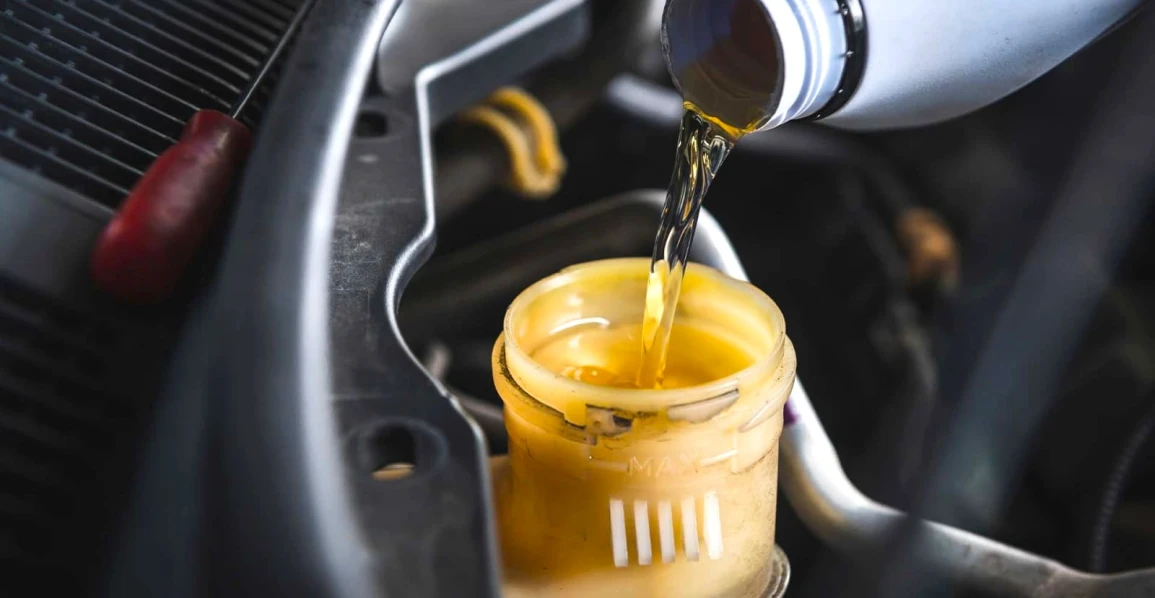
Brakes aren’t just a technical component – they’re your main safety system. You can drive carefully and predictably, but if your brakes fail at the wrong moment, the consequences can be devastating. Most drivers pay close attention to brake pads and discs, but they often overlook brake fluid, which actually links the pedal to the wheels.
The question “how often should brake fluid be changed” isn’t a formality. It’s a critical part of maintaining safety, reducing repair costs, and preventing dangerous situations on the road. Replacing the fluid on time doesn’t cost much, but it can prevent serious failures and accidents.
Brake fluid doesn’t just transmit force. It keeps the system stable during long descents, emergency braking, and high temperatures. Any deviation from normal properties can make the pedal soft, increase travel, and cause a dangerous loss of control.
What Brake Fluid Is and Why It’s Important
Modern braking systems rely on hydraulics. When you press the brake pedal, pressure builds in the master cylinder and is transmitted through the fluid to the wheel cylinders. The pads clamp onto the discs, and the vehicle slows down.
Brake fluid works as a non-compressible medium, ensuring an instant response and a predictable stopping distance. It also plays two additional roles:
- lubricates moving components, extending the life of seals and cylinders;
- protects internal parts from rust and corrosion.
Parameter | Fluid Function | If It Degrades |
Pressure transfer | Fast response to pedal input | Longer stopping distance |
Lubrication and protection | Prevents corrosion and sticking | Damage to components, sticking pistons |
High boiling point | Stable braking performance under load | Vapor lock, “spongy” pedal, brake fade |
If the hydraulic medium is neglected, the system loses pressure and reliability. What seems like a minor issue can lead to serious brake failure.
Why Changing Brake Fluid Matters
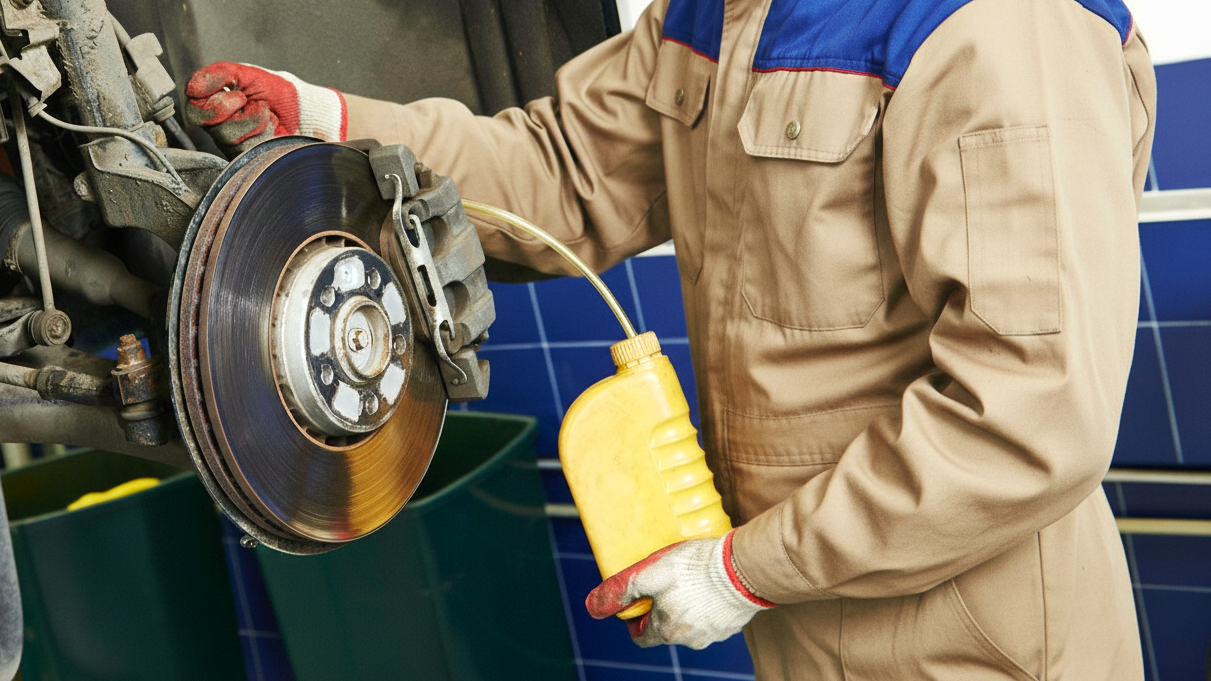
Brake fluid is one of the most critical components of your vehicle. The condition of the fluid directly affects braking performance and road safety. Even if your brakes seem to be working properly, over time the fluid loses its effectiveness, which can lead to extremely dangerous situations.
The Hygroscopic Nature of Brake Fluid
All brake fluids are hygroscopic, meaning they gradually absorb moisture from the air. Water can enter the system through microcracks, hoses, and the reservoir cap, slowly lowering the fluid’s boiling point.
Under heavy braking or on steep descents, the fluid can overheat and boil. When this happens, vapor bubbles form in the system, and the brake pedal becomes spongy or “soft”. Braking power drops dramatically — and even at speeds of 60 km/h (≈37 mph), this can lead to a serious accident.
Risk of Corrosion and Damage
Moisture inside the brake system also creates an ideal environment for corrosion. Cylinders, hoses, and fittings gradually deteriorate, leading to leaks. The hydraulic system loses its integrity, and even fresh brake fluid will not fix the problem if the internal components are already damaged.
Prevention and Safety
Timely replacement of brake fluid is a simple yet essential preventive measure that helps avoid:
- overheating of the brake system;
- brake failure at critical moments;
- costly repairs of cylinders, hoses, and calipers
The procedure typically takes about an hour, but it can prevent a potentially serious accident. Neglecting this crucial maintenance step is one of the common causes of brake-related accidents, often remembered only too late.
How Often to Change Brake Fluid
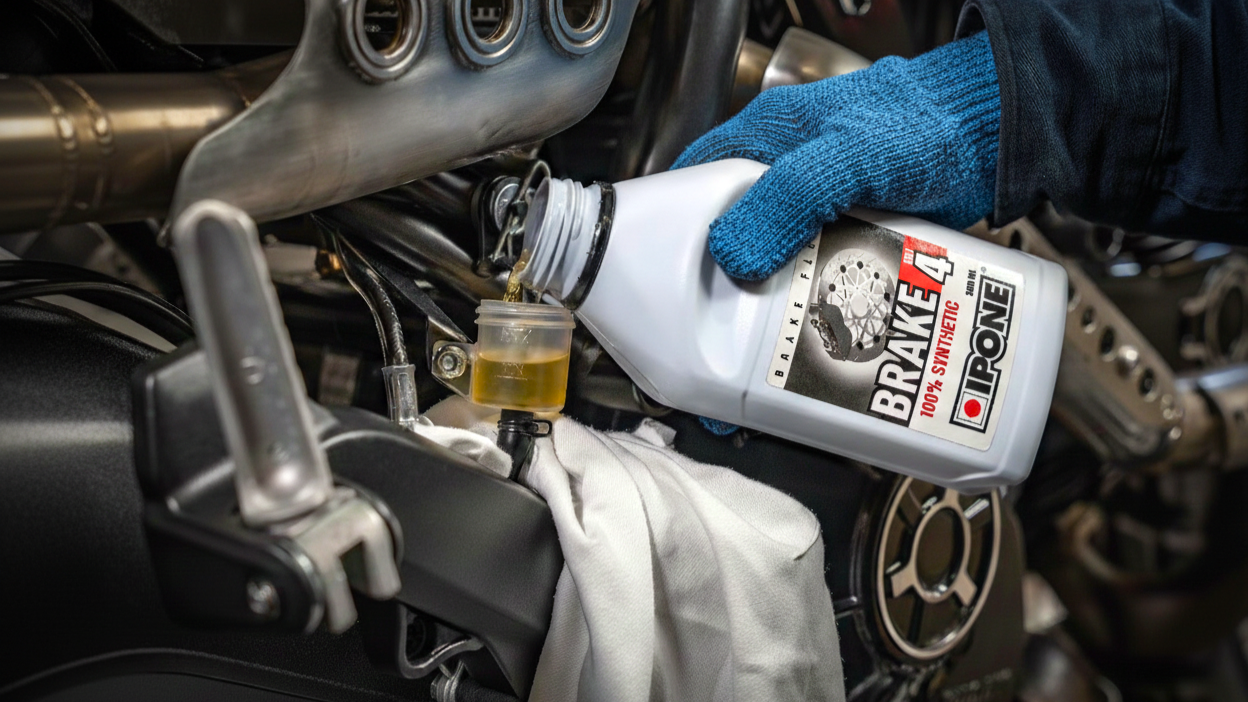
For most vehicles, the standard replacement interval is every two years or around 20,000–25,000 miles. But this is a general guideline. The exact answer to “how often to change brake fluid” depends on your car’s manual and driving conditions.
The environment and your driving style can shorten the fluid’s lifespan:
- Mountain roads: long downhill sections increase brake temperature and cause faster fluid degradation.
- Humid climates: moisture absorption accelerates.
- Aggressive driving: frequent hard braking heats up the hydraulic medium.
- City traffic: stop-and-go driving shortens service life.
You can check the fluid more often than you replace it. If it’s clear and has a high boiling point, it can stay in service longer. If it shows signs of wear, don’t delay replacement.
When to Change Brake Fluid: Warning Signs
Brake fluid can degrade earlier than expected. Typical symptoms include:
- a soft or spongy pedal feel;
- longer stopping distance than usual;
- brake warning light illuminated on the dashboard;
- dark, murky, or contaminated fluid in the reservoir.
If these symptoms appear, the answer to “when to change brake fluid” is simple – as soon as possible. Waiting for the next scheduled service can be dangerous.
How to Check Brake Fluid Condition
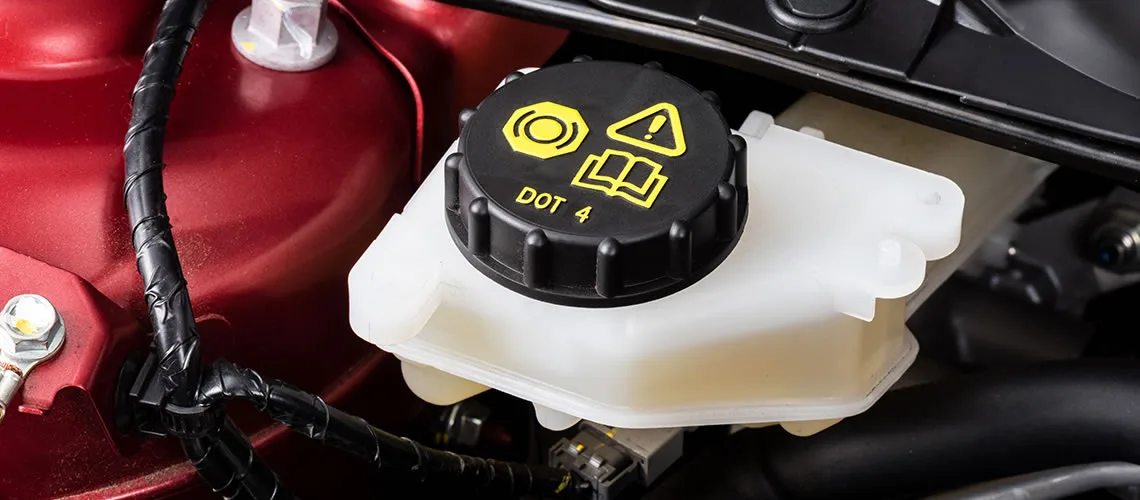
The first step is a visual inspection. Look at the transparent reservoir under the hood. The level should be between MIN and MAX marks, and the color should be clear or slightly yellow. Dark color or sediment indicates that the fluid has lost its properties. A more accurate method uses a brake fluid tester. It measures moisture content and boiling point. If the reading is outside the acceptable range, the fluid should be replaced. Even if the car is rarely driven, checking the fluid at least twice a year is good practice.
What Happens If You Don’t Replace Brake Fluid
Ignoring the recommended replacement schedule can trigger a chain of issues:
- increased stopping distance and delayed brake response;
- fluid boiling on descents and a complete brake failure risk;
- rust inside lines and cylinders, plus leaks;
- high repair bills instead of a cheap fluid replacement.
It usually starts with subtle pedal changes, but over time it can lead to a total loss of braking power. Timely service is far cheaper than rebuilding the entire system.
How to Choose the Right Brake Fluid
The correct type is printed on the reservoir cap or in the owner’s manual. The most common standards are DOT 3, DOT 4, and DOT 5. They differ in boiling points, moisture resistance, and base formulation.
Fluid Type | Boiling Point (dry/wet) | Key Features |
DOT 3 | ~205 °C / ~140 °C | Good for everyday driving, absorbs moisture faster |
DOT 4 | ~230 °C / ~155 °C | All-around option for most vehicles |
DOT 5 | ~260 °C / non-hygroscopic | Silicone-based, not compatible with DOT 3 or DOT 4 |
Never mix different types unless your manufacturer explicitly allows it. Using the wrong type can damage seals and compromise the entire system.
When to Change Brake Fluid
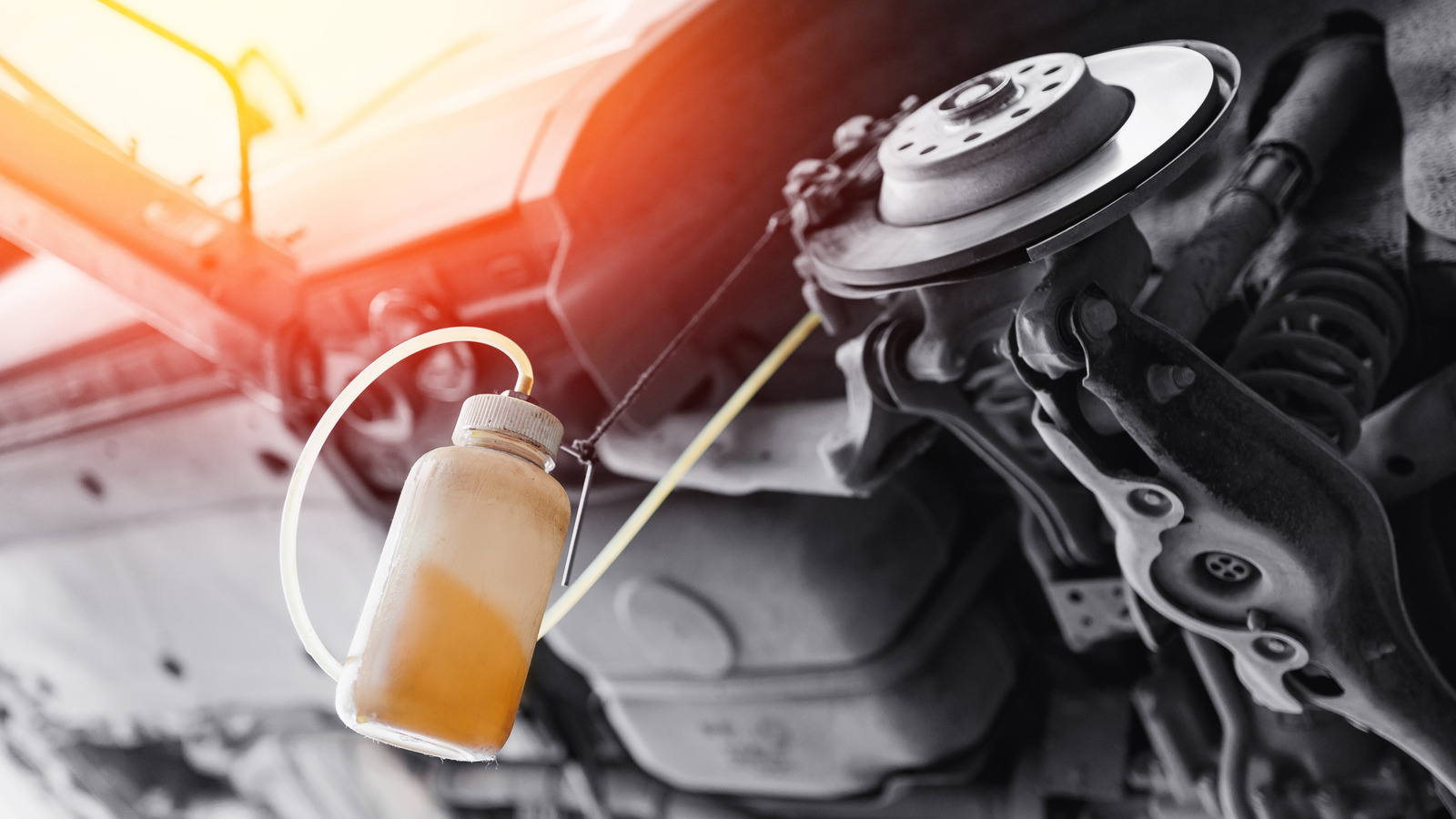
Although most vehicles have a recommended schedule for changing brake fluid, sometimes the fluid loses its effectiveness earlier than expected. If the problem is not detected in time, it can lead to reduced braking performance and even a potentially dangerous situation. Experienced drivers can often recognize the car’s “signals” before the official replacement interval.
- Soft or Spongy Brake Pedal. If the brake pedal feels soft, “spongy,” or sinks when pressed, this is the first warning sign. The fluid may contain moisture, which turns into vapor under heat, reducing the hydraulic efficiency of the brakes. This behavior is especially noticeable during intensive braking or in city driving with frequent stops.
- Increased Stopping Distance. If the car starts braking less effectively and the stopping distance increases even at normal speeds, this indicates that the brake fluid is losing its properties. It is particularly dangerous at higher speeds, when the brake response becomes unpredictable and the risk of an accident rises.
- Brake System Indicator on the Dashboard. A constantly lit or flashing warning light on the dashboard is a very serious signal. Modern systems can detect pressure drops or reduced brake fluid efficiency. Ignoring this warning may result in brake failure at a critical moment.
- Darkened, Cloudy Fluid or Sediment in the Reservoir. Visual inspection of the brake fluid is also important. If the fluid has darkened, become cloudy, or contains sediment, it indicates contamination or moisture accumulation. Even if the pedal feels normal, such changes already reduce the effectiveness of the braking system.
Key Recommendation
If you notice any one of these signs, the answer to the question “When should I change my brake fluid?” is clear — as soon as possible. Waiting for the scheduled replacement is risky: brakes are a critical safety system, and any delay can have serious consequences.
Why Prevention Costs Less Than Repair
Many drivers postpone service because “the brakes still work.” The problem is that brake fluid degradation is gradual. By the time symptoms become obvious, damage may already be significant. The cost of a fluid replacement is minimal compared to the price of rebuilding the master cylinder, replacing brake lines, or repairing ABS components. Add the potential risk of a crash, and skipping maintenance stops making sense.
Additional Notes for Careful Drivers
A few points are worth remembering. First, fluid degrades even when the vehicle is not driven. Moisture penetrates the system regardless of mileage. That’s why how often to replace brake fluid is usually based on time as well as distance. Second, low-quality products are a risk. Counterfeit brake fluid often boils prematurely and can damage the system. Always use trusted brands that meet DOT standards. Third, check the reservoir itself. If there’s visible residue or sludge inside, clean the system before filling it with new fluid. Contamination shortens the lifespan of the replacement fluid.
Conclusion
Regular fluid replacement is one of the simplest ways to keep your brakes reliable. A soft pedal, fading stopping power, or dark fluid are all signs that service can’t wait. How often should brake fluid be changed is clearly stated in your owner’s manual, but real-world factors can accelerate wear.
Even if the brakes “seem fine,” don’t postpone maintenance. A small preventive step costs far less than repairing a failed braking system. Knowing how often to replace brake fluid and how to change brake fluid is an easy, effective way to keep yourself and others safe on the road.

