



How Long Should You Let Your Car Warm Up in Winter?
The question of whether you should warm up your car before driving in cold weather continues to spark debate among vehicle owners. Habits formed decades ago during the carburetor era often contradict the design features of modern engines and motor oils. The purpose of this article is to provide up-to-date, officially recommended information on how long to warm up your car, how to do it correctly, and how to ensure reliable operation while preventing premature wear. Understanding these principles helps you make informed decisions, protect key components, and avoid unnecessary fuel waste during the cold season.
Why Warm Up Your Engine at All?
At low temperatures, oil becomes thick and cannot lubricate all parts quickly
When temperatures drop below zero, engine oil thickens and circulates more slowly through the lubrication channels. This causes short-term oil starvation for moving parts such as bearings, pistons, and cylinder walls. A brief warm-up is necessary to restore the protective oil film and reduce friction. Even a small delay in lubrication during the first few seconds after start-up can increase microscopic wear, which accumulates over time.
A cold engine runs inefficiently and wears out faster
In cold weather, the fuel-air mixture doesn’t burn completely, and the engine control unit enriches it artificially to keep the engine running. This increases fuel consumption, causes carbon deposits on spark plugs and valves, and allows unburned fuel to enter the crankcase, degrading the oil faster. Over time, this can lead to unstable idling and reduced overall performance. Warming the engine just enough allows sensors to provide more accurate readings, ensuring cleaner combustion and better efficiency.
Warming up helps normalize the operation of other systems — from the transmission to the cabin heater
Besides the engine, other components also need warming, especially the transmission (automatic gearboxes in particular) and the power steering system, whose fluids thicken in the cold. A short warm-up ensures smoother performance of all systems and allows the cabin heater and defroster to start working effectively, which is essential for driving safety. Drivers in regions with severe winters often notice that even windshield wipers, locks, and electric mirrors benefit indirectly from a short warm-up period.
How the Principles of Warming Up Have Changed in Modern Cars
Old carbureted engines required full warm-up before driving
In older vehicles, warming up until the engine reached operating temperature was mandatory to ensure proper fuel metering and stable performance. Driving without warming up could be difficult or even impossible, as engines often stalled or misfired during early acceleration.
Modern engines and oils are designed for cold starts
Fuel-injected engines with electronic control systems can automatically adjust fuel delivery and ignition timing for stability right after starting. Synthetic low-viscosity oils (such as 0W or 5W grades) allow rapid lubrication even in severe frost. Modern materials and tighter manufacturing tolerances mean that the engine reaches optimal temperature faster, while improved sensors monitor conditions hundreds of times per second.
Manufacturers now recommend starting to drive after 30–60 seconds
Most car manufacturers advise drivers to begin moving within 30–60 seconds after starting the engine, avoiding high revs. The engine, transmission, and other systems warm up more efficiently under light load while driving than at idle. This approach also reduces harmful emissions, since catalytic converters heat up faster during driving and start neutralizing exhaust gases sooner.
Tip: long idling is not only inefficient but can be harmful. Prolonged idling prevents the engine from reaching optimal temperature, causes incomplete fuel combustion, washes oil from the cylinder walls, increases wear, and may harm the catalytic converter. In Russia, idling in residential areas is legally limited to five minutes. In many other countries, “anti-idling” laws serve a similar environmental purpose.
Step-by-Step: How to Properly Warm Up Your Car in Winter

Preparation Before Starting
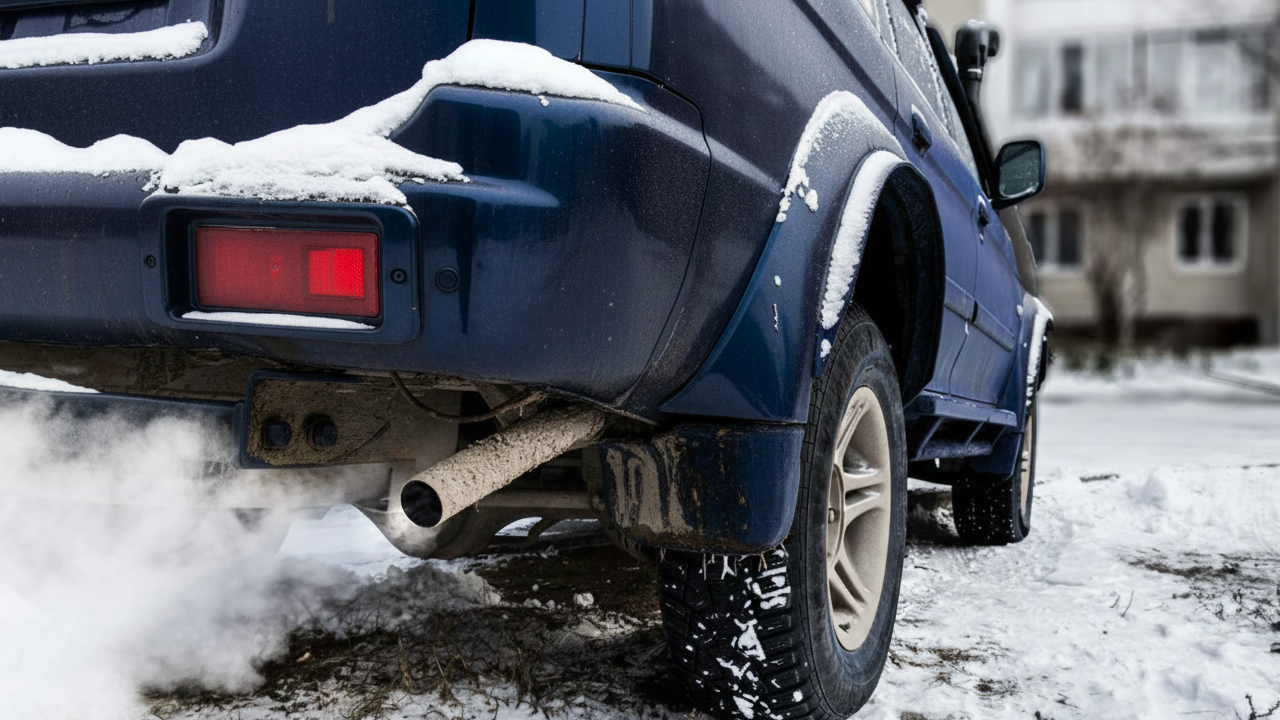
- Clear snow and ice from the hood, windows, mirrors, and especially the exhaust pipe to prevent exhaust gases from entering the cabin.
- Make sure the battery is charged. In very cold weather, briefly turn on the high beams for 15–20 seconds to “wake up” the battery.
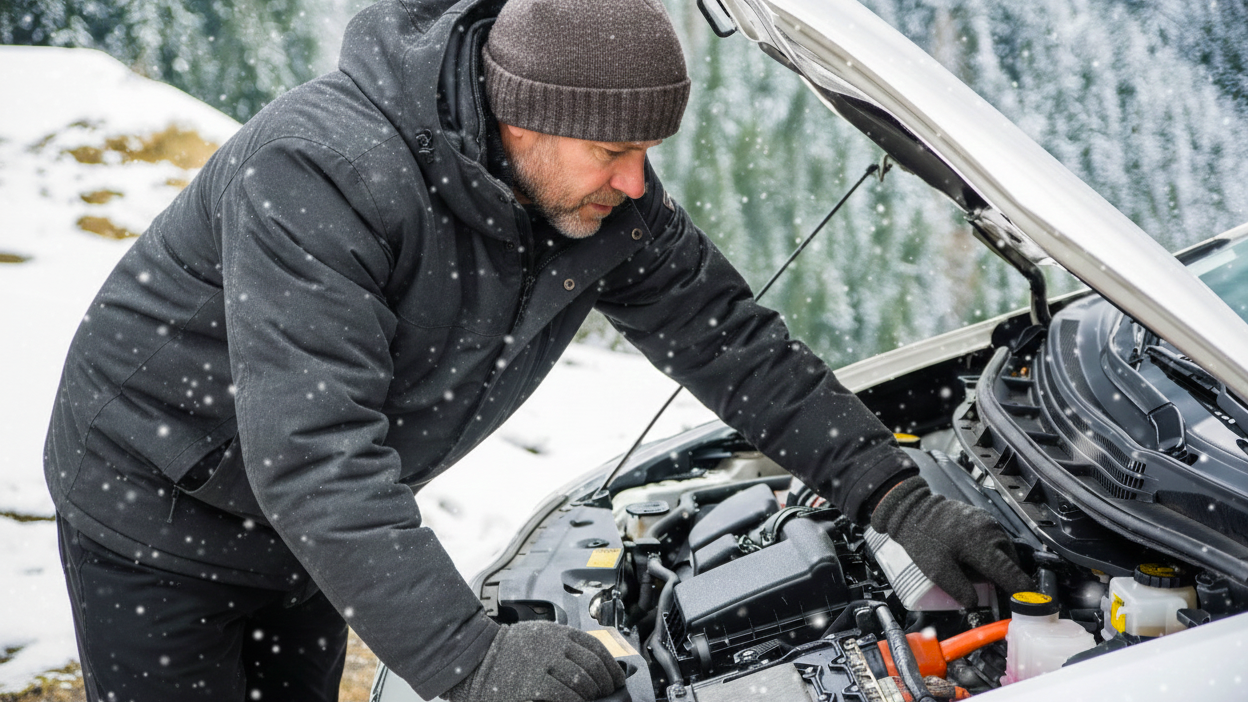
- Check oil and coolant levels. Low fluid levels can cause serious damage in freezing conditions.
Starting the Engine
Start the engine and let it idle for 30–60 seconds. This time is enough for oil pressure to stabilize and circulation to begin. Do not press the gas pedal — the ECU will automatically set elevated idle speed for a quick warm-up. Avoid revving a cold engine, since sudden pressure changes can stress seals and gaskets.
Beginning to Drive
Start moving smoothly without sharp accelerations. The ideal initial speed is up to 40–50 km/h (25–30 mph). Keep RPM moderate (below 2000–2500 rpm) for the first few minutes. For automatic transmissions, it helps to hold the selector in “D” or “R” with the brake pressed for 10–15 seconds before moving to let the system warm slightly. If your car has all-wheel drive, gentle movement helps evenly warm up the differentials and transfer case.
Warming Up on the Road
Engines warm up faster under light driving load than at idle, which also reduces wear. Cabin heat becomes fully effective within 5–10 minutes once coolant temperature rises. Turn on heating and defrost functions after the car starts moving or after minimal warm-up. Monitoring engine temperature indicators can help detect if the thermostat or cooling system is malfunctioning, which is vital in winter.
Warming Up Different Engine Types
Gasoline Engines
For modern fuel-injected gasoline engines, 1–2 minutes of idling is enough before driving. Make sure the temperature gauge starts rising gradually once you’re on the road. Avoid full-throttle driving until the engine reaches operating temperature.
Diesel Engines
Diesels are more efficient and thus warm up more slowly. Allow 2–3 minutes of idling before driving. Always use winter diesel fuel or anti-gel additives in freezing weather. Wait for the glow plug indicator to go out before starting — repeat the pre-heat cycle 2–3 times if necessary. A block heater is a great addition for diesel owners in cold regions, reducing engine stress during startup.
Hybrids and Electric Cars
In hybrids, the internal combustion engine warms up automatically as needed. Electric vehicles have no combustion engine and don’t require traditional warm-up, but their traction batteries may need pre-heating in extreme cold. This process is usually automatic or can be enabled manually. Proper battery warming helps maintain range and efficiency, and prevents internal resistance from rising sharply in sub-zero temperatures.
Common Warming-Up Mistakes That Harm Your Car

- Idling longer than 10 minutes wastes fuel. Extended idling accelerates wear and pollutes the environment without real benefit. Usually, 5–7 minutes in cold weather is sufficient.
- Revving the engine right after start-up. Avoid high RPM or hard acceleration until the engine reaches normal temperature.
- Turning on seat and window heaters immediately. Heavy electrical loads right after start strain the alternator and battery. Use these systems moderately in the first minutes.
- Using oil unsuitable for cold conditions. High-viscosity oil (e.g., 10W-40) in freezing temperatures leads to poor lubrication and faster engine wear.
- Ignoring frozen sensors or warning lights. Cold temperatures can cause false sensor readings; always wait a few seconds after startup to let the system stabilize before driving.
Tips to Extend Engine Life in Winter
Proper winter preparation is essential for maintaining vehicle reliability, ensuring engine longevity, and improving driving comfort in cold conditions. A combination of the right fluids, equipment, and habits can make a significant difference during freezing temperatures.
Use low-viscosity engine oil (e.g., 0W-30 or 5W-40) for easier cold starts
Choosing the correct oil for winter conditions ensures that it remains fluid even at very low temperatures. Low-viscosity oils allow the engine to turn over more easily on startup, quickly form a protective oil film on moving parts, and reduce wear during the critical first minutes after ignition. This also eases the load on the starter and battery, improving overall engine efficiency.
Add fuel conditioners to prevent condensation and fuel freezing, especially in diesel engines
During cold spells, water can accumulate in the fuel system due to condensation, which is particularly problematic for diesel vehicles. Frozen water or fuel crystallization can cause hard starting, unstable engine operation, or even blockages in the fuel lines. Fuel additives bind moisture, prevent ice formation, and improve fuel performance, ensuring stable engine operation in freezing temperatures.
Install a pre-heater or remote start system
Pre-heaters, whether electric or fuel-based, warm the engine before starting, eliminating the harsh effects of a “cold start.” This reduces engine wear, lowers fuel consumption, and provides a warm cabin immediately. Remote start systems offer similar convenience, allowing drivers to start and warm the engine from inside their home or office, ensuring the vehicle is ready to go when needed.
Park in sheltered or enclosed areas to preserve engine heat and minimize exposure to cold winds
Even small changes in parking habits can make a noticeable difference in cold weather. Parking in a garage, under a carport, or on the leeward side of a building helps retain residual engine heat and shields the vehicle from strong winds. This slows the cooling process, making morning starts easier and less stressful for all systems.
Keep tires properly inflated
Cold air causes tire pressure to drop, which negatively affects handling, braking, and fuel efficiency. Underinflated tires can compromise safety, especially during early morning drives on icy or snowy roads. Regularly checking and adjusting tire pressure ensures optimal traction, stability, and efficiency throughout the winter season.
By combining these measures—correct oil, fuel additives, pre-heating, smart parking, and proper tire care—you can significantly reduce winter-related issues, protect your engine and components, and enjoy safer, more comfortable driving in cold conditions.
Conclusion: Is It Important to Warm Up Your Car?
Modern vehicles with fuel injection and synthetic oils no longer need long idling before driving. The key rule for winter operation is simple — let the engine run for 30 seconds to 2–3 minutes for oil circulation and system stabilization, then start driving gently without high revs.
Following these science-based recommendations will significantly extend your engine’s lifespan, reduce fuel consumption, and minimize environmental impact — answering once and for all is it important to warm up your car in modern conditions. Proper warm-up is no longer about waiting endlessly in the driveway, but about giving your car just enough time to wake up before hitting the road.

