



Best Car Warranties of 2025: Comparison of the Strongest Coverage and Manufacturers

Buying a new car is always exciting. But once the euphoria of the new-car smell and glossy paint fades, reality kicks in. A modern vehicle is one of the most complex consumer products — thousands of parts, miles of wiring, countless electronic modules. What if something goes wrong? The “Check Engine” light suddenly appears, or a costly control unit fails? In that moment, the best car warranty from the manufacturer is no longer just a line in a brochure — it becomes your most important financial shield.
A strong warranty is not simply a promise of free repairs. It is full of confidence in product quality, backed by the manufacturer’s own money. It helps owners save on unexpected repairs and reduces the risks of ownership. In 2025, when technologies are becoming more complex and spare parts more expensive, choosing a vehicle with the best vehicle warranty is one of the most important factors when buying a car.
In this guide, we will break down the different types of coverage, present a detailed car warranty comparison, and answer the main question: what car manufacturer has the best warranty?
What a Car Warranty Includes
Manufacturer coverage is not a single package. It consists of several parts, each covering specific systems:
Type of Coverage | What It Covers | Average Industry Term |
Bumper-to-Bumper | Nearly everything, from electronics to suspension | 3 years / 60,000 km |
Powertrain | Engine, transmission, drive axles | 5 years / 100,000 km |
Battery (EV/Hybrid) | High-voltage battery, electric motors | 8 years / 160,000 km |
Corrosion Protection | Perforation rust of the body | 7–12 years |
Roadside Assistance | Towing, tire change, fuel delivery | 3–5 years |
- Bumper-to-Bumper – the most comprehensive, covering nearly all components except consumables like brake pads, filters, and tires.
- Powertrain – applies to the most expensive parts: engine, transmission, and drivetrain, with coverage that lasts longer than the base.
- Additional coverage – adds real value: EV battery service, perforation rust protection, and roadside assistance programs.
Leading Brands With the Longest and Most Generous Terms

Some automakers go further than others in the battle for consumer trust, offering record-breaking programs. The traditional leaders in this category are Korean manufacturers.
- Hyundai
- Terms: 5 years / 100,000 km bumper-to-bumper and 10 years / 160,000 km powertrain (U.S. and selected markets). In Europe – 5 years with unlimited mileage.
- Why it’s strong: Hyundai was one of the first brands to bet on long-term coverage to prove its reliability. Its program remains one of the most generous.
- Kia
- Terms: 7 years / 150,000 km (Europe). In the U.S. – the same 10 years / 160,000 km powertrain as Hyundai.
- Why it’s strong: Kia’s 7-year coverage in Europe is unique, protecting nearly every major component for an exceptionally long term.
- Genesis
- Terms: 5 years / 100,000 km basic, 10 years / 160,000 km powertrain, plus 3 years of free scheduled maintenance.
- Why it’s strong: Hyundai’s luxury brand combines long-term coverage with complimentary maintenance, lowering ownership costs.
- Mitsubishi
- Terms: 5 years / 100,000 km basic and 10 years / 160,000 km powertrain.
- Why it’s strong: Mitsubishi leverages extended coverage to highlight the reliability of its proven designs.
- Tesla
- Terms: 4 years / 80,000 km basic, plus 8 years / 192,000–240,000 km (depending on model) for batteries and motors.
- Why it’s strong: Tesla provides some of the longest protection for the most expensive EV components, ensuring long-term peace of mind.
European and American Brands With Strong Coverage

European and U.S. manufacturers often offer shorter terms but compensate with service quality and extras. A closer car warranty comparison shows the difference in approaches:
- Volkswagen: 4 years / 80,000 km in the U.S. plus 2 years of free maintenance. In Europe – 2 years with unlimited mileage.
- BMW / Mercedes-Benz: Standard 4 years / 80,000 km (U.S.) or 2–3 years (Europe), combined with premium service, courtesy cars, and roadside support.
- Jaguar / Land Rover: EliteCare program with 5 years / 100,000 km basic coverage and free maintenance — one of the strongest premium offerings.
- Chevrolet, Ford, GMC: Typically 3 years / 60,000 km basic and 5 years / 100,000 km powertrain, with a focus on pickups and SUVs.
Warranty Comparison 2025
Brand | Basic Warranty | Powertrain | Extra Benefits |
Kia (EU) | 7 years / 150,000 km | Included | 7 years roadside assistance |
Hyundai (EU) | 5 years / unlimited | Included | 5 years roadside assistance |
Genesis (US) | 5 years / 60,000 mi | 10 years / 100,000 mi | 3 years free maintenance |
Mitsubishi (US) | 5 years / 60,000 mi | 10 years / 100,000 mi | 5 years roadside assistance |
Tesla | 4 years / 50,000 mi | 8 years / 120,000–150,000 mi | Battery capacity coverage |
Jaguar | 5 years / 60,000 mi | Included | 5 years free maintenance |
BMW / Mercedes | 4 years / 50,000 mi | Included | 4 years roadside assistance |
Volkswagen (US) | 4 years / 50,000 mi | Included | 2 years free maintenance |
What to Check Before Choosing a Warranty

A warranty is one of the strongest selling points when buying a car. However, a long warranty period means little on its own unless you understand the terms, exclusions, and owner obligations. The details are what determine how well you are actually protected. Below are the key points you should pay close attention to.
1. Time and mileage: whichever comes first
Manufacturers almost always specify two limits: years and mileage. The warranty expires as soon as the first limit is reached. For example, “5 years or 100,000 km” means that if you drive a lot and reach the mileage limit within three years, the remaining two years will no longer apply.
This is especially important for:
- people who drive extensively for work;
- those who live outside the city;
- taxi drivers and delivery services.
If your annual mileage is high, relying only on the number of years is a mistake.
2. What is covered—and what is not: study the exclusions
A warranty is not a magic safety net that pays for every repair. Each program has its own list of exclusions, and it can be quite extensive.
Typically not covered:
- consumables and naturally wearing parts (brake pads, discs, tires, spark plugs, filters, clutch);
- damage caused by improper use (aggressive driving, non-approved fluids, overheating, missed maintenance);
- consequences of accidents or external factors (hail, corrosion from chemicals, non-factory modifications).
Some brands exclude expensive components such as automatic transmissions or turbochargers if there are signs of misuse. This is why it’s essential to know in advance which systems are fully protected and which may lead to disputes.
3. Warranty preservation requirements: your responsibility as the owner
To keep the warranty valid, manufacturers require owners to follow a number of rules—and these requirements should be taken seriously.
Typically, the owner must:
- follow the maintenance schedule strictly—not earlier and not later than the permitted intervals;
- use only recommended fluids (oils, coolants, transmission fluids);
- service the vehicle at authorized dealers or certified workshops to avoid disputes about repair quality;
- keep all documentation: service invoices, receipts, and work reports.
Failure to comply with any of these points can result in the manufacturer denying a warranty claim. Consistency and attention to detail are your best protection.
4. Warranty transfer to a new owner: crucial for resale
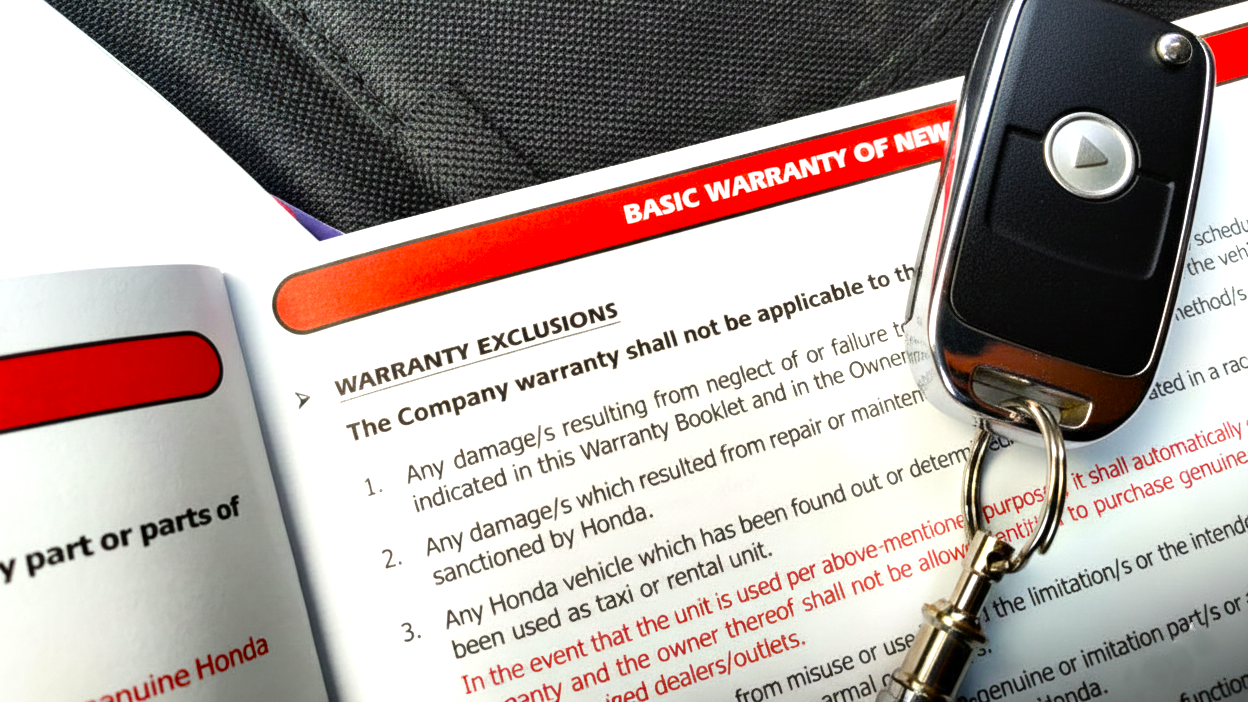
If you're buying a used car or planning to sell your vehicle in the future, it’s important to check whether the warranty transfers to the next owner. Most manufacturers allow full warranty transfer, which improves the car’s resale value and makes it more attractive on the market.
But there are exceptions. For example:
- In the United States, Hyundai and Kia’s 10-year powertrain warranty applies only to the first owner and is reduced for the second one.
Warranty rules may also differ from country to country, so it’s important to check the specific terms for both the brand and the market.
Extended Warranties and Additional Packages
After factory coverage ends, dealers often offer extended warranties. Deciding whether to buy one depends on your situation and the best warranty car for your needs.
- Worth it if: you own a complex premium model with lots of electronics, or plan to keep the car longer than 5–7 years.
- Not worth it if: you drive a highly reliable brand like Toyota or Lexus, or change cars every 3–4 years.
The Future of Warranties
Warranties will evolve along with the industry:
- EV coverage: will extend to battery capacity and charging performance.
- Software warranties: covering updates and autonomous features.
- Service subscriptions: combining maintenance, roadside help, and repairs into one plan.
Key Takeaways
So, what car manufacturer has the best warranty in 2025? The clear leaders are Hyundai, Kia, and Genesis, followed by Mitsubishi. In the premium class, Jaguar is the standout with its EliteCare program that combines coverage and free maintenance.
Still, don’t focus only on numbers. Read the fine print, evaluate local dealer networks, and remember: the best warranty is the one you never need to use. But its existence is the strongest signal of a manufacturer’s confidence in its product.
When comparing programs, look not only at the term length but also at what is actually covered. For example, bumper-to-bumper warranties usually exclude wear items, while powertrain coverage extends further but applies only to the most expensive mechanical parts. EV owners should pay special attention to battery coverage, as this is the single most costly component to replace.
Another factor is transferability. A warranty that can be passed on to the next owner increases resale value, while restrictions — such as limited coverage for second owners in some Hyundai and Kia markets — can affect long-term benefits. Dealer support also matters: a strong local network makes it easier to get repairs done quickly and reliably.
Finally, think about your ownership strategy. If you plan to keep a car for more than 7–8 years, the brand’s willingness to back long-term coverage becomes critical. If you change vehicles every few years, service extras like free maintenance or roadside assistance may bring more value than the length of the warranty itself.
In short, the best warranty car in 2025 is not only the one with the longest coverage on paper. It is the vehicle whose warranty program matches your driving habits, offers strong local dealer support, and protects the components that matter most throughout ownership.

