



Engine Types Explained: A Complete Guide to Modern Car Powertrains
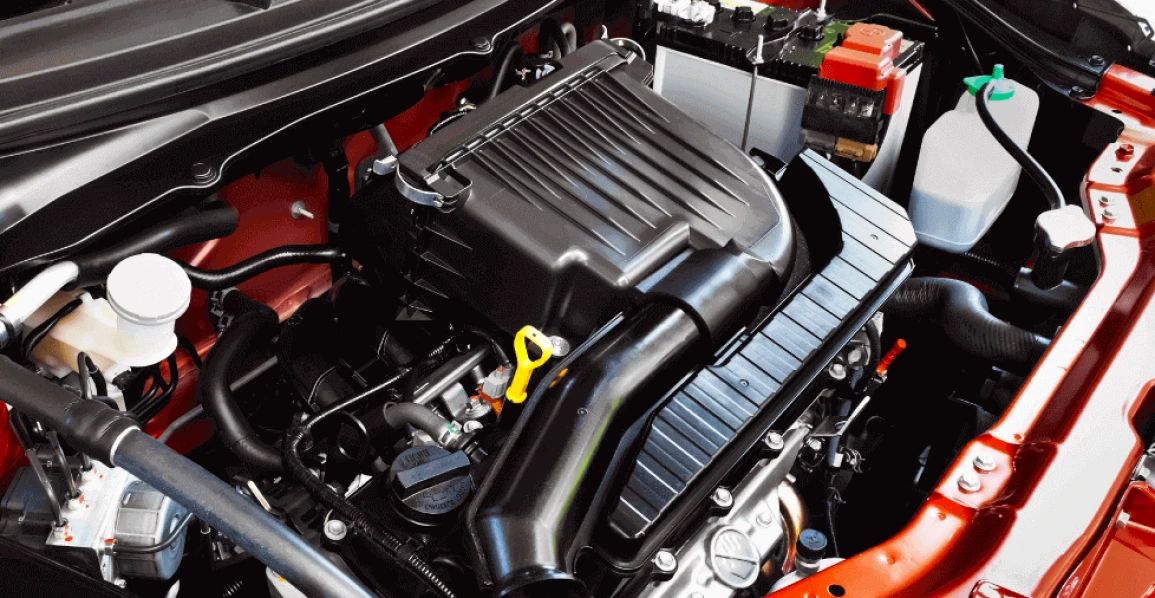
A car engine is the heart of a vehicle and its primary source of power. It determines how quickly a car accelerates, how much fuel it consumes, how it behaves in the city and on the highway, and how expensive it is to maintain. Understanding the different types of car engines helps you make a more informed purchase decision and avoid unnecessary expenses in the future.
Today, the market offers various engine types: gasoline, diesel, electric, hybrid, and even hydrogen-powered systems. Each option has its own characteristics, advantages, and limitations. One may be better suited for daily urban driving, another for long-distance travel or a more dynamic driving style. The engine type directly affects fuel consumption, performance, noise levels, environmental impact, and even taxation.
In this guide, we will break down the main categories of engines, explain how they work, and highlight their differences. Without unnecessary technical overload — so you can clearly understand the available engine types explained in practical terms and decide which one best suits your needs.
Main Classification of Car Engines
Modern car engines can generally be divided into five major categories: gasoline, diesel, electric, hybrid, and hydrogen powertrains. Despite their structural and operational differences, all of them serve the same purpose — converting energy from fuel or electricity into mechanical motion to move the vehicle.
Gasoline engines are the most common option in passenger cars. They operate by burning gasoline inside cylinders and are suitable for a wide range of uses, from city commuting to highway driving. They represent a versatile solution for most drivers.
Diesel engines rely on compression ignition rather than spark plugs. They offer higher torque and better fuel efficiency over long distances, which is why they are often found in SUVs, crossovers, and commercial vehicles.
Electric engines (BEV — Battery Electric Vehicle) run entirely on energy stored in a battery. These vehicles do not use a traditional internal combustion engine. They are ideal for urban driving, offer low operating costs, and produce no direct tailpipe emissions.
Hybrid vehicles (HEV — Hybrid Electric Vehicle) combine an internal combustion engine with an electric motor. The electric component helps reduce fuel consumption, especially in city driving. Plug-in hybrids (PHEV) can also be charged from an external power source.
Hydrogen vehicles (FCEV — Fuel Cell Electric Vehicle) use fuel cells to convert hydrogen into electricity. In essence, they are driven by an electric motor, but the energy source differs.
The choice of engine depends on driving habits and usage scenarios. For city driving, compact gasoline engines or electric vehicles are practical. For frequent long-distance travel, diesel engines may be more efficient. Hybrids provide a balanced solution between economy and versatility, while hydrogen remains a niche option in regions with developed infrastructure.
Gasoline Engines: Features and Variations
Gasoline engines remain the most widespread option in passenger cars. They are valued for versatility, smooth operation, and relatively simple maintenance. However, there are several technical variations within this category that significantly influence vehicle performance.
Naturally Aspirated vs. Turbocharged Engines
A naturally aspirated engine draws air into the cylinders without forced induction. These engines tend to have a simpler design, predictable power delivery, and lower sensitivity to fuel and oil quality.
A turbocharged engine uses a turbocharger to force more air into the cylinders. This allows a smaller engine to produce more power — a concept known as downsizing. Turbo engines can deliver strong performance with improved fuel efficiency under moderate driving conditions. However, they operate under higher temperatures and stress, making proper maintenance especially important.
Direct vs. Port Fuel Injection
With port fuel injection, fuel is sprayed into the intake manifold before entering the cylinders. This is a well-established and relatively simple system.
Direct injection delivers fuel directly into the combustion chamber. This allows more precise fuel control, improved efficiency, and often lower fuel consumption. However, the system is more complex and may require more attentive maintenance.
Pros and Cons of Gasoline Engines
Advantages:
- Wide availability and versatility
- Smooth and quiet operation
- Fast warm-up and good cold-weather performance
Disadvantages:
- Higher fuel consumption on highways compared to diesel
- Increased consumption under heavy load or aggressive driving
- Greater maintenance sensitivity in turbocharged versions
Overall, gasoline engines offer a balanced solution for everyday driving, particularly when comfort and dynamic performance are priorities.
Diesel Engines: Operating Principle and Advantages
Diesel engines differ from gasoline engines primarily in how fuel is ignited. Instead of spark plugs, diesel engines ignite fuel through high air compression. Air is compressed until it becomes extremely hot, and then diesel fuel is injected, causing it to ignite spontaneously. This process increases combustion efficiency and delivers strong torque at low engine speeds.
The main advantage of diesel engines is fuel efficiency, especially over long distances. For the same engine size, diesel typically consumes less fuel than gasoline on highways. Another key benefit is high torque, which provides strong pulling power, easier overtaking without high revving, and better capability for towing or carrying heavy loads. This is why diesel engines are common in SUVs and commercial vehicles.
Modern diesel engines are equipped with emission-reduction systems such as SCR (Selective Catalytic Reduction). These systems use a fluid like AdBlue (DEF) to reduce nitrogen oxide emissions. While this makes vehicles cleaner, it also adds maintenance requirements.
Diesel engines are particularly suitable for drivers who cover long distances regularly. However, they involve more complex emission systems and potentially higher maintenance costs compared to basic gasoline engines.
Electric Engines
Electric engines operate differently from internal combustion engines. Instead of burning fuel, they rely on electricity stored in a battery. The system works as follows: the battery sends electricity to an inverter, which converts direct current into alternating current, and then powers the electric motor that drives the wheels.
Electric vehicles typically do not have a conventional multi-speed gearbox. Electric motors deliver maximum torque almost instantly, allowing the use of a single-speed transmission. This simplifies the drivetrain and provides smooth, linear acceleration.
Key advantages include quiet operation, minimal vibration, and lower operating costs. Electric motors contain fewer moving parts compared to internal combustion engines, potentially reducing maintenance needs. They also produce no direct exhaust emissions.
Limitations include driving range and dependence on charging infrastructure. Charging time is significantly longer than refueling with gasoline or diesel, and real-world range depends on battery capacity and driving conditions.
Hybrid Powertrains
Hybrid vehicles combine an internal combustion engine with an electric motor. Their goal is to reduce fuel consumption and emissions without fully eliminating traditional fuel use.
In a parallel hybrid, both the engine and electric motor can power the wheels independently or together — the most common configuration. In a series hybrid, the electric motor drives the wheels while the gasoline engine acts as a generator. Combined systems switch between operating modes depending on driving conditions.
Hybrids are divided into HEV (Hybrid Electric Vehicle) and PHEV (Plug-in Hybrid Electric Vehicle). Standard hybrids charge their batteries through regenerative braking and engine operation. Plug-in hybrids can be charged externally, allowing short distances to be driven purely on electricity.
Hybrids are especially efficient in city traffic, where the electric motor handles low-speed driving. On highways, the combustion engine typically plays a larger role.
Classification by Cylinder Configuration
Engines also differ in cylinder arrangement, which affects size, balance, and performance characteristics.
Inline engines are the most common design, with cylinders arranged in a straight line. They are compact and suitable for mass-market vehicles.
V-shaped engines have two cylinder banks arranged at an angle. This design shortens engine length while accommodating more cylinders, commonly seen in V6 and V8 performance vehicles.
Boxer engines position cylinders horizontally opposite each other. This lowers the vehicle’s center of gravity and improves balance.
W engines are complex configurations allowing many cylinders in a compact space, typically found in high-performance luxury cars.
Rotary engines use a rotating rotor instead of traditional pistons. They are rare and unconventional compared to mainstream piston engines.
Two-Stroke vs. Four-Stroke Engines
Internal combustion engines are also categorized by their operating cycle.
A four-stroke engine completes intake, compression, power, and exhaust in four piston strokes. This provides cleaner combustion, improved efficiency, and better emissions control.
A two-stroke engine completes the cycle in two strokes. While simpler and capable of high power relative to size, it is less efficient and produces higher emissions.
Modern passenger cars almost exclusively use four-stroke engines due to durability, efficiency, and compliance with environmental regulations.
Modern Trends in Engine Development
The automotive industry is evolving under environmental regulations and technological innovation. Downsizing combined with turbocharging has become a standard approach to improving efficiency while maintaining performance.
Electrification is a major global trend. According to the International Energy Agency (IEA), global electric vehicle sales continue to grow rapidly, increasing their market share worldwide. Manufacturers increasingly offer multiple powertrain options for the same model.
Stricter environmental standards have led to advanced emission-control systems such as SCR for diesel engines and more sophisticated catalytic converters for gasoline engines.
Conclusion
Modern engine types differ significantly in design, operation, and ownership experience. Gasoline engines remain versatile, diesel engines excel in long-distance efficiency, hybrids offer a practical balance, and electric vehicles represent a shift toward new mobility models. Cylinder configuration, fuel injection systems, and forced induction also shape a vehicle’s character.
Choosing an engine is not about trends but about needs. It affects fuel economy, maintenance costs, comfort, and environmental impact. Understanding the differences between powertrains allows you to select a vehicle that truly matches your driving style and usage conditions. With all engine types explained, you can make a confident and informed decision.

