



How to Drive Safely at Night: Expert Techniques and Practical Guidance
Night changes the rules of the road. Familiar routes become unfamiliar, and other cars appear suddenly out of the darkness. Traffic police statistics are unforgiving – at night, the risk of being involved in a serious accident increases several times over. The reasons: limited visibility, the body's natural fatigue, and a general decline in concentration among all road users.
The ability to confidently handle a car in the dark is not an innate talent but a set of specific skills and rules. These rules are equally important for novices, taxi drivers, long-haul truckers, and everyday drivers heading home from work. Proper driving at night is the result of thorough preparation, sober calculation, and maximum concentration. In this article, we will detail how to make your nighttime journeys safe, comfortable, and predictable.
The Peculiarities of Night Driving
To drive safely, you must understand the challenges a driver faces in the dark. There are several categories of problems: physiological, psychological, and external risks.
Limited Visibility and Visual Physiology
Our eyes are not designed for darkness. The pupils instinctively dilate to capture more light, which reduces visual acuity. Peripheral vision, responsible for detecting threats from the side, deteriorates, creating a "tunnel vision" effect. The ability to accurately judge distances and the speed of objects drops significantly. Headlights illuminate only a narrow section of the road, leaving the shoulders, turns, and distant areas in a dangerous blind spot. Furthermore, color perception worsens in the dark, and a dark blue car on the shoulder can blend in with the black asphalt.
Fatigue and Drowsiness
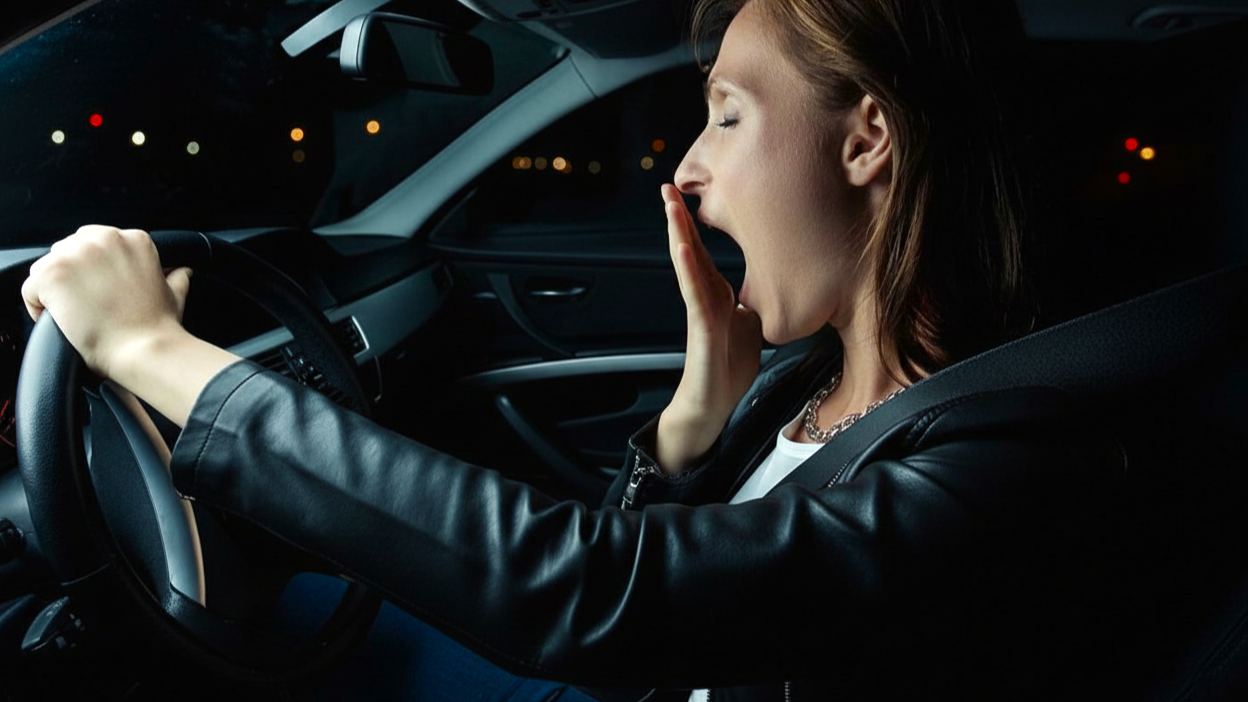
The human body operates on circadian rhythms. At night, it produces melatonin, the sleep hormone. Even if you feel alert after a cup of coffee, your reaction times are objectively slower, and your attention wanes. The greatest danger is microsleep. You can zone out for just 2-3 seconds without even realizing it. At a speed of 90 km/h (about 55 mph), a car travels over 70 meters (230 feet) without a driver in control during that time.
The Psychological Factor
Empty night roads can create a deceptive sense of freedom and safety. The reduced traffic can tempt drivers to speed, which becomes deadly in conditions of limited visibility.
Risks from Other Road Users
At night, there are more intoxicated or critically tired drivers on the road. The likelihood of encountering a pedestrian in dark clothing without reflective elements increases. Wild animals pose a separate danger. Their eyes reflect headlights, but their behavior is unpredictable. They might freeze in place or dart directly into your path.
Preparing Your Vehicle for a Night Trip
Your car must serve as your eyes and ears. An unprepared vehicle in the dark becomes a source of heightened danger, not just for you but for everyone around you.
- Check and Clean Your Lights. Ensure that your low beams, high beams, parking lights, brake lights, turn signals, and fog lights are all working. Your headlights must be crystal clean – a layer of road grime or film can absorb up to 50% of the light output, cutting your visibility in half.
- Ensure Clean Windows and Mirrors. A dirty windshield at night turns into a hazy screen that catches glare and scatters the light from oncoming headlights, creating blinding halos. Thoroughly clean the glass inside and out. The greasy film that builds up on the interior from plastic off-gassing and breathing is especially detrimental to visibility. Make sure your washer fluid reservoir is full and your wiper blades don't leave streaks.
- Proper Headlight Alignment. Improperly aimed headlights are a huge problem. If they point too low, you won't see hazards in time. If they are too high, you will constantly blind oncoming drivers, creating a dangerous situation for them and for you. Have your headlight alignment checked at a service center at least once a year, especially after changing tires or performing suspension work.
- Dashboard Illumination. The brightness of your dashboard lights should be comfortable. Light that is too bright can strain your eyes and prevent them from adjusting to the darkness outside the car. Dim the illumination to the minimum level necessary to read the instruments easily.
Personal Preparation of the Driver
Your condition is the most critical safety factor. Even a perfectly maintained car won't save you if the driver is tired, distracted, or under the influence of medication.
- Rest Before the Trip. Getting enough sleep is not a recommendation; it's a requirement. If you have a long night drive ahead, be sure to sleep for at least 6-7 hours before you leave. Never set out on a night journey after a long workday, hoping to get a "second wind."
- Proper Nutrition and Hydration. Avoid heavy, greasy, or high-carb meals before driving, as they can cause drowsiness. The best choice is light protein, vegetables, or fruit. Energy drinks provide only a short-lived, deceptive boost, followed by an even greater crash. Coffee helps, but in moderation. The driver's best friend is plain water.
- Medication. Carefully read the instructions for any medications you are taking. Many allergy, cold, or anti-anxiety drugs cause drowsiness and slow reaction times. Driving under their influence is as dangerous as driving intoxicated.
- Clothing and Footwear. Your clothes should be comfortable and not restrict movement. Your shoes should have a non-slip sole that is thin enough to feel the pedals properly.
- Psychological Mindset. Prepare yourself for a calm, non-aggressive drive. Night is not the time for speed records or sudden maneuvers. Remember that your main goal is to arrive at your destination safely. Useful driving at night tips begin with the right mindset for the process.
Safe Night Driving Techniques
You need to drive differently at night than you do during the day. This involves adjusting your speed, your following distance, and how you use your lights.
- Speed Management. The golden rule: your total stopping distance should never exceed the area illuminated by your headlights. You must be able to stop for a sudden obstacle that appears in your cone of light. On an unfamiliar road or in bad weather, reduce your speed by an additional 15–20 km/h (10-15 mph) from the posted limit.
- Distance and Spacing. Increase your following distance behind the vehicle in front of you. During the day, the three-second rule is recommended; at night, increase it to five or six seconds. This buffer will give you time to react to a sudden stop or maneuver. Stay farther from the shoulder, as that is where pedestrians, cyclists, or vehicles parked without lights may be.
- Use of Lights. High beams are your best friend on unlit roads, but they can also be a weapon if used improperly. Switch to your low beams at least 200 meters (about 650 feet) before an oncoming vehicle. Also, switch to low beams when you are catching up to a vehicle to avoid blinding the driver through their mirrors. After an oncoming car has passed, don't rush to switch your high beams back on-give your eyes a second to readjust.
- Navigating Turns and Intersections. Before entering a blind curve, slow down in advance and flash your high beams briefly to warn any potential oncoming drivers of your approach. Be doubly cautious at unregulated intersections, even when you have the right of way.
Applying these tips for driving at night will significantly increase your safety and predictability on the road.
How to Handle Dangerous Situations
The night is full of surprises. It is vital to know in advance how to act in a critical moment so your reflexes work correctly.
Being Dazzled by Oncoming Headlights
If you are blinded, never look directly at the headlights or try to "flash back" at the offender. Immediately shift your gaze to the right edge of the road, using the white line or the shoulder as a guide. Gradually reduce your speed without making any sudden steering movements. Once the oncoming car has passed, close your eyes for a second to help them recover faster.
Sudden Appearance of Animals
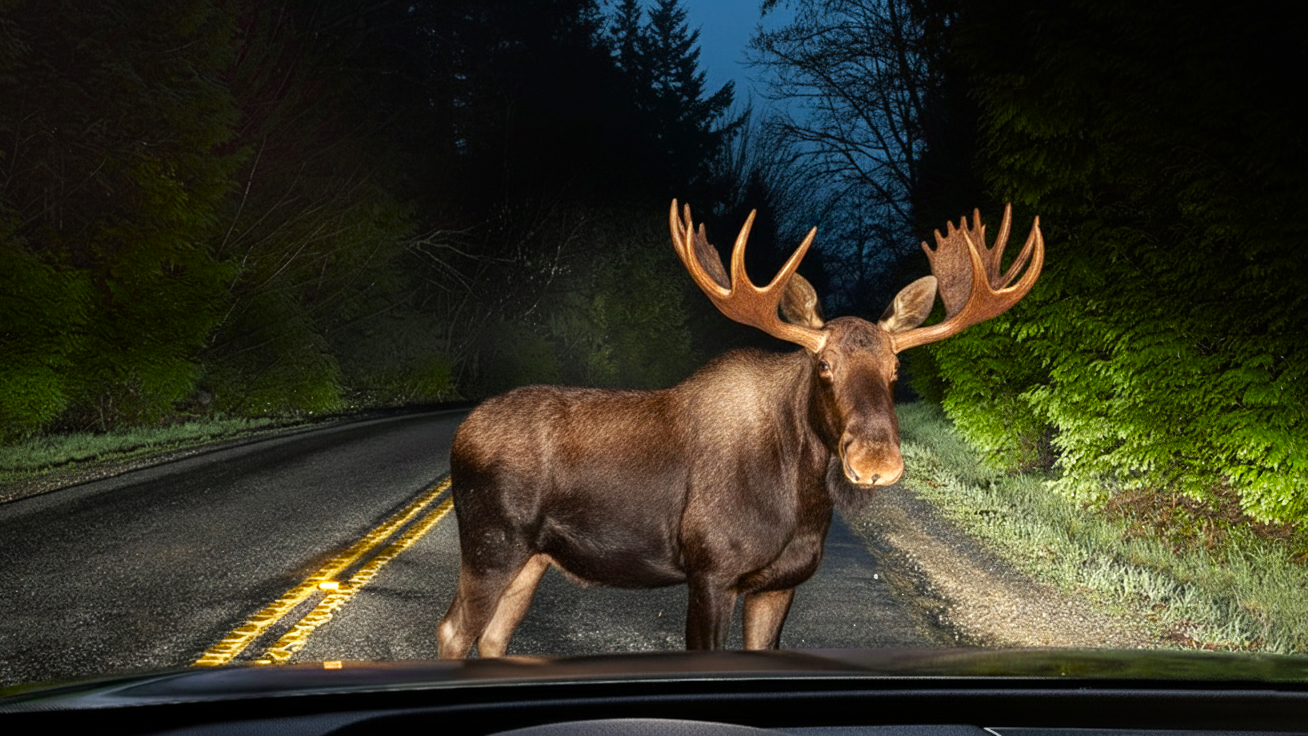
Braking is the top priority. Apply firm, emergency braking while keeping the steering wheel straight. Do not try to swerve around the animal. An instinctive jerk of the wheel can lead to a skid, running off the road, or veering into oncoming traffic, which is far more dangerous than hitting the animal (unless it's a very large one, like a moose or a cow).
Signs of Fatigue
If you feel your eyelids getting heavy, you're yawning frequently, or you can't focus your gaze, immediately find a safe place to pull over. Do not try to fight sleep with loud music or an open window. The only cure for sleep is sleep. A 15-20 minute nap can save your life.
Forced Stops
If your car breaks down, try to pull it as far onto the shoulder as possible. Turn on your hazard lights. Put on a reflective vest before exiting the vehicle. Place a warning triangle at least 30 meters (about 100 feet) behind your car. These rules are especially important if you are driving at night for the first time. Think through these scenarios in advance so you don't panic in a real situation.
Tips for Long Night Trips
Extended drives in the dark require special discipline and preparation.
1. Plan Your Route and Stops. Look at a map beforehand to identify well-lit gas stations or rest areas. Make regular stops every 1.5–2 hours for 10–15 minutes. Get out of the car, stretch, and splash some cold water on your face.
2. Prepare a "Night Kit". Your car should always contain:
- a bright flashlight (a headlamp is ideal to keep your hands free);
- a reflective vest for every person in the car;
- a supply of water and light snacks (nuts, dried fruit, dark chocolate);
- a fully charged phone and a portable power bank;
- a portable jump starter in case your battery dies.
Use Technology Wisely. Modern cars are equipped with driver-assistance systems: fatigue monitors, lane-keeping assist, adaptive cruise control, and automatic high-beam switching. Learn how to use them, but remember they are aids, not replacements for an alert driver. Do not trust them blindly. These simple night time driving tips will help you cover long distances without unnecessary risk and stress.
Conclusion: Concentration and Responsibility
Safe driving at night is the result of preparation, discipline, and utmost concentration. Every mile of the journey demands more attention from you than it does during the day. Your safety is a responsibility not only to yourself but also to your passengers and everyone else on the road.
Follow these simple rules, and prepare yourself and your car for every trip. By doing so, you will turn night roads from a source of stress into a calm and comfortable part of your journey.

