



How to Check Cyprus Camera Fines and Avoid Penalties

Driving in Cyprus requires attention not only to road signs but also to the island's network of speed cameras in Cyprus. These automated monitoring tools operate continuously across main roads and urban areas. This article explains what types of cameras are used, where they are typically installed, how violations are recorded, and how this enforcement affects drivers. Knowing the rules of this system is the best strategy to avoid misunderstandings and unexpected Cyprus camera fines.
The automated system enforces traffic laws without direct police intervention, affecting drivers in several key ways. Violations like speeding, running red lights, and using a mobile phone are detected and recorded electronically. Once a violation is captured, the registered vehicle owner will receive a fine by post, which includes photographic evidence. This automated process means that penalties are almost inevitable for detected offenses, emphasizing the need for constant compliance with traffic rules, even when no police are visibly present.
This guide is designed to help you navigate Cyprus's traffic enforcement landscape confidently. By understanding the different camera types (fixed, mobile, traffic light) and their common locations, you can be more aware of your driving behavior in high-risk zones. Clarifying the legal process for fines – how they are issued, challenged, or paid – prevents administrative headaches. Ultimately, this knowledge empowers you to drive within the law, budget accurately for potential penalties, and resolve any issues efficiently should they arise.
Types of Speed Control Cameras in Cyprus
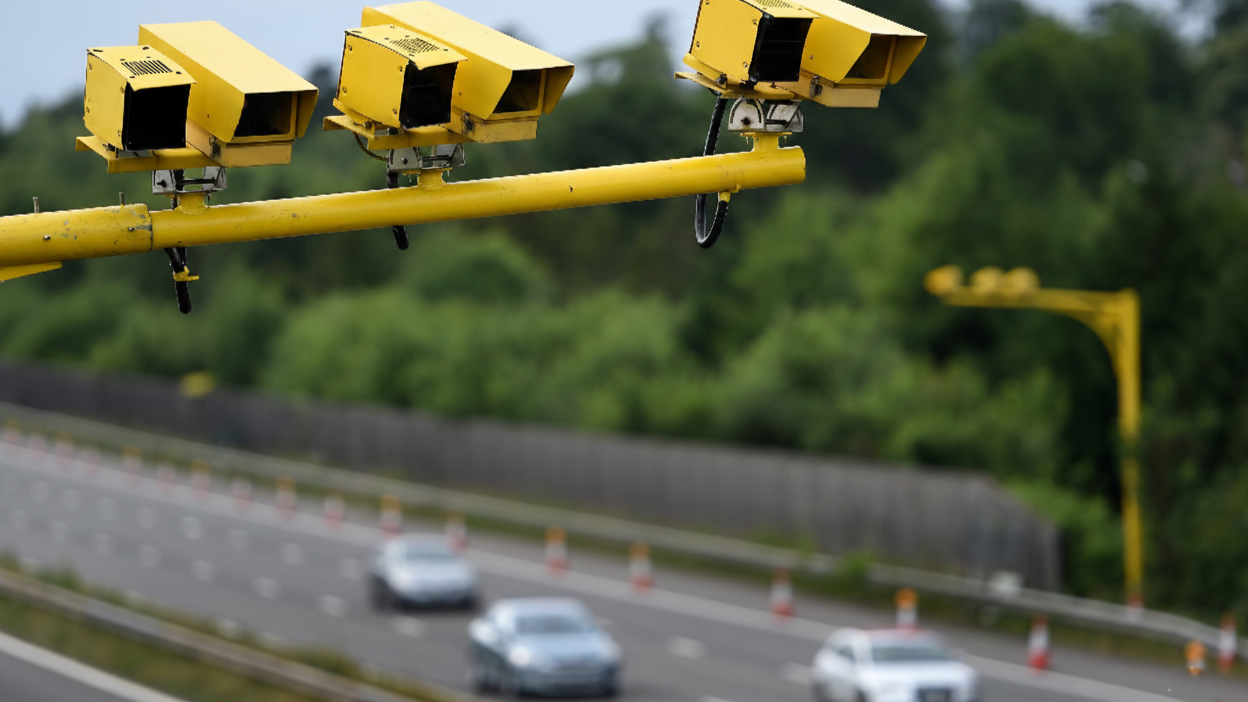
Several automated systems are used to monitor traffic violations in Cyprus. They differ by location and function.
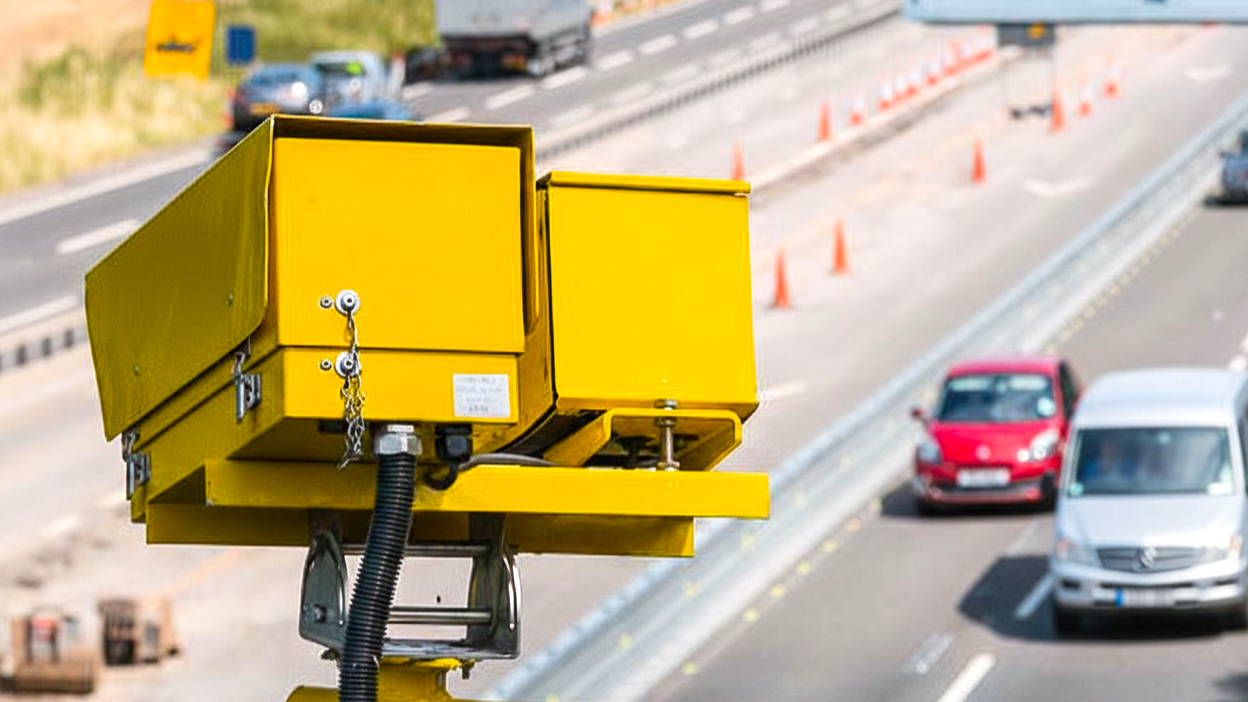
- Fixed radar cameras. These are the most visible devices, often mounted on tall poles or overhead road structures. They continuously monitor speed in specific areas.
- Mobile radar units. Police use portable devices or radars installed in patrol cars. They are placed on roadsides, bridges, or tripods, and their locations change frequently.
- Traffic light cameras (red light and speed). Installed at intersections, these record both running red lights and speeding when approaching traffic signals.
- Combined systems. Modern setups can monitor several violations at once – speed, red-light crossings, driving in bus lanes, and stopping beyond stop lines.
Each of these systems automatically generates digital evidence of the offense.
Where Speed Cameras Are Installed in Cyprus
Cameras are placed in areas with higher accident risks or frequent rule violations. The main control zones include:
- Highways. Cameras are often positioned at entrances and exits of major cities such as Limassol, Nicosia, Paphos, and Larnaca, as well as on long straight stretches where drivers tend to speed up.
- Urban streets and residential areas. Special attention is given to zones near schools, hospitals, and pedestrian crossings, where speed limits are strict.
- Roundabouts and complex intersections. Cameras record failure to yield, incorrect lane use, and excessive entry speed.
- High-accident locations. Traffic police analyze statistics and install cameras on dangerous curves, downhill sections, and historically risky roads.
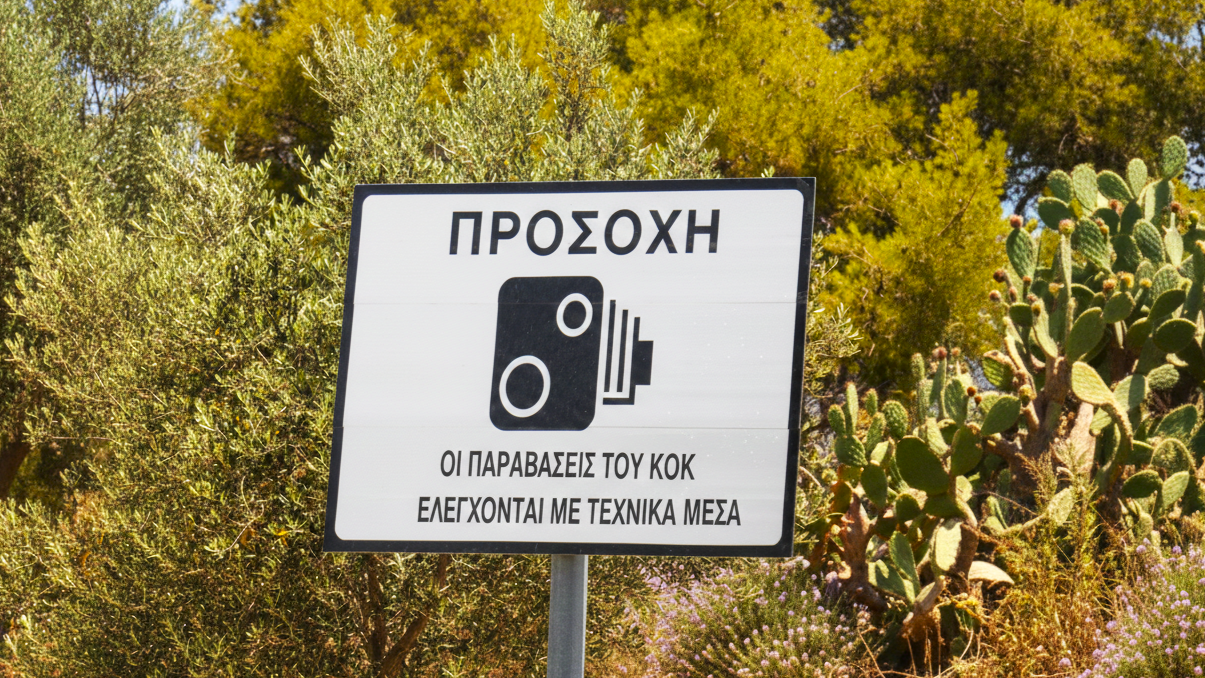
It is important to note that warning signs for cameras are not always present.
How Cameras Record Violations

Understanding the process helps eliminate doubts about the accuracy of fines. Everything happens automatically.
Step 1: Speed measurement. Cameras use radar or laser beams to calculate vehicle speed based on signal reflection.
Step 2: Error margin adjustment. A technical tolerance (usually around 5 km/h) is applied. Fines are issued only when the excess speed exceeds this allowance.
Step 3: Vehicle identification. High-resolution cameras take one or more photos clearly showing the license plate. Modern systems can read plates even at night or at high speeds.
Step 4: Evidence creation. The violation file usually includes:
- a close-up photo of the license plate,
- a wider photo showing the road situation,
- exact data: date, time, location, recorded speed, and permitted speed,
- sometimes a short video clip.
This information forms the official proof, which is very difficult to challenge unless there is a clear error (such as an unreadable plate).
How to Check and Pay Camera Fines in Cyprus

If a camera records a violation, the fine is sent by post to the registered address of the vehicle owner. However, you do not have to wait for the letter – you can check cyprus camera fines yourself at any time.
Official online service – JCC Smart. This is the main government portal for fine checks and payments.
- Go to the JCC Smart website.
- Find the section related to traffic police or fines (usually labeled Traffic Fines or Contraventions).
- Enter your Vehicle Registration Number.
- The system will display all unpaid fines, including the date, location, and type of violation.
This process is the most reliable cyprus camera fines check method and is exactly how to check camera fines in cyprus online.
Alternative options:
- visit a traffic police office in person,
- check through some banks (certain mobile banking apps and payment terminals allow fine lookup by vehicle number)/
You can pay fines directly on the JCC Smart portal, via a banking app, or at a bank branch. It is important to complete payment within the deadline stated in the notice to avoid penalties and increased charges.
Practical Tips to Avoid Camera Fines in Cyprus
Follow these simple recommendations to reduce your risk of violations:
- Carefully read road signs. Pay attention not only to speed limits but also to additional plates that may indicate a monitored zone.
- Keep speed low in urban areas. In residential neighborhoods and near schools, limits are often 30–50 km/h, and cameras are very common.
- Be extra alert when leaving a city for a highway and when entering a town. Speed limits often change sharply in these areas, and cameras are usually installed there.
- Use navigation apps. Services like Google Maps and Waze often warn about fixed speed cameras cyprus drivers report.
- Do not rely solely on radar detectors. Their legality may be limited, and they are often ineffective against modern camera systems.
Regularly checking fines through official channels helps you stay informed and avoid unpleasant surprises.
Cameras Record More Than Just Speed
Modern camera systems in Cyprus are designed to detect several types of violations at once, improving overall road safety.
- Running a red light. Intersection cameras capture a sequence of images showing the vehicle crossing the stop line after the signal turns red – one of the most dangerous offenses.
- Not wearing seat belts. High-resolution systems can analyze images and detect whether the driver or front passenger is unbelted.
- Using a mobile phone while driving. Image recognition identifies the typical gesture of holding a phone near the ear or steering wheel.
- Crossing the stop line. Even if the vehicle stops but passes the marked stop line at a red light, the camera may register it as a violation.
So even when driving within the speed limit, it is essential to follow all other traffic rules.
How and when a fine arrives

After a violation is recorded, the data goes through official processing. The notification procedure usually follows standard stages.
- Processing time: typically, it takes between 2 and 8 weeks from the date of the violation to receive the notice by mail. This period covers data verification, vehicle registration checks, and letter preparation.
- Delivery method: the official Contravention Notice is sent by registered mail to the address listed in the vehicle registration records. It includes photos, location, time, type of violation, and the fine amount.
- If the letter never arrives: mail can sometimes be lost or sent to an incorrect address. However, responsibility still lies with the vehicle owner. That is why regular online checks through JCC Smart using your registration number are strongly recommended. Not receiving the notice does not cancel the obligation to pay the fine.
Speeding Fine Scale in Cyprus
The size of a fine in Cyprus depends directly on how much you exceed the allowed speed limit. In addition to financial penalties, the penalty point system also applies.
Below is an approximate fine structure (always check official sources for current rates):
Speed limit exceeded | Approximate fine (€) | Penalty points |
Up to 30% over the limit | 25–40 | 2 |
30% to 50% over the limit | 40–80 | 3 |
More than 50% over the limit | 100+ | 4 + possible court case |
Penalty points are added to your driving record. If you reach 12 points within three years, your driving license may be suspended. Repeat violations within a year often result in significantly higher fines.
Step-by-Step Actions After Receiving a Camera Fine
Once you receive a fine notice, it is important to act in order to avoid complications.
1. Check the details. Carefully review the photos and information in the notice. Make sure it shows your vehicle, the license plate is clear, and the date, time, and location are correct.
2. Pay the fine within 30 days. Payment methods usually include:
- online via JCC Smart,
- internet banking,
- any bank branch,
- post office.
3. Appeal if necessary. If you believe the fine was issued in error:
- submit a written objection to the local traffic police department within 15 days,
- attach evidence supporting your claim (for example, proof that the vehicle was elsewhere at the time).
Be aware that appeals take time. If your claim is rejected, the standard payment deadline may already have passed.
Common Driver Mistakes Near Speed Cameras
Some actions not only fail to prevent fines but also create safety risks.
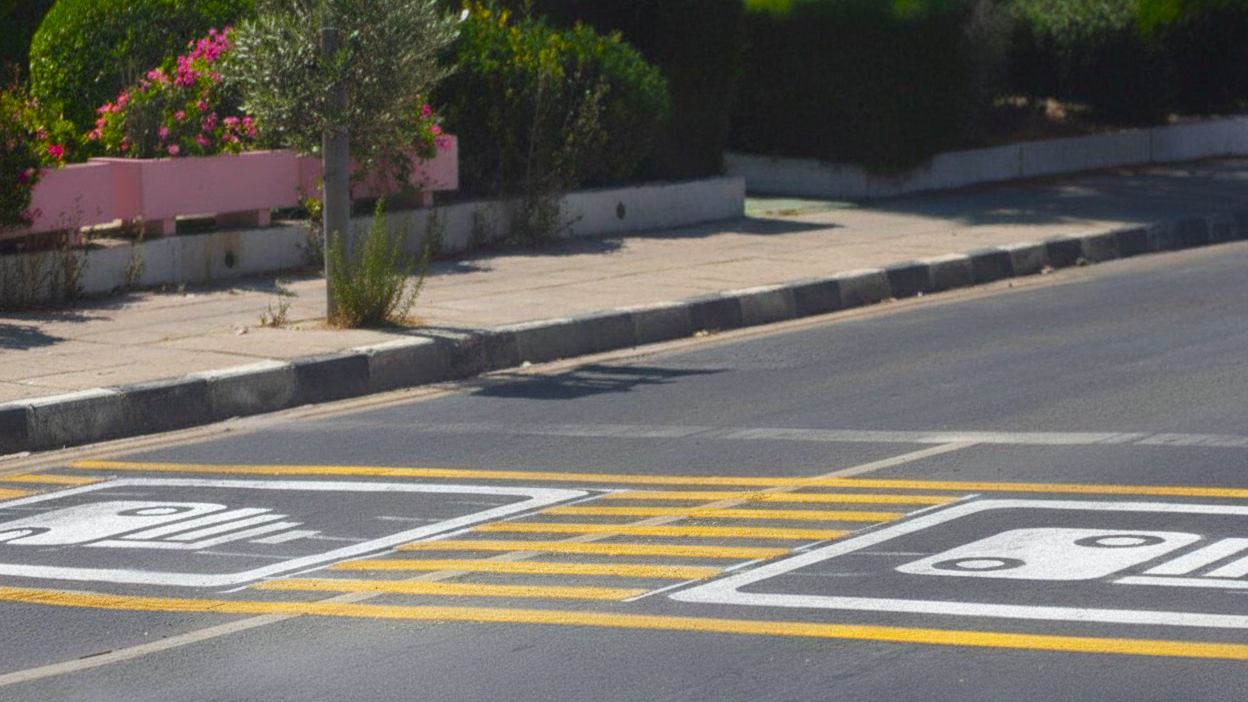
- Sudden braking right before a camera. This is the most frequent and dangerous mistake. It increases the risk of rear-end collisions. In addition, many systems measure average speed over a road section, so slowing down at one point does not help.
- Misreading speed limit signs. Drivers sometimes follow outdated signs or miss speed changes. For example, after leaving a built-up area, the limit may automatically increase from 50 km/h to 65 km/h, and then to 100 km/h on highways.
- Ignoring time-based limits. Some signs – especially near schools – apply only during specific hours (such as 7:00 to 13:00). Driving faster during these periods can still be recorded by cameras.
Camera Fines When Driving a Rental Car in Cyprus
If you are driving a rental vehicle, the fine process has a few important differences.
- Processing chain. The initial fine notice is sent to the rental company as the legal owner of the car. Under the rental agreement, the company provides your details to the authorities, and the fine is then transferred to you.
- Administrative fees. Most rental agencies charge a non-refundable administrative handling fee for processing the fine. This usually ranges from €15 to €50 in addition to the fine itself.
- Practical advice for tourists. When collecting the car, ask about the company’s fine policy. If you think you may have violated a rule, do not wait for a paper notice – you may not receive it in time. About 3–4 weeks after your trip, check for fines online on the JCC Smart website using the rental car’s registration number and pay directly to avoid extra charges from the rental company.
Effective Strategies for Fine-Free Driving in Cyprus

- Stick to the posted speed limits all the time – not only when you spot a camera. This is the main rule. On motorways, use cruise control to maintain a steady legal speed.
- Enable camera alerts in your navigation app (Waze, Google Maps). This helps you anticipate changes in traffic conditions. However, do not rely on apps 100% – always follow road signs first.
- Be especially attentive to speed limit signs when entering and leaving towns and villages. These are the areas where limits change most often and where cameras are most commonly installed.
Conclusion
Speed cameras in Cyprus are a technological part of the broader road safety system. Their main purpose is to improve driver discipline and reduce accidents, especially in urban areas and high-risk zones.
Understanding how and where these cameras operate helps you move from simply fearing fines to following the rules consciously. This turns driving from a stressful experience into a predictable and safe routine. A key part of this confidence is knowing exactly how to check camera fines in Cyprus, which allows you to address any issues promptly and avoid additional penalties.
Focus on consistent speed control, use technology as a helpful tool, and always pay attention to up-to-date road signs. With this approach, your trips around Cyprus will be remembered for pleasant experiences, not unexpected Cyprus camera fines.

