



What Is a Handbrake and How It Protects Your Car
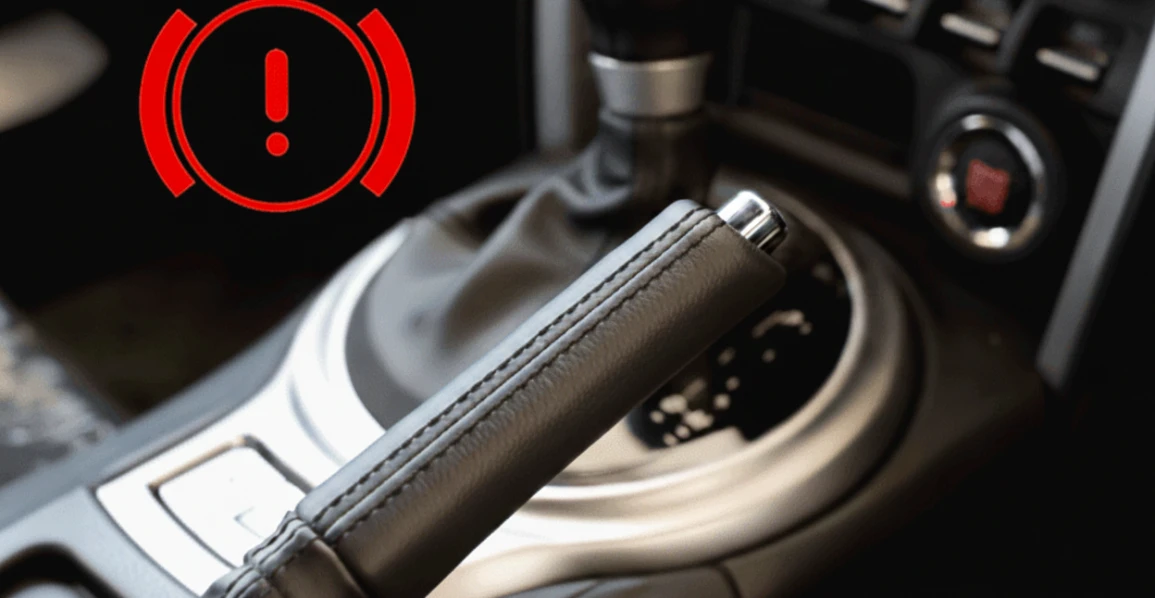
That quiet click when you pull a lever or press a small button might seem like nothing – just a habit before leaving the driver’s seat. But that sound is your car’s promise that it will stay right where you left it. The parking brake is one of the simplest and most overlooked safety features in any vehicle.
Ask ten drivers what that lever does, and half of them will call it “the emergency brake,” while others will say it’s just for parking. Both are only partly right. The system’s job is not to stop a speeding car, nor to decorate the center console – it’s there to lock the vehicle still, even when every other system takes a break.
The truth is, most drivers use this mechanism automatically without really understanding it. And that’s fine – until the day you park on a slope, or your brakes fail, and you realize this small device has the final word in control.
What Is a Handbrake and Why Do You Need It
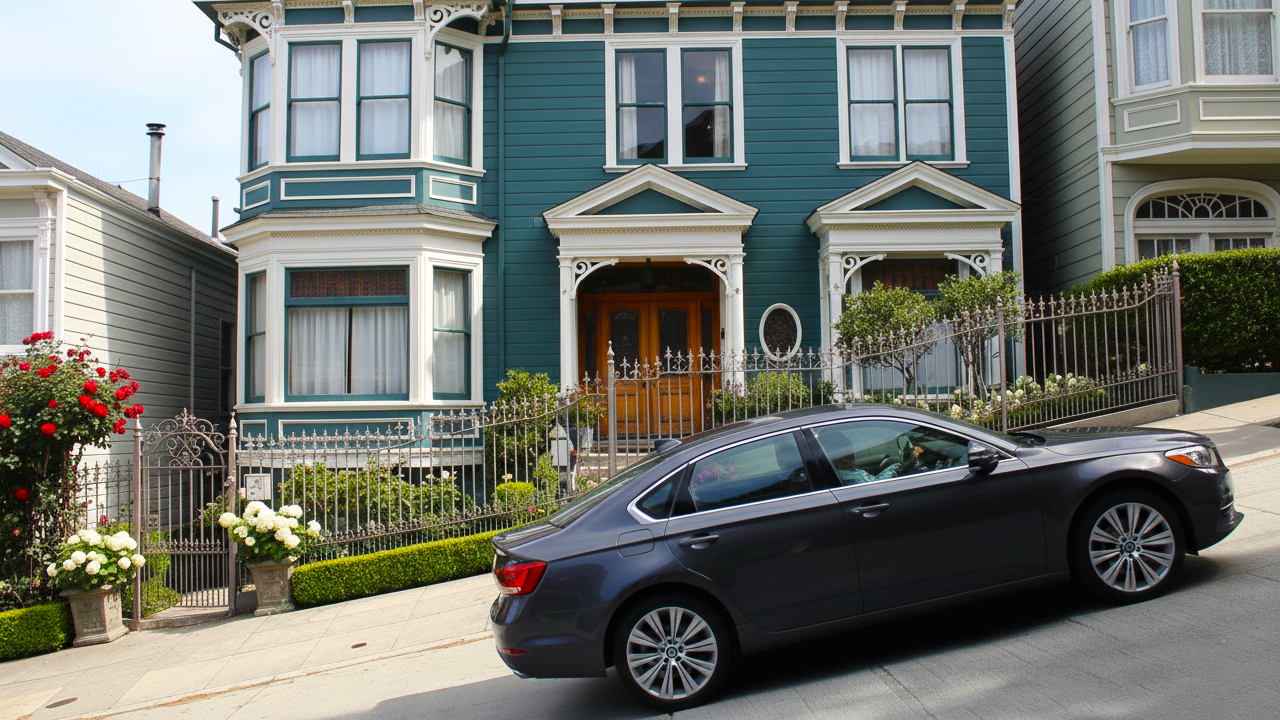
If you strip a car down to its essentials, it needs only three things to stay put: traction, gravity balance, and the brake that holds it. The lever (or button, in modern models) controls a secondary braking circuit that works independently of the main hydraulic one. When you engage it, it physically locks the rear wheels through a cable or an electric motor.
The main job is simple – prevent movement. Parked on a hill, at a red light, or in your driveway, it ensures the car doesn’t roll a centimeter. But there’s a bit more to it than that.
Hidden Roles You Might Not Notice
- It helps you start on an incline without rolling backward – especially in a manual transmission.
- It acts as a mechanical backup if the primary brake line fails.
- In some sports cars, it even assists in precise cornering maneuvers (though that’s not for daily use).
While the service brakes rely on hydraulic pressure, the secondary system depends on raw mechanical force. That’s why it can still work if your car loses power or fluid – a small but crucial insurance policy for every trip.
Your main brakes are built for stopping momentum; this one is built for holding still. Think of it like comparing running shoes to climbing gear – both deal with friction, but in completely different ways.
Types of Handbrakes
Mechanical Handbrake
This is the classic lever-style brake – the one most of us pull upward with a satisfying click. It works via a steel cable that connects the lever to the rear brake mechanism. When you pull the lever, the cable tightens and forces the brake shoes or pads against the wheel.
Advantages:
- Simple design, easy to repair.
- Works even with no power or hydraulic pressure.
- Offers tactile control – you feel exactly when it engages.
Drawbacks:
- Requires periodic adjustment as the cable stretches.
- In winter, moisture in the cable can freeze.
- Physically demanding for some drivers.
Electronic Parking Brake (EPB)
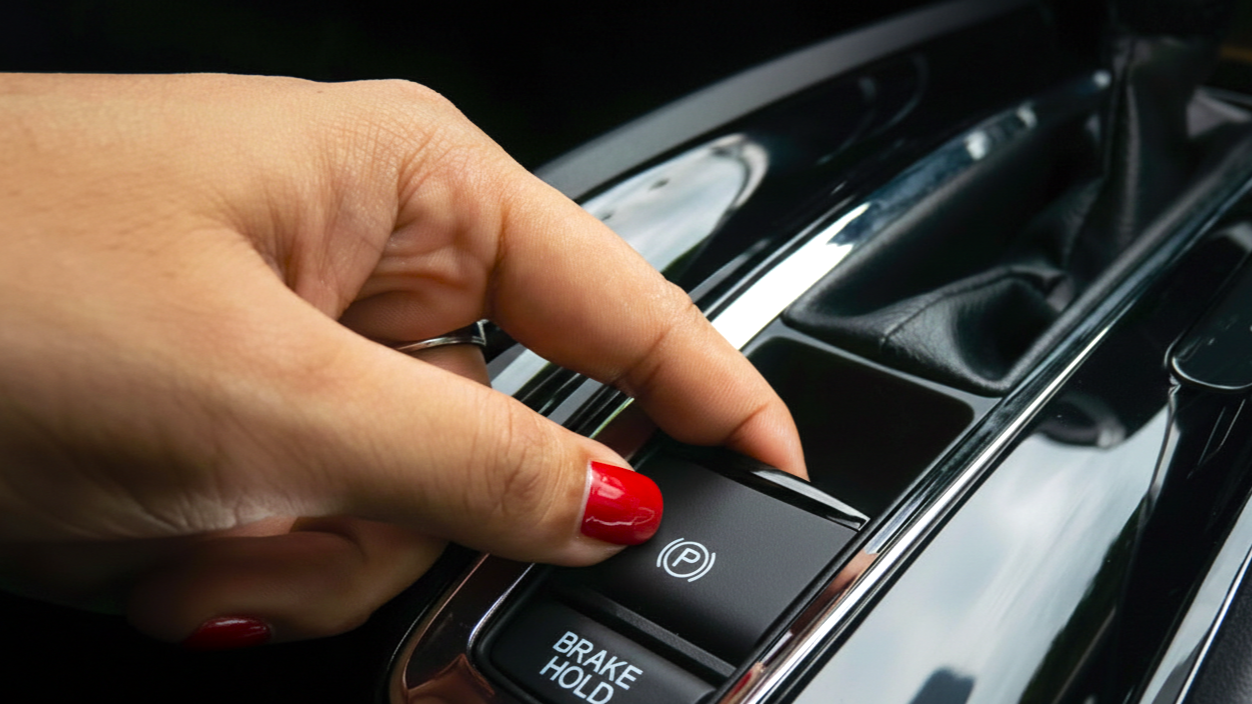
Modern vehicles increasingly use EPB systems instead of a traditional lever. A small button replaces the lever, and electric motors clamp the rear brakes.
Pros:
- No physical effort.
- Integrates with safety systems like Auto Hold, ABS, and stability control.
- Automatically activates when you park or switch off the engine.
Cons:
- More expensive to repair.
- Relies on electrical power – a dead battery can cause trouble.
- Lacks the mechanical “feel” of engagement.
Foot-Operated Handbrake
Common in American sedans and large SUVs, this version uses a pedal on the far left of the driver’s footwell. You press it to engage and press again to release. It saves space on the center console but can be confusing for drivers used to the hand lever. To identify which type your car has, check the owner’s manual or look for visual cues: a lever between the seats, a pedal under the dashboard, or a “P” button near the gear selector.
How Does a Handbrake Work
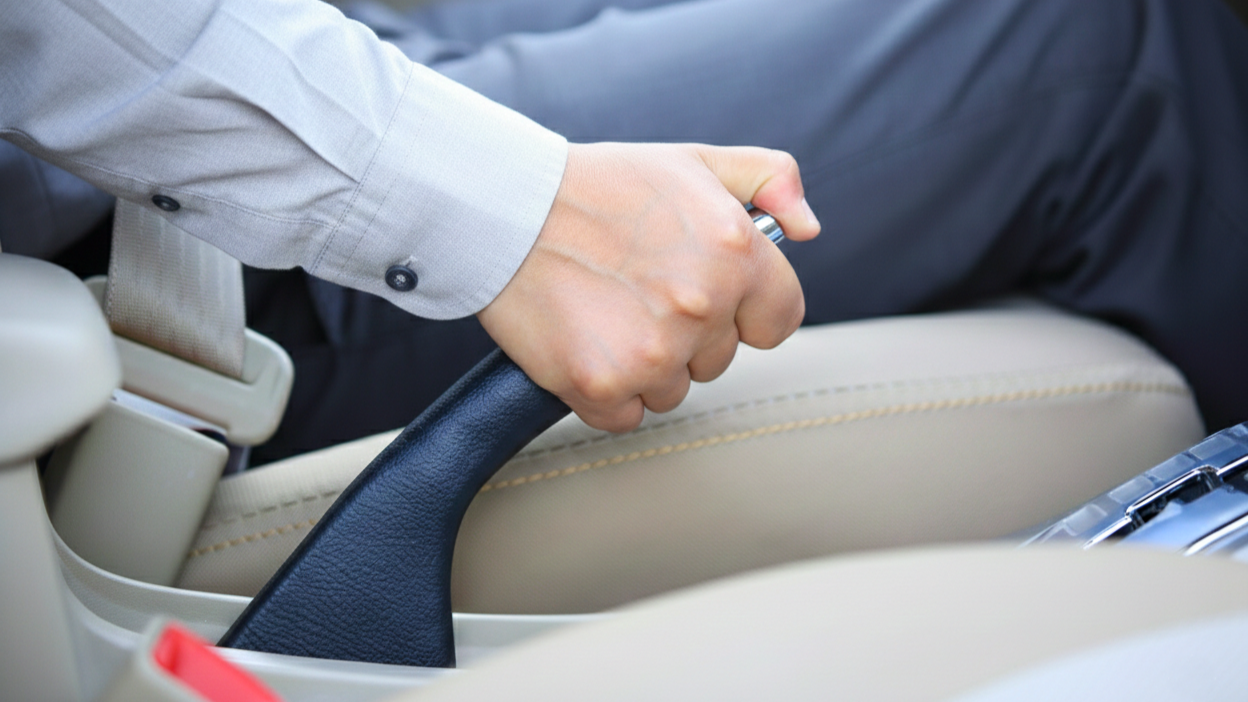
Regardless of type, all parking brakes serve one function – to hold the rear wheels still. When engaged, the system locks the wheels mechanically or electronically.
Mechanical System
Pulling the lever tightens the steel cable. This tension forces brake shoes inside the drum (or pads in the caliper) to press against the wheel surface. The resulting friction prevents rotation – your car stays put.
Electronic System
In EPB systems, electric motors in each rear caliper replace the cable. When you press the button, a control unit activates these motors, clamping the pads automatically. Sensors confirm that the system is fully engaged.
How It Differs by Drivetrain
- Front-wheel drive: Rear brakes are purely for parking; most braking power remains up front.
- Rear-wheel drive: The handbrake locks the driving wheels, so it’s stronger – and riskier to use while moving.
- All-wheel drive: Systems are electronically balanced to prevent stress on the driveline.
In short, the handbrake is a mechanical safeguard independent of your car’s primary braking system – simple in purpose, vital in effect.
How to Use the Handbrake Properly

Most drivers pull the lever or tap the switch without a second thought. Yet the way you apply and release this system decides whether it quietly protects the gearbox or slowly destroys it. Let’s walk through everyday situations and see how to do it right.
When You Park on Level Ground
- Keep your foot on the main brake.
- Select neutral on a manual or “P” on an automatic gearbox.
- Set the parking brake with steady pressure, not a sharp tug.
- Only then ease off the pedal and switch off the ignition.
That simple order of actions keeps the weight of the car on the brake mechanism rather than the transmission locks, which were never meant to carry a full vehicle load.
Stopping on a Slope
Gravity loves to test drivers. The trick is to let the car lean safely against the curb, not fight to roll away.
- Facing uphill? Turn the front wheels out from the curb.
- Facing downhill? Turn them in. Always activate the brake before you release the pedal, and if you drive a manual, leave the gear engaged opposite to the direction of the slope.
Starting on an Incline
Manual-transmission drivers know the nervous feeling of rolling backward. The cure is a smooth hand-over between the two systems.
- Hold the car with the parking brake.
- Find the clutch’s bite point so the car begins to pull forward.
- Increase the throttle and lower the lever gradually.
This small coordination exercise prevents rollbacks, saves the clutch, and keeps traffic behind you calm.
If the Main Brakes Fail
A mechanical brake can still bring you home safely, but it must be handled with finesse. Apply it little by little so the rear wheels slow down evenly. A sudden pull will lock them and send the car sideways. In vehicles with electronic controls, pressing and holding the “P” button tells the computer to apply braking force progressively–almost like a built-in rescue mode.
Extra Tip
After a rainy or snowy drive, moisture can freeze the cables overnight. If you park for a long time in cold weather, rely on the gearbox and wheel position instead. It’s easier to chock a wheel than to unstick a frozen brake at dawn.
Common Driver Mistakes
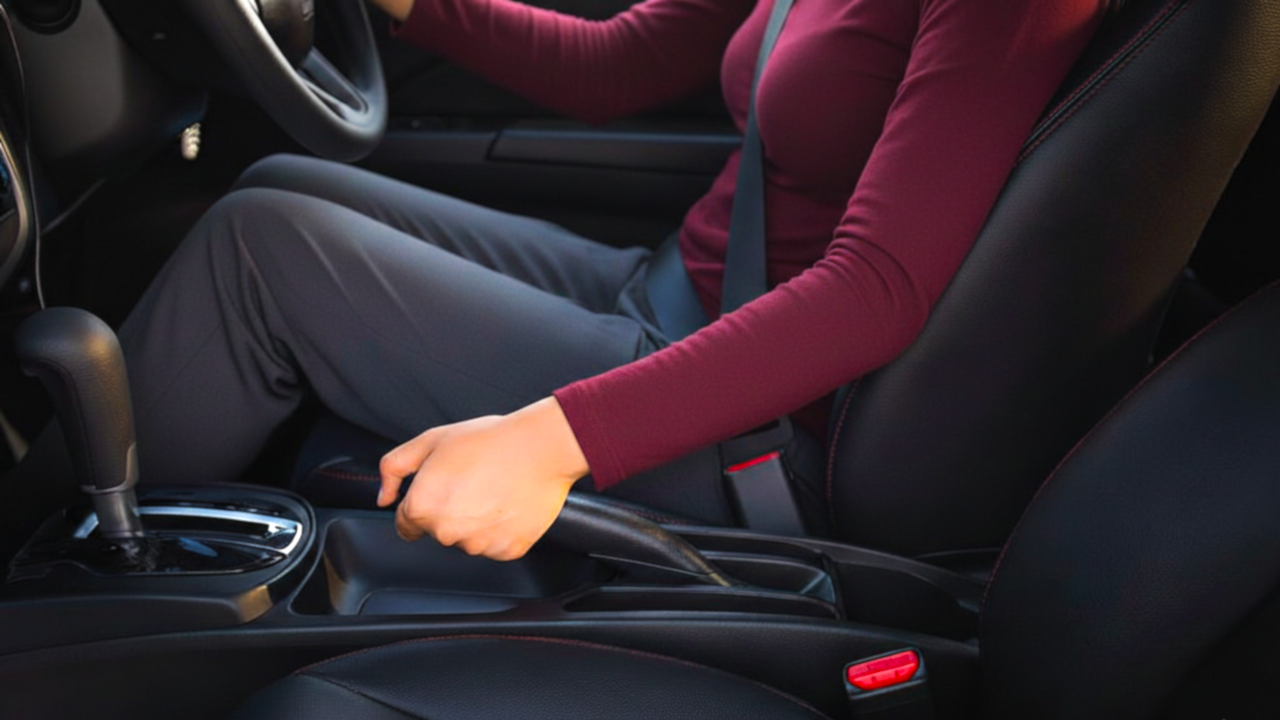
Even experienced drivers misuse the handbrake in the car. These are the most frequent errors:
- Pulling too hard – stretching the cable unnecessarily and risking breakage.
- Driving with the handbrake on – causes overheating and premature wear of brake pads or shoes.
- Using it for stunts – pulling the handbrake to “drift” might look fun, but it damages tires and rear axles.
- Leaving it engaged for days in winter – moisture can freeze the components, locking the wheels solid.
Remember: the handbrake is a safety tool, not a toy.
Using the Handbrake in Winter
Cold weather brings unique challenges for the braking system. When temperatures drop below freezing, moisture can freeze inside cables or around the brake shoes, making it impossible to release the lever.
To prevent freezing:
- Avoid applying it overnight in sub-zero conditions.
- Instead, park in gear (manual) or “P” (automatic).
- If necessary, move the car slightly after applying the brake to relieve tension.
If your handbrake in the car is already frozen, don’t force it – warm the area or let the car idle until it releases naturally. For cars with EPB systems, ensure the battery is healthy, as low voltage can prevent disengagement in cold weather.
Electronic Handbrake: Features and Tips
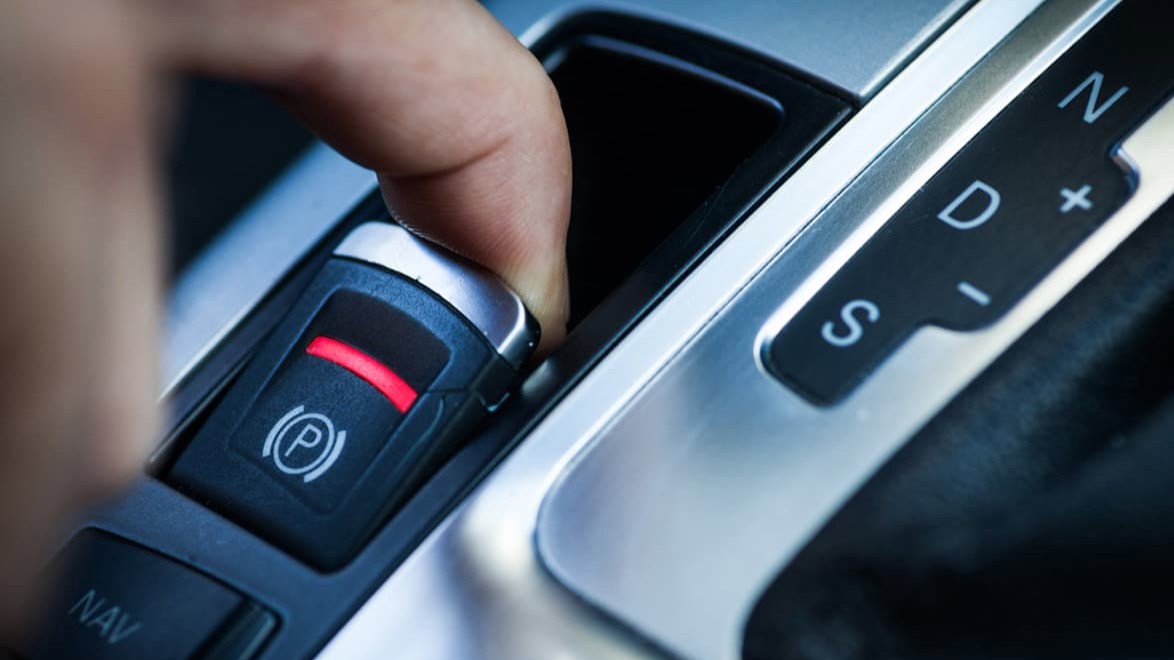
Modern technology has revolutionized what the handbrake does. An Electronic Parking Brake (EPB) replaces the traditional lever with a small button. Beyond convenience, it offers new safety functions.
AUTO HOLD Function
When enabled, this system automatically keeps the car stationary after stopping, even if you release the brake pedal. It’s perfect for stop-and-go traffic or hill starts – the EPB releases automatically as you accelerate.
Advantages
- Integrated with ABS and stability systems.
- No physical wear on cables.
- Consistent braking force every time.
Can It Be Used for Emergency Braking?
Yes – in most EPB systems, holding the button engages braking gradually, mimicking a controlled stop. However, consult your manual, as behavior varies by brand.
What If It Fails?
If the button or actuator stops responding, most cars include a manual override – usually a release tool near the rear axle or inside the trunk. Check your owner’s guide before it happens.
Maintenance and Diagnosis
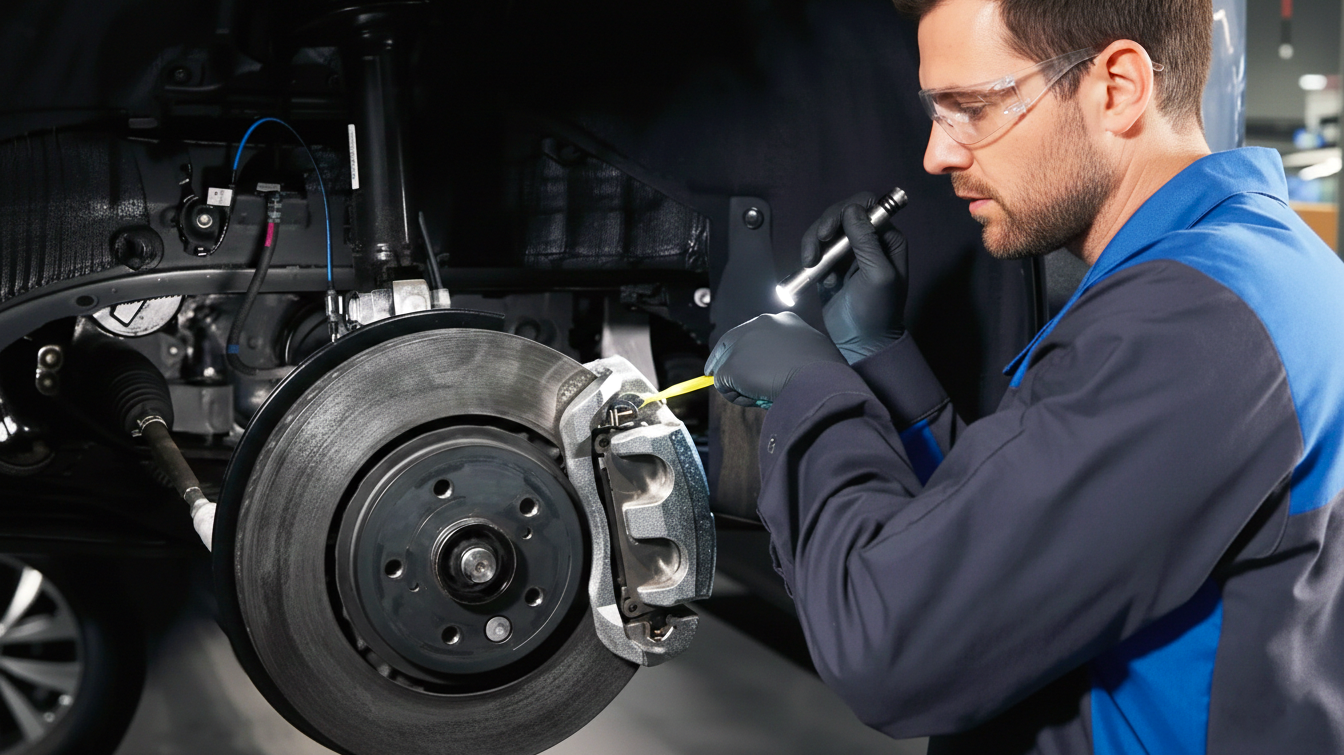
A handbrake is reliable only if it’s maintained properly. Mechanics recommend checking it every 10,000–15,000 km or during scheduled service.
Watch for these warning signs:
- The lever or button feels loose or travels too far.
- The car rolls slightly even with the brake engaged.
- A warning light stays on after release.
- Grinding or metallic noises from the rear wheels.
Typical costs: Cable adjustment or replacement – moderate; EPB module repair – expensive due to electronics. While minor checks can be done at home, deep repairs should be handled by professionals.
Frequently Asked Questions
- Why does my car move even when the brake is set? If the vehicle shifts slightly after you’ve parked, it usually means the holding system isn’t gripping fully. The cable may have stretched, or the mechanism needs cleaning. A quick visit to a workshop can restore the proper tension.
- Is it safe to drive when the warning light is still on? No. That signal means the rear wheels are still under pressure. Driving like that overheats the pads and shortens their life dramatically. Always double-check that the light is off before pulling away.
- Which version lasts longer – mechanical or electronic? Mechanical systems are easy to adjust and keep working for years with minimal care. Electronic ones feel more refined, but they depend on sensors and power supply. When maintained properly, both can serve equally well – they just fail in different ways.
- Can I move the car a short distance without releasing the brake? Avoid it if possible. Even rolling a few meters with the system engaged can glaze the pads or scratch the discs. If you need to reposition the car, release it first and re-apply afterward.
- What if I hear grinding or squeaking from the back wheels? That’s a sign of corrosion or dirt inside the mechanism. Don’t ignore it – friction noises mean parts are rubbing where they shouldn’t. Have a technician inspect the rear brakes before the problem spreads.
Conclusion
Understanding how this safety system works and using it correctly transforms it from a simple lever into a vital element of control and stability. Whether mechanical or electronic, the handbrake remains the quiet guardian that keeps your car secure when parked, prevents rollbacks, and supports you in emergencies. It’s one small control with an outsized role in road safety – and that’s what it does best.

