



Parallel Parking Explained: Step-by-Step Guide and Practical Tips

Parallel parking is widely considered one of the most challenging maneuvers in vehicle operation. This skill presents difficulties not only for novice drivers but also for those with significant driving experience. The main complexities arise from the necessity of precisely calculating the trajectory of movement in a confined space, coupled with a lack of visual control over the vehicle's dimensions and the distance to obstacles.
This article presents a simple and proven method that allows you to successfully perform parallel parking on the first attempt. The technique described is suitable for beginners to master the skill and for experienced drivers seeking to improve their proficiency.
What is Parallel Parking and Where is it Used
Parallel parking is the act of positioning a vehicle in a limited space along a curb line between two other vehicles. This maneuver is primarily utilized in situations with a scarcity of parking spaces—on narrow city streets, in central urban areas, and near administrative or office buildings.
Modern cities are experiencing a constant increase in the number of vehicles, resulting in limited available space. Parallel parking represents an efficient use of territory, reduces the likelihood of obstruction, and contributes to overall traffic improvement. Proficiency in this skill is a prerequisite for successfully passing a driving school exam and builds confidence in vehicle operation.
Key Principles of Parallel Parking
Parallel parking may seem difficult at first glance. In reality, it is a logical and predictable maneuver that requires not strength or speed, but an understanding of the process, spatial awareness, and calmness. By following a few basic principles, parking even in heavy city traffic becomes far less stressful.
Minimum Distance Between Vehicles

One of the key factors for successful parking is choosing the right space. Ideally, the length of the available parking spot should be about one and a half times the length of your vehicle.
This extra space allows you to:
- set up the correct trajectory without rushing;
- avoid sharp or abrupt steering movements;
- adjust the vehicle’s position if the first attempt is not perfect.
It is important to remember that the smaller the space, the higher the precision required. Beginners are advised to choose spots with extra room — this reduces pressure and helps build confidence more quickly.
Correct Steering and Vehicle Positioning
The steering wheel is the main tool in parallel parking. The success of the maneuver largely depends on the car’s initial position relative to the parked vehicle ahead. It is generally recommended to stop parallel to the parked car, aligning the rear ends of both vehicles and leaving a lateral gap of about 50–70 cm.
Next, it is important to:
- begin turning the steering wheel at the right moment;
- gradually adjust the steering angle while reversing;
- avoid sudden or erratic movements.
Smooth and logical steering inputs help the vehicle fit naturally into the space without unnecessary corrections or stops.
Mirror Use and Blind Spot Awareness
Rear-view mirrors are your primary means of control. During parking, it is essential to constantly monitor:
- the distance between the rear wheels and the curb;
- the gaps to the vehicles in front and behind;
- the vehicle’s position relative to road markings.
Special attention should be paid to blind spots — areas that are not visible in the mirrors. These can be checked by turning your head, using direct visual observation, and relying on modern driver-assistance systems such as rear-view cameras, parking sensors, and 360-degree camera systems. However, even with electronic aids, it is important not to rely on them completely — the driver must always be aware of where the vehicle is positioned in space.
Patience and Focus Are Key Qualities of a Successful Driver
Parallel parking does not tolerate rushing. Trying to complete the maneuver under stress almost always leads to mistakes: an incorrect entry angle, excessive distance from the curb, or the need to start over.
The right approach involves:
- a calm pace;
- smooth, controlled movements;
- readiness to make additional adjustments when necessary.
Even experienced drivers sometimes need two or three attempts to straighten the vehicle — and that is perfectly normal. Confidence comes not from speed, but from control and attentiveness.
Step-by-Step Instructions for Parallel Parking

This algorithm ensures high accuracy and minimizes the risk of errors during the maneuver. These are the crucial parallel parking steps.
- Preparation. Engage the appropriate turn signal. Stop your vehicle alongside the car parked in front of your chosen space. The lateral distance between the cars should be approximately 0.5 to 1 meter.
- Starting the Maneuver. Slowly begin to move backward. Stop when the rear wheels of your vehicle are aligned with the rear bumper or the middle of the rear wheel of the neighboring car (depending on its size).
- Turning the Steering Wheel. Turn the steering wheel fully towards the curb (usually to the right). Continue moving backward slowly. At this point, your vehicle will begin to enter the parking space at an angle. Monitor the process using the right-side mirror.
- Straightening. Stop moving when the entire front part of the vehicle located behind you becomes visible in your left rear-view mirror, or when the corner of the vehicle in front (usually the right front headlight) aligns opposite your left mirror. Also, aim for a 45-degree angle relative to the curb. After stopping, quickly straighten the steering wheel (set the wheels straight).
- Correction. Continue moving backward with the wheels straight. Stop when the right front fender of your car aligns with the rear bumper of the car in front, or when the rear wheels in the right mirror are approximately 20-30 cm from the curb.
- Completion. Turn the steering wheel fully to the opposite side from the curb (usually to the left). Continue moving backward until your vehicle is parallel to the curb. Straighten the wheels, and move slightly forward or backward to ensure equal distance to the vehicles in front and behind. Ensure that your vehicle is within the boundaries of the parking space.
Common Mistakes in Parallel Parking
Avoiding the following common errors significantly increases the likelihood of a successful maneuver.
- Turning the Steering Wheel Too Early or Too Late. Incorrect calculation of the steering start point (step 2 of the instructions) results in the vehicle either hitting the front car with its front end, hitting the curb with its rear wheel, or occupying an incorrect position.
- Underestimating the Distance Between Cars. Choosing a parking space that is too short prevents the maneuver from being executed correctly and requires multiple additional corrections.
- Ignoring Rear-View Mirrors. A lack of continuous monitoring of the wheel position and dimensions via the mirrors prevents timely trajectory correction.
- Excessive Haste During the Maneuver. Fast movement complicates accurate calculation and leads to abrupt and incorrect steering movements.
- Lack of Control Over Rear Wheels. Insufficient attention to the right rear wheel can lead to contact with the curb.
Useful Parallel Parking Tips for Beginners
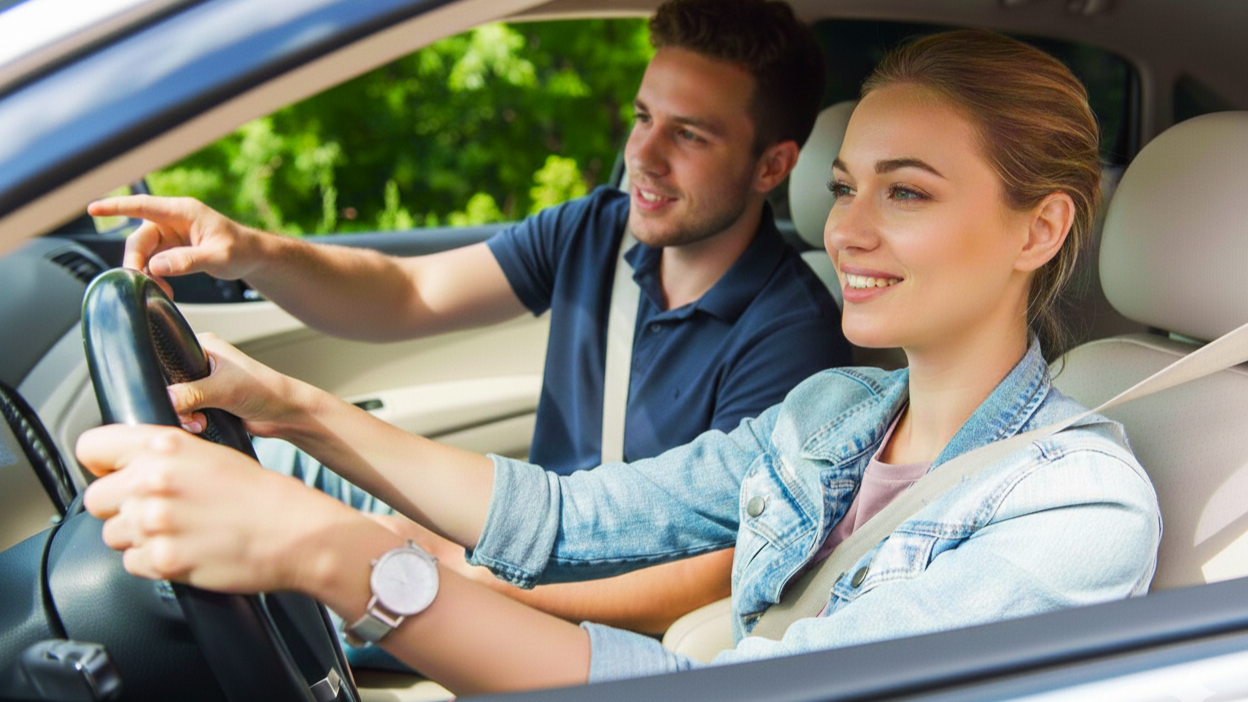
- Practice in empty parking lots, where there is no risk of hitting other cars. This allows you to practice the sequence of actions, understand the vehicle's dimensions, and build muscle memory without stress.
- Use parking sensors and rear-view cameras. These systems provide additional information about the distance to obstacles and are a valuable aid, but they should not replace visual control.
- Monitor your viewing angles and use the mirrors as a guide. Develop a system of reference points in the mirrors (e.g., specific points on the bodywork or on neighboring cars) to accurately determine the moments for turning the steering wheel.
- Do not be afraid to correct the vehicle's position—it is completely normal. If the car is not perfectly positioned, a slight movement forward or backward with a small turn of the wheel in the required direction allows the situation to be easily corrected.
Modern Technologies that Help with Parking
The development of automotive technology significantly simplifies the parking process and enhances its safety.
- Automatic Parking Systems (Park Assist). These systems use ultrasonic sensors and/or cameras to scan the space, independently determine a suitable spot, and take over control of the steering wheel, and in some cases, the pedals, to perform reverse parallel parking.
- 360 Surround View Cameras. A complex of cameras located around the perimeter of the vehicle creates a "bird's-eye view" image of the car on the multimedia screen. This allows the driver to see all obstacles around and monitor the distance to them in real-time.
- Parking Assistants and Ultrasonic Sensors. Ultrasonic sensors (parking radar) measure the distance to obstacles and inform the driver with an audible signal. Assistants can display the trajectory of movement on the screen depending on the steering wheel angle.
These technologies significantly simplify the driver's life by automating complex calculations, minimizing "blind spots," and increasing the precision of maneuvering, which ultimately enhances the overall safety of the parking process.
Conclusion
Parallel parking is a useful and necessary tool for a confident driver. Strict adherence to the presented step-by-step instructions, based on precise reference points, allows for the elimination of typical errors and significantly reduces the time required for the maneuver. It is recommended to practice this method today to quickly reinforce the skill. The main things are to stay calm, demonstrate confidence in your actions, and practice regularly.

