



What You Need to Know About Driving in Cyprus: Laws, Limits & Licences

Cyprus is an island practically made for road trips. Scenic mountain routes, secluded beaches hidden far from tourist trails, and ancient monasteries—many of the most interesting places can only be reached by car. Renting a car here isn't a luxury; it's the key to discovering the real, non-touristy Cyprus. However, when you get behind the wheel, it's important to remember that you are entering a different driving culture with its own set of rules and unwritten laws.
This article is your complete guide to the roads of Cyprus. It will be useful for tourists planning to rent a car, expats who have recently moved to the island, and even those who just want to refresh their knowledge. We will break down the main differences, from driving on the left to parking regulations, and provide practical tips to help you avoid fines and trouble. Proper preparation is the foundation for confident and safe driving in Cyprus.
General Features of Driving in Cyprus
The first and most important challenge for drivers accustomed to European right-hand traffic is adjusting to driving on the left side of the road. As a legacy of British colonial influence, Cyprus follows left-hand traffic rules — and this requires a full shift in your driving habits.
Key Differences You Need to Get Used To
- Left-hand traffic. Cars have the steering wheel on the right. At first, your brain will instinctively push you toward the right side of the road. During the first few days, stay extra focused — especially at intersections and roundabouts. Keep in mind that roundabouts in Cyprus move clockwise.
- Local driving style. Cypriots tend to drive in a relaxed manner, but unexpected maneuvers are common. Indicators are not always used consistently, and stopping “just for a minute” in the middle of the road is not unusual. Stay calm, keep a safe distance, and be ready for surprises.
- Road quality. Major highways connecting cities like Limassol, Paphos, Nicosia, and Larnaca are in excellent condition. However, as soon as you turn onto secondary or mountain roads, expect narrow segments, sharp bends, and occasional uneven surfaces.
- Troodos Mountains. The Troodos region offers breathtaking views and cooler air — but also specific driving conditions. Mountain roads are narrow, winding, and often steep, requiring heightened attention and precise control.
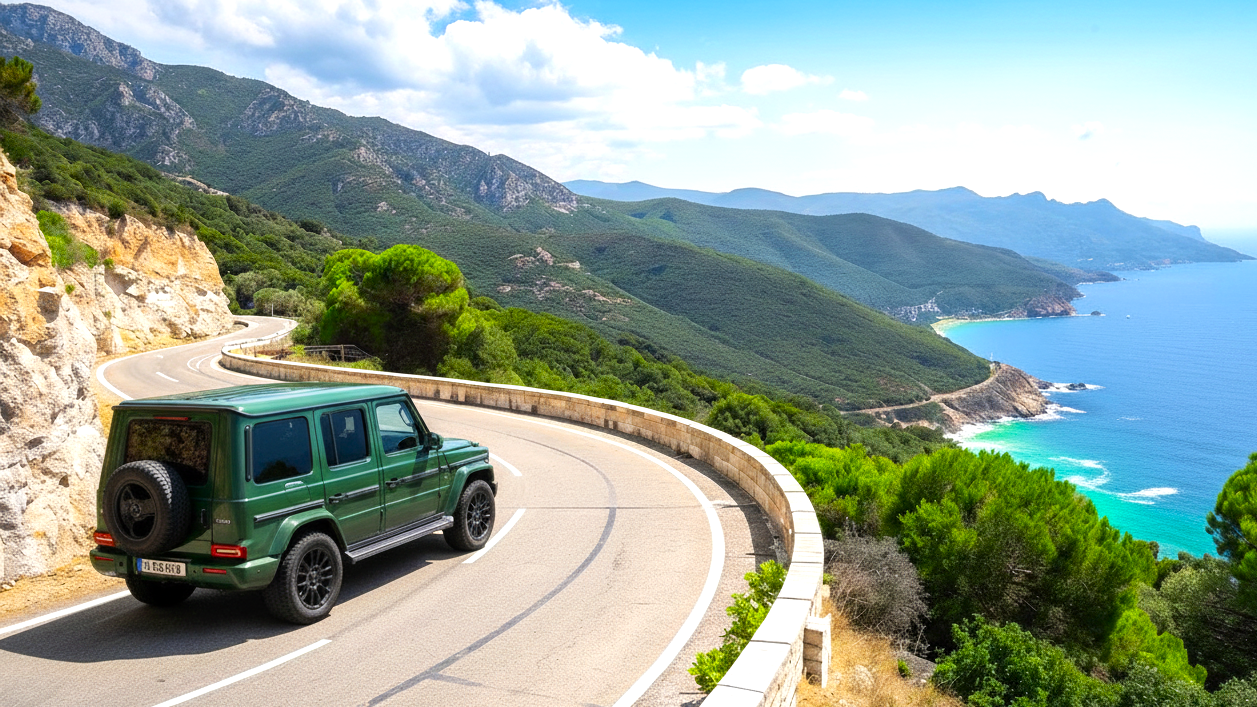
- Speed and gear control. Always reduce speed before entering a curve. Use lower gears when driving downhill to prevent brake overheating and to maintain better control of the vehicle. Many automatic cars have an “L” (Low) mode or a manual-shift setting, ideal for steep descents.
- Oncoming traffic awareness. On narrow mountain roads, be especially alert. Oncoming cars may appear suddenly from behind bends. When the road is too narrow for two vehicles, one driver must yield — by pulling over or even reversing to a wider section. Vehicles going uphill often have priority since it’s harder for them to restart from a stop.
- Weather conditions. In winter, mountain areas may experience snowfall and icy roads, especially in shaded sections. Always check the forecast before travelling to the mountains during colder months — some roads may be temporarily closed due to weather.
- Scenic distractions. Do not get carried away by the stunning views while driving. Stop only in designated lookout points or wide shoulders where it’s safe and won’t obstruct traffic.
- Road signs. Traffic signs follow international standards and are easy to understand. Town and street names are provided in both Greek and English, making navigation convenient for tourists.
Roundabouts: What You Must Know
Roundabouts — or roundabouts, as they are called locally — are extremely common in Cyprus and serve as the main traffic management system at major junctions. Here’s the essential rule:Traffic on the roundabout moves clockwise, and vehicles already on the roundabout have priority. You must yield to cars approaching from your right before entering.
Lane choice follows a simple logic:
- For the 1st or 2nd exit — stay in the left (outer) lane.
- For the 3rd or 4th exit (meaning you’re passing more than half the circle) — move to the right (inner) lane in advance.
And don’t forget to use your indicator before exiting the roundabout to signal your maneuver clearly to other drivers.
Traffic Rules: What You Need to Know
The traffic laws in Cyprus are generally in line with European standards but have several important national peculiarities, violations of which carry heavy fines.
Speed Limits:
- In built-up areas: 50 km/h.
- Outside of towns (on regular roads): 80 km/h.
- On motorways: 100 km/h (minimum speed is 65 km/h).
The island has numerous fixed and mobile speed cameras, so exceeding the limit is not recommended.
Main Rules and Prohibitions:
- Seat Belts. Mandatory for the driver and all passengers in both the front and back seats.
- Mobile Phones. Talking on a mobile phone without a hands-free system is strictly forbidden.
- Eating and Drinking. Cyprus has a unique law that prohibits eating and drinking (even water) while driving.
- Smoking. Prohibited if a minor (under 16) is in the vehicle.
- Children in the Car. Children under 5 must be transported in an appropriate child seat. Children aged 5 to 12 (and under 150 cm tall) must use a child seat or a booster seat.
Insurance

Basic insurance (CDW – Collision Damage Waiver) is usually included in the price, but it comes with an excess (deductible) – the amount for which you are liable in case of damage. To fully protect yourself, it's recommended to purchase full insurance (SCDW – Super Collision Damage Waiver) with zero excess. Read the rental agreement carefully: insurance often does not cover damage to tires, glass, and the undercarriage of the car.
If you want a deeper breakdown of all car insurance types in Cyprus—what they cover, how much they cost, and how to choose the right one—check out our full guide: "Complete Guide to Car Insurance in Cyprus: Types, Benefits, and Costs".
Alcohol and Driving: Strict Limits
The issue of drinking and driving is taken very seriously in Cyprus. Regular police checks, especially on Friday and Saturday evenings, are the norm. The Cyprus drink drive limit depends on the driver's experience and the type of vehicle.
- For experienced drivers (license held for more than 3 years):
- 22 micrograms of alcohol per 100 milliliters of breath;
- 50 milligrams of alcohol per 100 milliliters of blood (0.05% BAC).
- For novice drivers (license held for less than 3 years) and professional drivers (taxi, bus drivers):
- 9 micrograms of alcohol per 100 ml of breath;
- 20 milligrams of alcohol per 100 ml of blood (0.02% BAC).
Penalties for exceeding the limit range from a large fine to license suspension and even imprisonment in cases of a high reading or a repeat offense. The best advice is to completely abstain from alcohol before driving.
Renting a Car in Cyprus
Renting a car is the most convenient way to explore the island. The process is straightforward but requires attention to detail.
Requirements for Renters:
- Age: usually 21 years or older. For drivers under 25 or over 70, higher rates or additional insurance may apply.
- Driving Experience: typically a minimum of 3 years.
- Documents: your Cyprus driving licence can be your national one (if it meets international standards with Latin characters) or an International Driving Permit (IDP). You will also need your passport and a credit card for the security deposit.
Thinking about getting your own car instead of renting? We compare both options in detail in our article "Buy vs Lease a Car in Cyprus: What’s Better for You?". It will help you understand costs, pros and cons, and which option makes more sense for your situation.
Parking in Cyprus: Reading the Signs and Markings
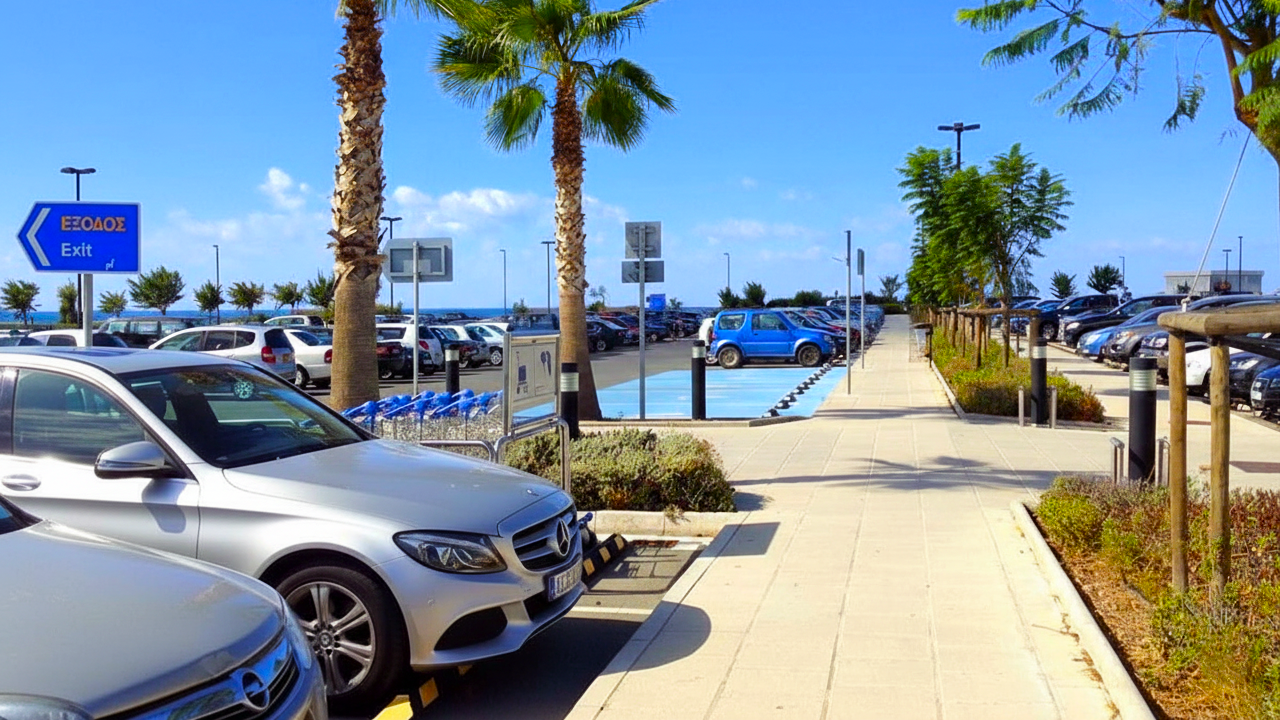
Parking in major cities, especially in tourist hubs, can be challenging. To avoid fines, it is crucial to understand the marking system.
Parking Line Color Guide
Line Color | Meaning | Conditions |
White Line | Parking permitted | Free of charge, unless otherwise indicated by signs. |
Yellow Line | Loading/unloading, pick-up/drop-off | Parking is forbidden, but a brief stop is allowed. |
Double Yellow Line | No stopping or parking | Prohibition is in effect 24/7. |
Blue Line | Disabled parking | Parking only for vehicles with a valid disabled person's permit. |
City centers have many municipal and private paid parking lots. Payment is made at meters, which accept coins. Keep the ticket and display it on your dashboard. Parking fines are issued regularly.
Fines and Penalties
The system of fines in Cyprus is strict, and the amounts are significant. Violations are recorded by both police patrols and automatic cameras.
A List of Common Violations and Fines (Approximate):
- Speeding: from €2 per km/h over the limit (the amount increases progressively).
- Not wearing a seat belt: €150.
- Using a mobile phone while driving: €150.
- Running a red light: €300.
- Parking violation: €100.
Fines issued by the police can be paid at local police stations or through online services. If the fine is from a municipality (e.g., for parking), it must be paid at the municipal office. Tourists who have rented a car can often pay the fine through the rental company, but usually with an added administrative fee.
Conclusion: Respect and Preparation
Driving in Cyprus is a pleasant and convenient way to explore the island, as long as you approach it with intelligence and respect for local rules. The main keys to success are adapting to left-hand traffic, observing speed limits and parking rules, and maintaining absolute sobriety behind the wheel.
Be attentive, be courteous on the road, and don't be afraid to ask for advice if you're unsure about something. Thorough preparation and a calm driving style will make your road trip across Cyprus safe, comfortable, and full of pleasant discoveries.

