



Traffic Rules in Cyprus: Speed Limits, Fines, Deadlines and How to Check Penalties
You rented a car in Cyprus to enjoy complete freedom, but instead you may risk getting a hefty fine. The main reason is unfamiliarity with local regulations and their strict enforcement through speed cameras. Left-hand traffic, unusual right-of-way rules, and tight restrictions can easily trap unprepared drivers. This article is a clear guide to Cyprus traffic rules, current penalties, and how to check and pay them. You will learn how to avoid unpleasant surprises and fully enjoy your trip.
Key Features of Driving in Cyprus
The most well-known and fundamental feature is left-hand traffic. Vehicles have the steering wheel on the right side. This system requires extra attention, especially when making turns and overtaking. At intersections, main roads are often marked not only by signs but also by yellow diamond-shaped road markings. Drivers on the main road always have priority.
At roundabouts, vehicles already circulating have the right of way. Cars entering the roundabout must yield. This rule is common in many European countries, but it may differ from what some drivers are used to.
Local driving habits tend to be relatively calm in cities and more aggressive on highways. Pedestrian crossings, especially outside major tourist areas, are not always strictly respected by drivers, so pedestrians should remain cautious.
Key differences in brief:
- Left-hand traffic system;
- Priority on roundabouts goes to vehicles already on the circle;
- Frequent use of hazard lights to say thank you or signal stopping on the roadside.
Speed Limits in Cyprus
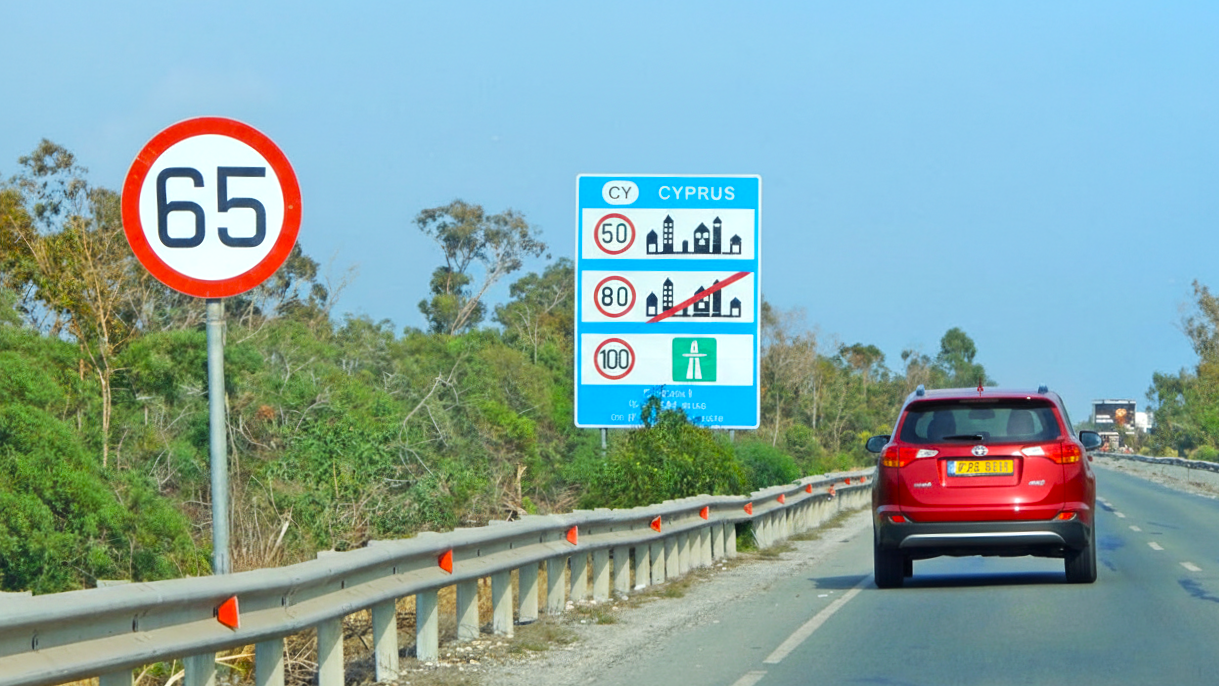
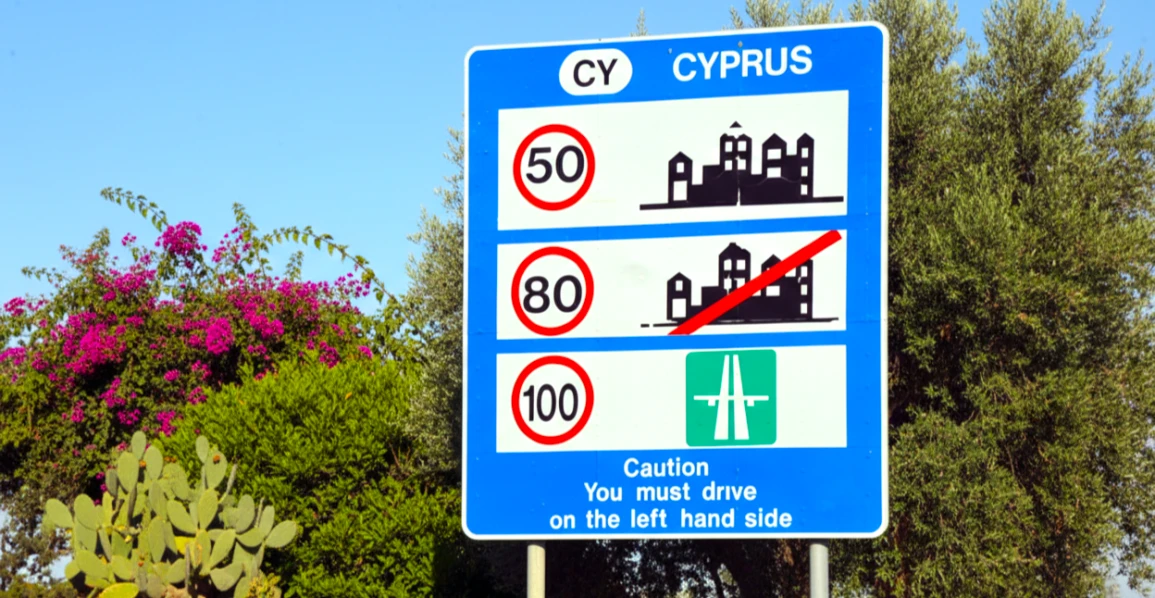
Following speed limits is essential to avoid penalties. Limits are strictly regulated and actively enforced. In built-up areas (cities and villages), the maximum speed is 50 km/h. On rural roads that are not motorways, the limit is 80 km/h. On motorways (marked with green signs), the maximum allowed speed is 100 km/h.
Speed control is carried out by police patrols and a widespread network of fixed cameras. Automated cameras operate across the island, especially at city entrances and on main roads. A speeding fine is sent by post to the vehicle owner. For tourists renting cars, the fine is first sent to the rental company, which then charges the amount to the customer’s deposit or credit card, often adding an administrative fee.
Seat Belt and Child Seat Regulations
These rules are strictly enforced in Cyprus with no exceptions. Seat belts must be worn by all passengers in every seat. Fines apply both to the driver (for unbelted passengers) and to the passengers themselves.
Children must be transported using proper child restraint systems:
- Children under 135 cm must use a child seat suitable for their age and weight.
- Children over 135 cm may use a standard seat belt.
- It is forbidden to place a rear-facing child seat on the front passenger seat if the car has an active airbag.
Penalties in this category are substantial and aimed at improving safety. When renting a car, child seats must usually be requested as an extra service.
Using Mobile Phones While Driving

Holding a mobile phone while driving is one of the most common and heavily punished violations in Cyprus. The law allows phone use only with a hands-free system. The device must be securely mounted. Any action that involves holding the phone – calling, texting, or checking navigation – is illegal while the vehicle is moving.
Traffic fines in Cyprus for this offense can reach several hundred euros. The exact amount depends on circumstances and may increase if the violation caused a dangerous situation. Enforcement is carried out not only by police officers but also by automated camera systems. Modern photo and video monitoring can clearly identify drivers using phones. As with speeding violations, the fine is sent by post to the vehicle owner. For tourists, this usually means the rental company charges the fine directly from the deposit.
Alcohol and Drugs Behind the Wheel
The legal blood alcohol limit for drivers in Cyprus is 0.5‰, which is the standard threshold across most European countries. However, there are important exceptions.
A zero-tolerance policy applies to the following categories:
- drivers with less than three years of experience,
- professional drivers (taxis, trucks, buses),
- moped and motorcycle riders.
Police carry out regular roadside checks, especially in the evenings, at night, and on weekends. Tests may be random or conducted at fixed checkpoints. Drivers are required to take a breathalyzer test. Refusing the test is treated as an admission of guilt and leads to serious consequences.
Driving under the influence carries severe penalties. For a first offense with a blood alcohol level above 0.5‰ (but below 1.1‰), fines can reach up to €200. Higher levels or repeat offenses result in much heavier fines (hundreds or even thousands of euros), license suspension for 3 to 12 months, and in some cases imprisonment. The presence of drugs in the body is punished even more strictly, with mandatory license revocation and criminal charges.
Parking and Stopping Rules

Parking in Cyprus is governed by clear regulations. Stopping and parking are prohibited:
- in areas marked with “No Parking” signs or yellow solid curb lines,
- within 10 meters of pedestrian crossings,
- at bus stops,
- wherever a parked vehicle blocks traffic or creates hazards.
In major cities such as Nicosia, Limassol, and Paphos, paid parking zones operate (marked by blue curb lines). Payment is usually made through parking meters or mobile apps. Charges typically apply on weekdays only.
Fines for illegal parking usually range from €50 to €100, depending on the city and severity of the violation. If a vehicle causes serious obstruction or remains in a restricted area for a long time, it may be towed. In such cases, drivers must pay not only the fine but also towing and storage fees, which often exceed €200 in total.
Mandatory Documents for Drivers
Whenever driving in Cyprus, motorists must carry three essential documents:
- A valid driving license. Tourists may use an international license or an EU driving license. Non-EU licenses should have an English or Greek translation if they are not in a European format.
- Vehicle registration documents. In rental cars, a copy is usually kept in the glove compartment.
- A valid third-party insurance policy (Green Card). The insurance must be the original document, not a photocopy.
Failure to present any of these during a police check results in a fine. Penalties can reach €200–€300 per missing document. If insurance has expired, the maximum fine applies and the vehicle may be detained until the issue is resolved.
Cameras, Fines, and the Penalty System
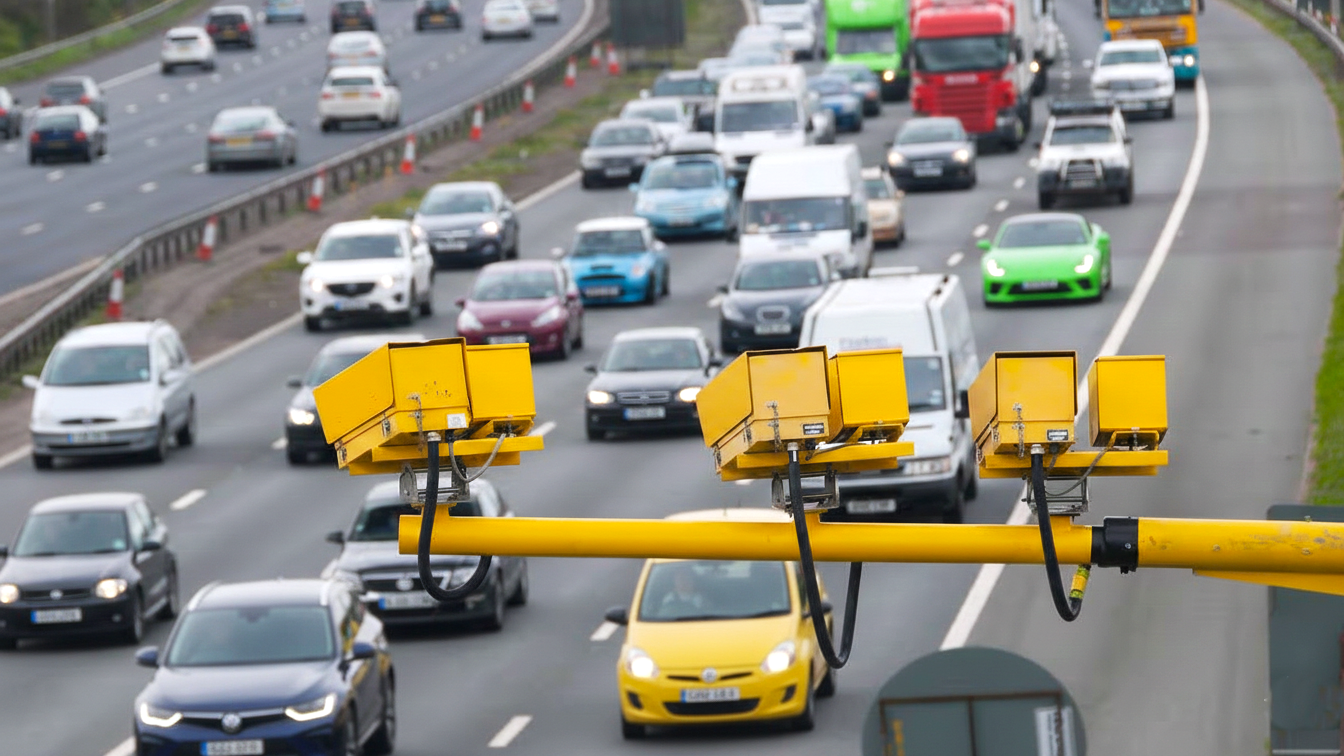
Traffic enforcement in Cyprus relies heavily on automated camera systems. These record several types of violations: speeding, running red lights, and using a mobile phone while driving. Cameras are installed on highways, city entrances, and major intersections.
Fines are sent by post to the registered owner of the vehicle. The notice includes a photo of the offense, date, location, the fine amount, and payment details. The usual payment period is 30 days from the date of receiving the notice.
If payment is not made within the specified time, the fine increases due to penalties. Continued non-payment may result in court proceedings, travel restrictions for rental vehicles, or enforced debt collection. For residents, unpaid fines can cause problems when renewing or re-registering a vehicle.
Penalty Points and Driving License Suspension
Cyprus operates a penalty point system. For each traffic violation, a certain number of points is added to the driver’s license depending on the severity of the offense. For example:
- speeding by 20–30 km/h – 2 points,
- using a mobile phone while driving – 3 points,
- running a red light – 4 points,
- driving under the influence of alcohol – 6 points.
If a driver accumulates 12 or more points within a three-year period, their driving license is automatically suspended. The suspension period depends on the total number of points and usually ranges from 3 to 12 months.
After the suspension ends, the driver must retake the theoretical exam and, in some cases, the practical driving test to regain their license. The point system strongly encourages compliance, as it penalizes not only serious single offenses but also repeated minor violations.
Violations Most Common Among Foreign Drivers

Foreign drivers in Cyprus often fall into the same traps due to unfamiliar local rules and habits carried over from other countries. The most frequent offenses include:
- speeding,
- mistakes at roundabouts,
- illegal parking,
- using a mobile phone while driving.
These issues usually stem from automatic driving behavior and not paying close attention to road signs. Being aware of local rules and driving consciously helps avoid most of them.
What to Do If You Receive a Fine in Cyprus
If you receive a fine notice, follow a clear sequence of steps. First, carefully check the details. Make sure the photo shows your vehicle and that the date and location are correct. For rental cars, the fine is sent to the rental company, which will then contact you.
Fines can be paid online through the JCC Smart portal, at banks, or at post offices. For tourists, online card payment is usually the easiest option.
If you believe the fine was issued unfairly, you have the right to appeal. An official objection must be submitted to the police or the court within the period stated in the notice. However, for visitors this process can be difficult due to time limits and the need for personal presence.
Deadlines and consequences for ignoring fines are serious. Paying within the first 15–30 days often allows a reduced amount. Late payment increases the fine. Outstanding fines may block departure from the island for rental vehicles or create complications during future visits to Cyprus.
Practical Tips for Safe and Legal Driving

To adapt quickly to left-hand traffic, follow one simple rule: stay on the left side of the road, and remember that turning trajectories are reversed at intersections. In the beginning, it helps if a passenger assists by watching traffic from the unfamiliar side.
Tourists and new residents should pay close attention to road signs, especially speed limit changes when entering towns and villages. Always wear your seat belt, never use your phone while driving, and plan parking in advance to avoid risky maneuvers while searching for a space.
To avoid the most common mistakes, remember these three key points:
- at roundabouts, give way to vehicles already on the circle,
- if you see a yellow curb line, do not park there,
- cameras monitor not only speed but also phone use.
Conclusion
Following traffic rules in Cyprus is a practical way to protect both your budget and your peace of mind. Understanding local specifics – such as left-hand traffic, roundabout priority, and strict speed enforcement – makes every trip safer and more predictable.
The main advice for drivers on the island is simple: always carry your documents, stay alert to signs and road markings, and remember that cameras operate continuously. Check fines in time and pay them within the required period. This approach ensures that your experience in beautiful Cyprus is remembered only for pleasant journeys and positive impressions on the road.

