



Classic SUVs: The Best Old SUV Models Ever Built
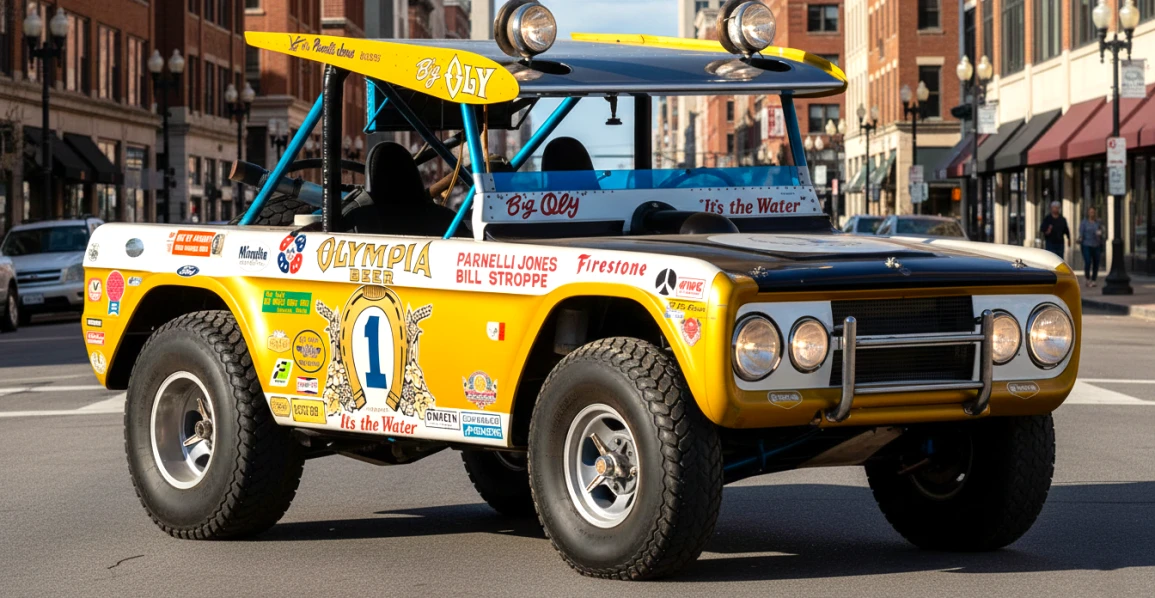
In the vast and ever-evolving landscape of automotive engineering, there exists a unique and revered caste of machines that do not merely age; instead, they acquire a noble patina of time. Classic SUVs are far more than simple means of transportation or utilitarian tools. They are enduring symbols of freedom, testaments to engineering honesty, and relics of a golden era when automobiles were created by passionate engineers rather than cost-cutting marketing departments.
To answer the question, "What are the best classic SUVs?" in brief. these are the definitive models released primarily between the 1960s and the 1990s that established the global standards for off-road capability, design aesthetics, and mechanical reliability. But why do these best old suvs remain cult favorites today, even as the market becomes saturated with high-tech, computer-controlled crossovers? The answer lies in a unique convergence of emotional and practical factors. a sharp, piercing nostalgia for an "analog" time, incredible mechanical endurance that defies modern planned obsolescence, and unmatched versatility. These machines look equally appropriate parked in the valet lot of a Michelin-starred restaurant as they do buried waist-deep in mud in a remote forest. Furthermore, their historical value continues to climb year after year, transforming a passion purchase into a savvy financial investment.
In this extensive article, we will conduct a deep-dive review of the classic suvs category, meticulously analyze legendary old SUV models, provide professional-grade advice on selection and acquisition, and attempt to determine exactly which vehicle is worthy of the prestigious title of the best SUV of all time.
Top 10 Best Classic SUVs of All Time
This ranking has been curated based on a rigorous set of criteria. mechanical reliability, parts availability, cult status, and raw off-road potential.
1. Toyota Land Cruiser (Series J40, J60, J80)
.png?_t=1770976143)
If there is a synonym for the word "reliability" in the automotive dictionary, it is undoubtedly the Land Cruiser.
- J40 (1960–1984). An absolute icon of style. Utilitarian, rigid, and practically immortal. It was the J40 series that cemented Toyota’s reputation as a global powerhouse in off-roading. Its distinct bezel design and white roof are instantly recognizable worldwide.
- J60 and J80. These models represent the evolution into more comfortable, yet still body-on-frame, monsters. The 80-series is frequently cited by experts as the greatest expedition vehicle in history due to its perfect synthesis of solid axles, coil spring suspension for articulation, and factory locking differentials.
- Why it’s in the top: the incredible lifespan of its engines (often capable of hitting a million kilometers) and its unbeatable liquidity in the collector market.
2. Land Rover Defender (Series I-III)
.png?_t=1770976143)
The British answer to the American Willys Jeep, which became a global symbol of exploration and adventure. It features an aluminum body (which does not rust, though the steel frame beneath it certainly does) and an unmistakable "boxy" silhouette.
- Features: a spartan interior that prioritizes function over comfort, permanent four-wheel drive on later models, and fantastic geometric capability (approach and departure angles).
- Status: this is the vehicle of choice for everyone from humble farmers to Queen Elizabeth II and trans-African explorers. It represents the spirit of "going anywhere."
3. Ford Bronco (First Generation 1966–1977)
.png?_t=1770976143)
An American classic currently experiencing a massive market renaissance. It is compact, powerful, and overflowing with charisma.
- Engines: the availability of V8 engines (specifically the 289 or 302 cubic inch variants) gave the Bronco excellent dynamics and a glorious exhaust note that modern cars cannot replicate.
- Design: the removable hardtop, short wheelbase, and classic round headlights make it one of the most aesthetically pleasing SUVs in history. Prices for frame-off restored examples today can easily exceed $100,000.
4. Jeep Grand Wagoneer (SJ)
.png?_t=1770981207)
The true progenitor of the luxury SUV class. It was produced with almost no external changes from 1963 to 1991, a testament to its timeless design.
- The Signature: iconic woodgrain panels on the flanks (the "Woody" look) and an interior that resembles a cozy living room, complete with plush, soft sofas for seats.
- Engineering: powered by massive V8 engines and featuring the advanced Quadra-Trac permanent four-wheel-drive system. This was the vehicle of choice for wealthy families traveling to their country estates or ski lodges.
5. Mercedes-Benz G-Class (W460/W461)
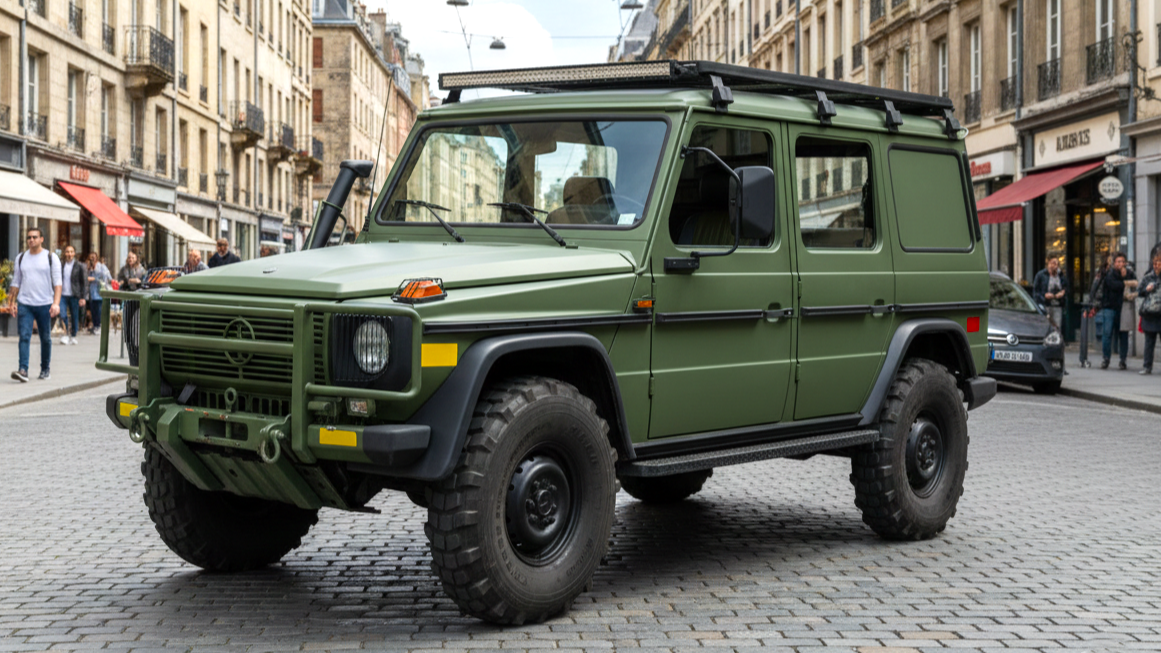
The "G-Wagen" did not begin its life as a toy for celebrities and rappers, but as a strictly military instrument developed at the request of the Shah of Iran.
- Construction: it features three manually locking differentials (front, center, rear)—a unique feature that makes it the undisputed king of difficult terrain.
- Style: hewn from granite, with flat glass, exposed hinges, and doors that close with the distinct, satisfying sound of a rifle bolt action. Early models with diesel engines are slow, but they are mechanically eternal.
6. International Harvester Scout II
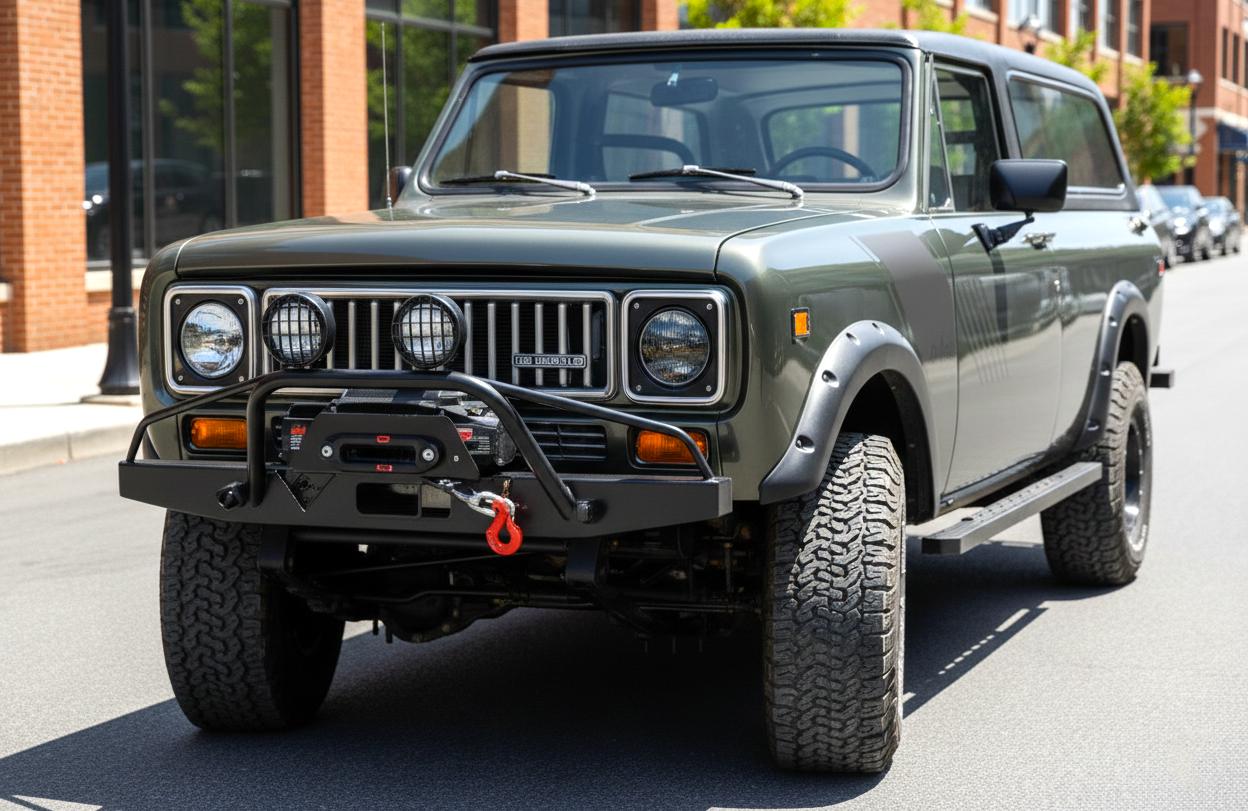
The connoisseur’s choice and a hipster favorite. The Scout was a direct competitor to the Bronco, but it offered slightly more interior space and the unique style of agricultural machinery engineering.
- The Issue and the Benefit: the bodies are notoriously prone to severe rust, but the mechanical components (particularly the V8 engines) are incredibly robust. Finding a "living," rust-free Scout is significantly harder than finding a Jeep, which makes owning one far more exclusive.
7. Range Rover Classic (1970–1996)
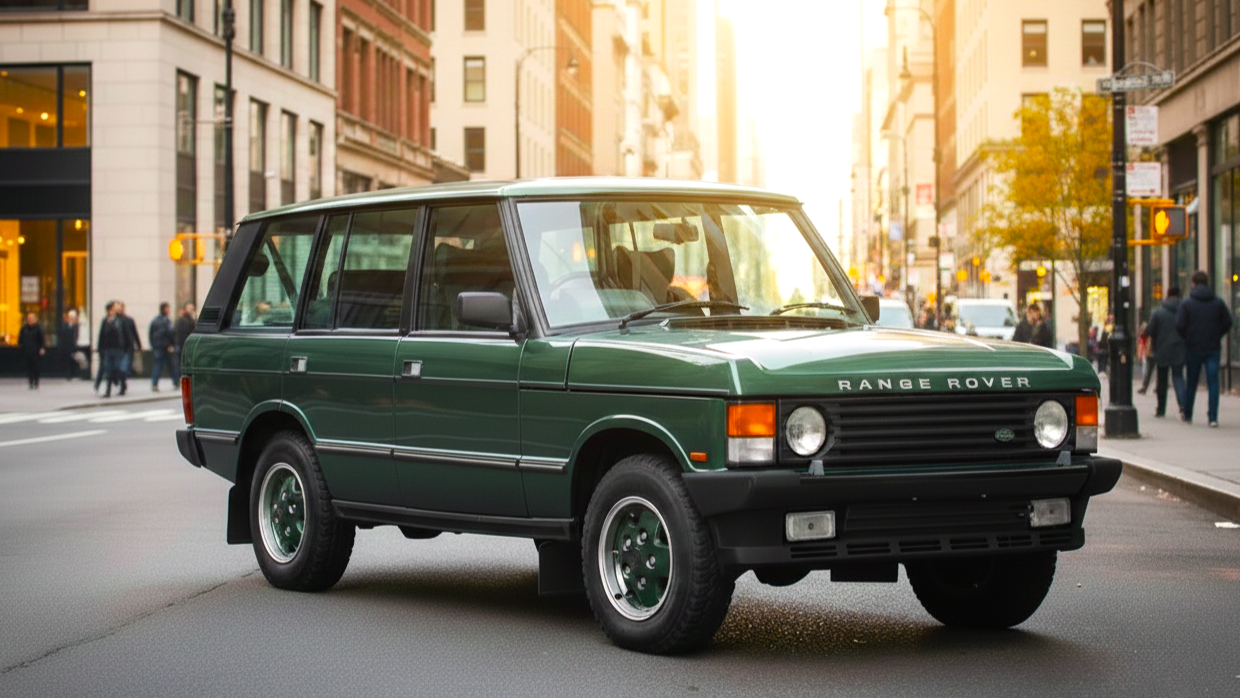
The vehicle that proved an SUV could be comfortable. It was the first vehicle to be exhibited at the Louvre in Paris as an exemplar of industrial design.
- Innovations: it introduced coil spring suspension (replacing rough leaf springs), disc brakes on all four wheels, and a powerful aluminum V8 derived from Buick.
- Ownership: it requires attentive maintenance, particularly regarding the electrical systems and the air suspension on later versions, but it rewards the owner with an unsurpassed, "magic carpet" ride quality.
8. Chevrolet K5 Blazer (1969–1991)
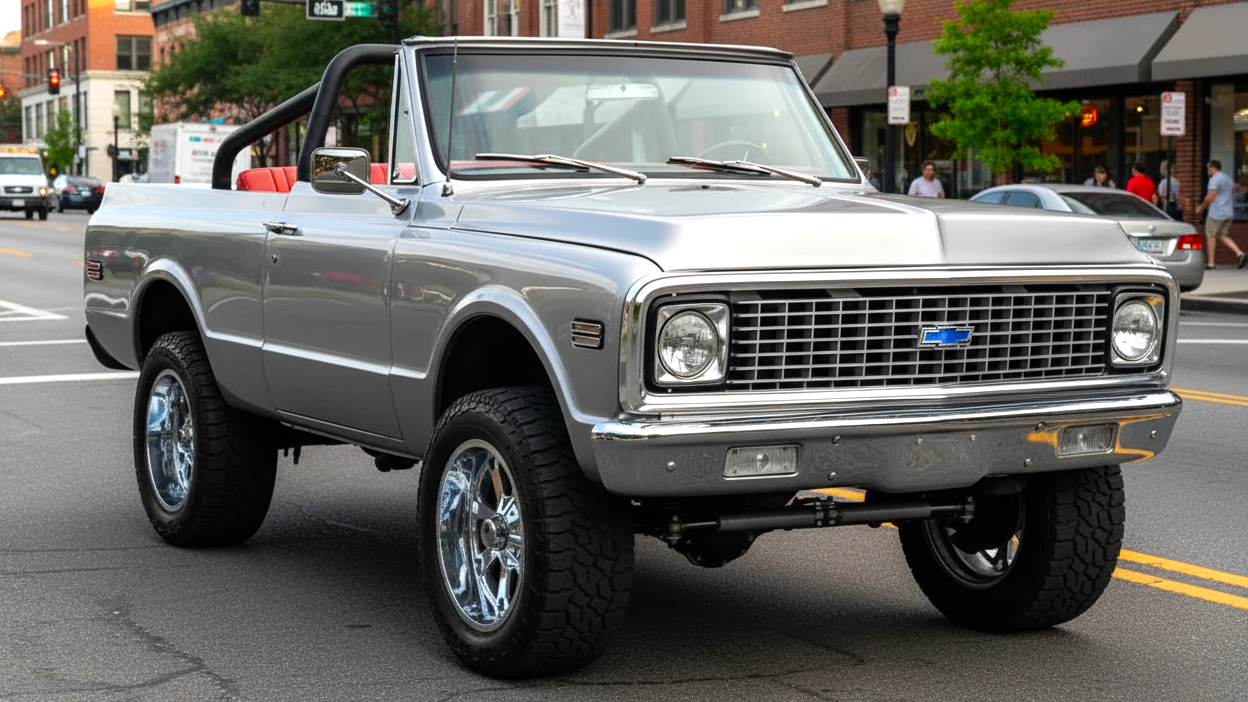
A full-size American "truck" with a closed body, built on the legendary C/K pickup platform.
- Features: until 1975, it featured a fully removable roof (all the way to the windshield header), which effectively turned this giant truck into a massive convertible.
- Power: huge V8 engines, simple construction, and dirt-cheap parts availability make the Blazer an excellent entry point into the world of classics.
9. Nissan Patrol (Y60 / GR)
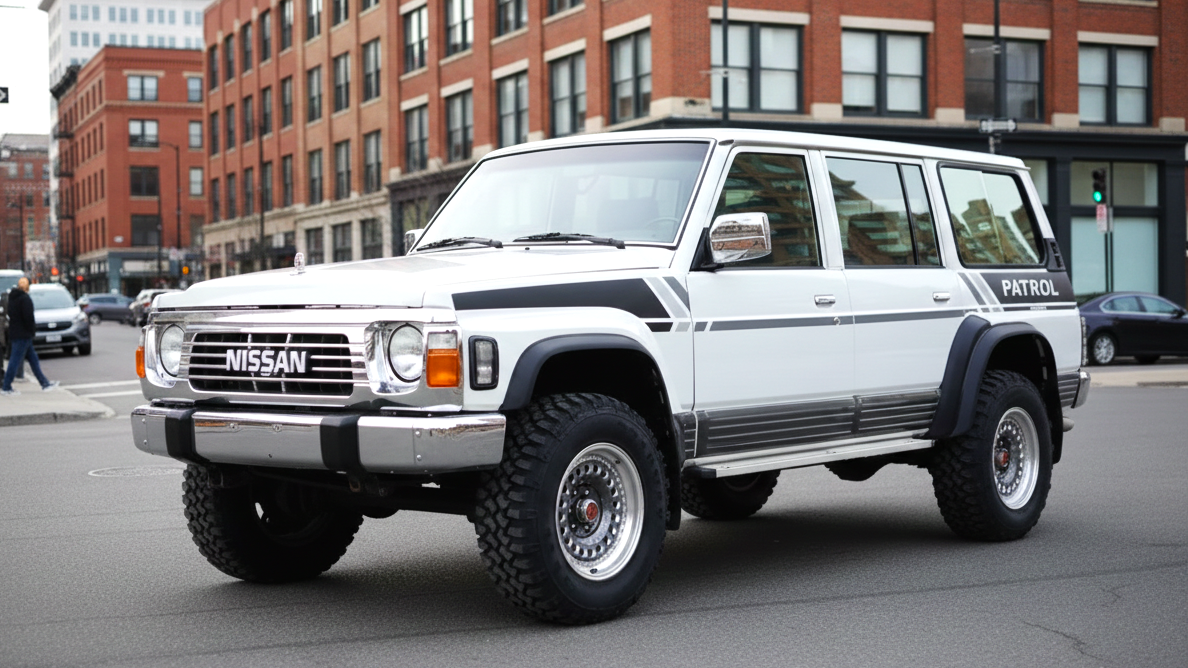
The main—and perhaps only—worthy rival to the Toyota Land Cruiser.
- The Legend: the TD42 diesel engine is widely regarded as one of the most reliable internal combustion engines ever built.
- Drivetrain: indestructible axles and a transmission capable of handling massive 35-37 inch tires without requiring aftermarket tuning. This is the top choice for heavy-duty off-roading.
10. Jeep Cherokee (XJ)
.png?_t=1770972604)
Although this is a more modern model (introduced in 1984), the XJ deserves its place in the pantheon. It was the first mass-produced SUV with a unibody construction that retained excellent off-road capability.
- Engine: the 4.0L "High Output" inline-six is a legendary motor known for its torque and longevity.
- Accessibility: one of the most affordable ways to touch history and enter the classic car hobby.
Comparative Specifications Table
To visually demonstrate the differences between regional schools of automotive engineering, let’s look at the table below.
Model | Country of Origin | Frame/Body Type | Key Feature | Best Suited For |
Toyota Land Cruiser J40 | Japan | Body-on-Frame | Reliability | Expeditions, Collections |
Land Rover Defender | UK | Aluminum on Steel Frame | Geometric Capability | Farming, Trophy Raids |
Ford Bronco (Gen 1) | USA | Body-on-Frame | Design, V8 Power | Beach Cruising, Investment |
Range Rover Classic | UK | Body-on-Frame | Ride Comfort | Daily Driving, Style |
Jeep Cherokee XJ | USA | Unibody | Lightweight | City + Light Off-Road |
What Makes an SUV "Classic" — Key Criteria
Not every old car becomes a classic. To legitimately fall into the classic suvs category, a vehicle must meet a specific set of criteria valued by collectors and enthusiasts alike.
- Age. Typically, these are vehicles older than 25-30 years. This threshold often unlocks benefits such as simplified import regulations and eligibility for "Historical" or "Vintage" license plates in many jurisdictions.
- "Form Follows Function" Design. Classic models are distinguished by an angular, honest design language. Flat glass, round sealed-beam headlights, and minimalism in decor. These cars were drawn with a ruler and protractor, not shaped in a wind tunnel for aerodynamics.
- Mechanical Simplicity. The absence of complex electronics is crucial. Carburetors or simple mechanical fuel injection, a minimum number of sensors, and manual transfer cases. The owner should be able to fix the car in a field using a basic set of wrenches and a screwdriver.
- Historical Influence. The model must have brought something new to the industry or served as the face of an era (like the Jeep for the military or the Range Rover for the aristocracy).
- Off-Road Potential. A true classic SUV is obligated to have a body-on-frame construction (with rare exceptions like the XJ or Lada Niva), solid axles, and a low-range transfer case.
These old SUV models are prized specifically for the raw sense of control they offer the driver. There are no lane-keeping assistants or automatic emergency braking systems here—only you and the machine.
Buying Advice for a Classic SUV. How to Avoid Buying Scrap Metal
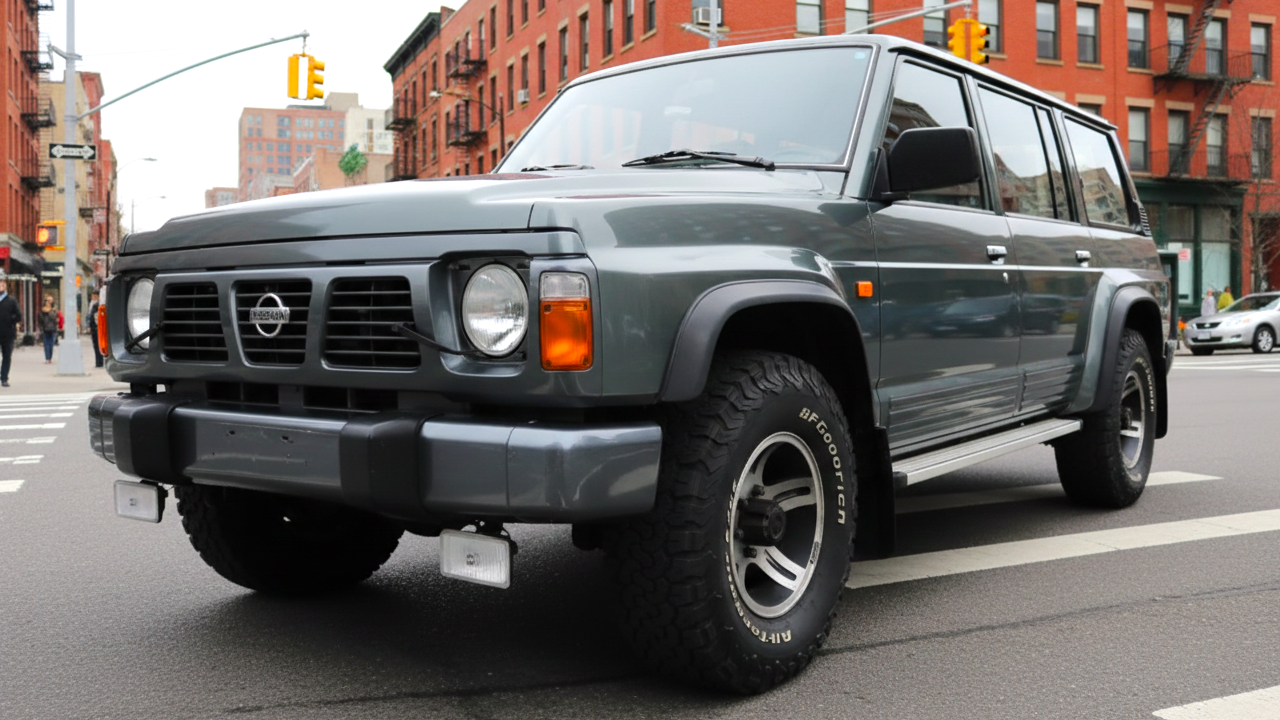
The retro car market is a minefield full of potential disasters. Beautiful, shiny paint can often hide fatal structural problems. Here is a professional checklist for the prospective buyer.
1. Rust is Enemy #1
In the 1970s and 80s, factory anti-corrosion treatments were primitive at best.
- Where to check. The frame (especially the rear section near the suspension mounts), cabin floor pans, rocker panels, the bottom edge of doors, and body-to-frame mounting points.
- Pro Tip. Always bring a weak refrigerator magnet. If it doesn't stick to the fender or quarter panel, you are looking at a kilogram of plastic body filler (Bondo), not steel.
2. Completeness (Originality)
Finding original trim pieces, emblems, or specific interior details (window cranks, dashboard buttons) for rare models (like the International Scout) can be significantly harder and more expensive than rebuilding an engine.
- Important. The closer the car is to its factory state, the higher its investment value and potential for appreciation.
3. Drivetrain Condition
Rigorous testing of the four-wheel-drive system is mandatory.
- Does the low-range gear engage smoothly?
- Is there a whining or grinding noise coming from the differentials/axles?
- Are the pinion seals leaking? Rebuilding axles is a specialized and costly procedure.
4. Documents and History
Ensure the VIN (Vehicle Identification Number) on the frame is clearly legible. On old frame-based jeeps, these numbers are often obliterated by corrosion, which can make legal registration impossible.
5. Where to Look and Payment
Classics are best found on specialized auctions (Bring a Trailer, Cars & Bids) or niche local classifieds.
- Payment. When buying internationally, specialized escrow services or international wire transfers are often required. To check the history of a vehicle by VIN (if it is a US-market car), use services like Carfax or AutoCheck. If direct card payment for these reports is unavailable in your region, use specialized intermediary services.
Living with a Legend. Operation, Maintenance, and Modernization
.png?_t=1770976143)
Owning the best old suv is not just about the romance of travel; it is a specific lifestyle that requires preparation and a shift in mindset. Unlike modern crossovers that work on the "get in and drive" principle, classic machinery requires a dialogue with the driver. Here are several practical aspects that will improve the quality of your life with a retro vehicle.
The Reality of Daily Driving
Many enthusiasts attempt to use classic suvs as daily drivers. This is entirely possible, but it requires adaptation. Be prepared for the fact that the ergonomics of the 1970s are far from ideal. pedals may be heavy, the steering wheel large and thin-rimmed, and sound insulation purely nominal. Fuel consumption for models with V8 engines (such as the Ford Bronco or Range Rover) frequently exceeds 20-25 liters per 100 km (10-12 mpg). However, this is compensated by the tactile, "analog" sensations and the positive attention from bystanders that no modern sports car can provide.
Maintenance Strategy and Spare Parts
The golden rule for the longevity of old SUV models is preventive service.
- Greasing the Chassis. Most old body-on-frame jeeps have grease fittings (zerks) on the driveshaft U-joints and suspension components. This procedure ("lube job") must be performed every 3,000–5,000 miles (5,000–7,000 km).
- Combating Overheat. Old cooling systems often struggle with modern stop-and-go traffic. Flushing the radiator and installing a high-performance electric fan is the first recommended upgrade.
- Sourcing Parts. For giants like Toyota or Land Rover, parts are available in a wide assortment globally. For rarer models (International Scout), your best resource will be niche forums and communities in the USA. Do not forget to use mail-forwarding services to ship parts from eBay or RockAuto if they don't ship to you directly.
Restomodding. A Fine Line
.png?_t=1770976639)
There is currently a massive trend toward "restomods"—preserving the classic exterior look while installing modern internal components. If you want to make your contender for the best SUV of all time safer and more comfortable, start with reversible improvements.
- Brakes. Converting front drum brakes to disc brakes is a question of your safety in modern traffic.
- Lighting. Installing high-quality optics (hidden LEDs or H4 conversions stylized as retro) to replace dim factory sealed beams.
- Suspension. Modern polyurethane bushings and high-quality shock absorbers (like Bilstein or Fox) will drastically improve handling without ruining the authenticity.
Remember. competent maintenance not only gives you confidence on the road but also directly influences the market value of your asset.
Conclusion
Summarizing our journey, we can say with confidence that classic SUVs are not merely transport; they are a portal to an era of genuine adventure. The models listed above have earned their title as the best old suvs through decades of flawless service in the harshest corners of the planet. They offer a unique driving experience that is impossible to replicate in a modern vehicle that isolates you from the road a nd the elements.
Whether you choose a brutal Defender for your collection, a stylish Bronco for weekend beach trips, or a reliable Land Cruiser for a round-the-world expedition, you are making a choice in favor of eternal values. These machines teach us mechanics, patience, and give us joy for every kilometer conquered.
It is important to remember that owning such a vehicle requires investment, time, and attention, but the emotions they return outweigh the costs. If you are searching for the best SUV of all time, the answer will be subjective, but any of the "Big Ten" listed here is worthy of that title.
The world of classic SUVs awaits you. Start the engine and go where the asphalt ends!

