



Winter Driving Safety: How to Prepare Your Car and Drive Confidently on Ice

The first snow. The road, familiar and predictable just yesterday, turns into an ice rink. The braking distance triples. A familiar turn requires maximum precision. And all of this is about winter driving, which can be called an annual exam for every driver that must be passed with flying colors.
The statistics are relentless: the number of accidents increases dramatically with the onset of cold weather. And the reason is not just the weather. The reason is a lack of preparation – of both the car and the driver. Low temperatures change the physics of motion: oil thickens, rubber hardens, and the battery loses up to half of its capacity. To ignore these changes is to take a risk.
Every driver in winter becomes a bit of a pilot and a bit of a sapper. A pilot – because driving on ice requires maximum precision. A sapper – because every trip can hide invisible dangers, be it slippery ice or a snow-covered curb. And to get through this season successfully, you need to use our expert winter driving tips. This involves just two things: perfectly prepared equipment and a cool head. Our material provides both. First, a comprehensive preparing your car for the winter checklist. Then, a breakdown of all the safe driving techniques on slippery surfaces.
How to Winterize Car: A Technical Checklist
Proper winter car preparation begins long before the first frost. It is a comprehensive check of all major systems.
- Cooling System. The main task of antifreeze is to prevent the engine from freezing. Check its concentration with a hydrometer. For most regions, a 50/50 mix is optimal, providing protection down to –35°C. Inspect the hoses and radiator for leaks.
- Battery. The cold is the main enemy of the battery. At –20°C, it can lose up to 50% of its starting power. Before the season, clean the terminals of corrosion, check the charge level, and if the battery is more than 3–4 years old, consider replacing it.
- Engine Oil. The viscosity of the oil is crucial for easy starting in the cold. Synthetic oils with a low first number in the index, such as 0W–30 or 5W–30, are best for winter. They remain fluid even in severe frosts, ensuring lubrication of engine parts from the first seconds.
Tires: The Cornerstone of Winter Safety
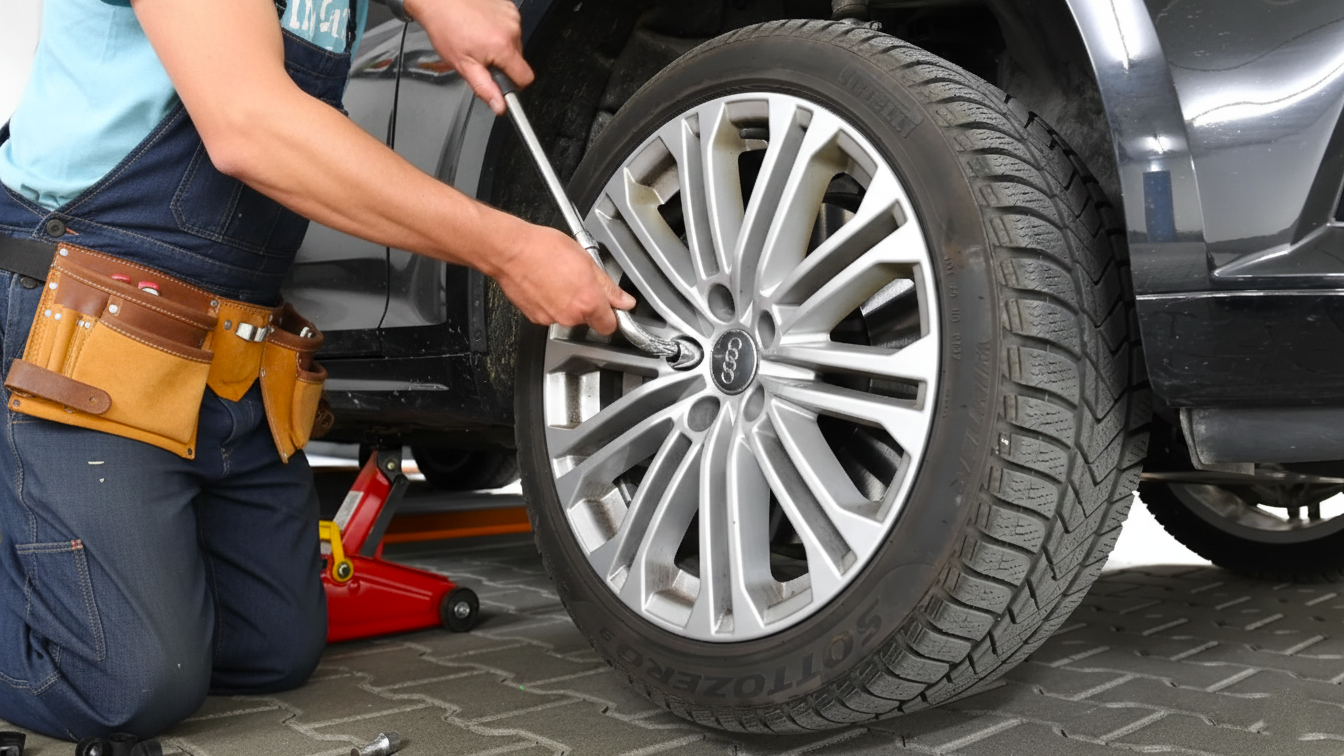
No electronic systems will help if the car has no grip on the road. Proper winter tire preparation is the most important stage.
Winter vs. All–Season
All–season tires are a compromise that performs poorly at temperatures below +7°C. Their rubber compound hardens, and they begin to slide. Reliable winter tires are made of a soft compound that maintains elasticity in the cold, and their tread has thousands of small sipes that grip snow and ice.
Studded vs. Studless ("Friction")
- Studs are the best choice for icy roads and packed snow. They literally bite into the ice. The downsides are noise on asphalt and a ban in some European countries.
- Studless tires work better in urban winter conditions with wet asphalt, slush, and fresh snow.
Tire Pressure
In the cold, tire pressure drops (by about 0.1 atm for every 10°C). Regularly, at least once every two weeks, check the pressure on cold tires and maintain it at the level recommended by the manufacturer.
Additional Equipment and Accessories
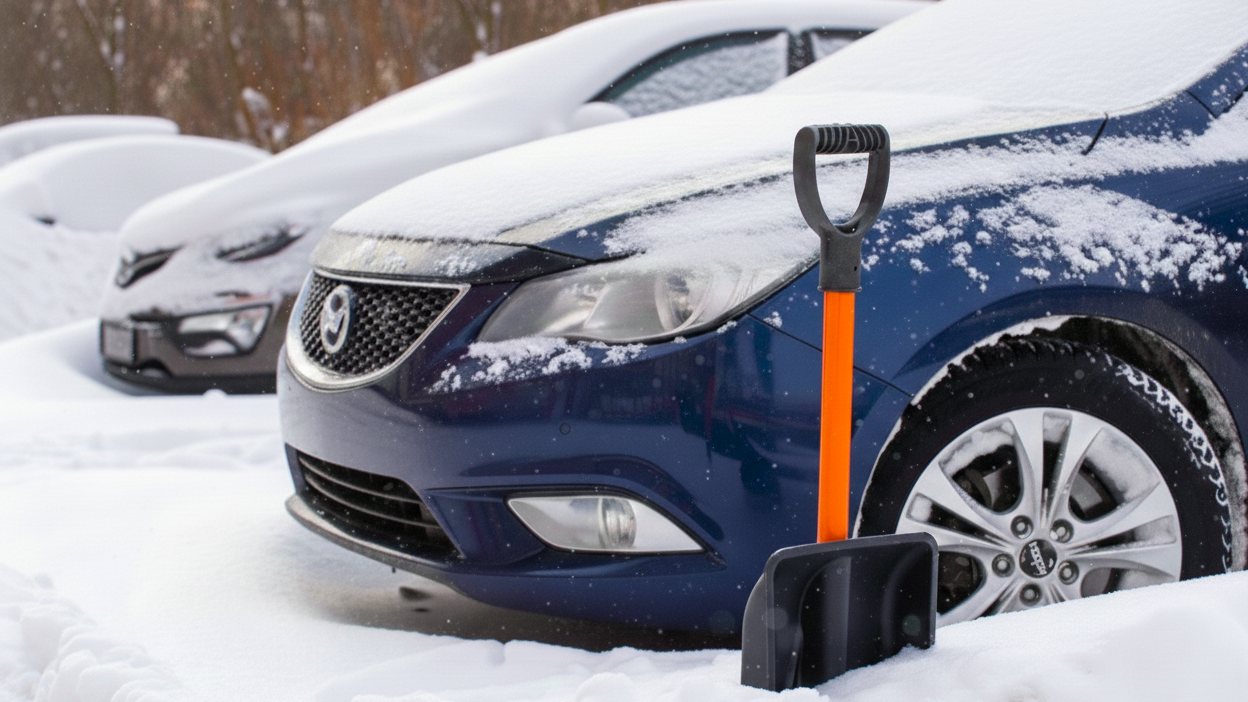
The right winter kit in your trunk is your insurance for unexpected situations. This is the foundation of how to winterize car not just technically, but practically.
Category | What You Should Have | Why You Need It |
Cleaning | Brush, scraper, shovel | To remove snow and ice from windows and the body, and to dig out the car. |
Emergency | Jumper cables, tow rope, lock de-icer | To start a dead battery, for towing, and to open frozen doors. |
Traction | Sand, salt, or cat litter | To help get moving on pure ice if you sprinkle it under the drive wheels. |
Personal Safety | Warm gloves, flashlight, reflective vest | For comfortable and safe work near the car in the dark. |
Tire chains indispensable for trips to the mountains or on heavily snow-covered roads. They are installed on the drive wheels and significantly increase traction.
Winter Driving Techniques: The Basics of Control
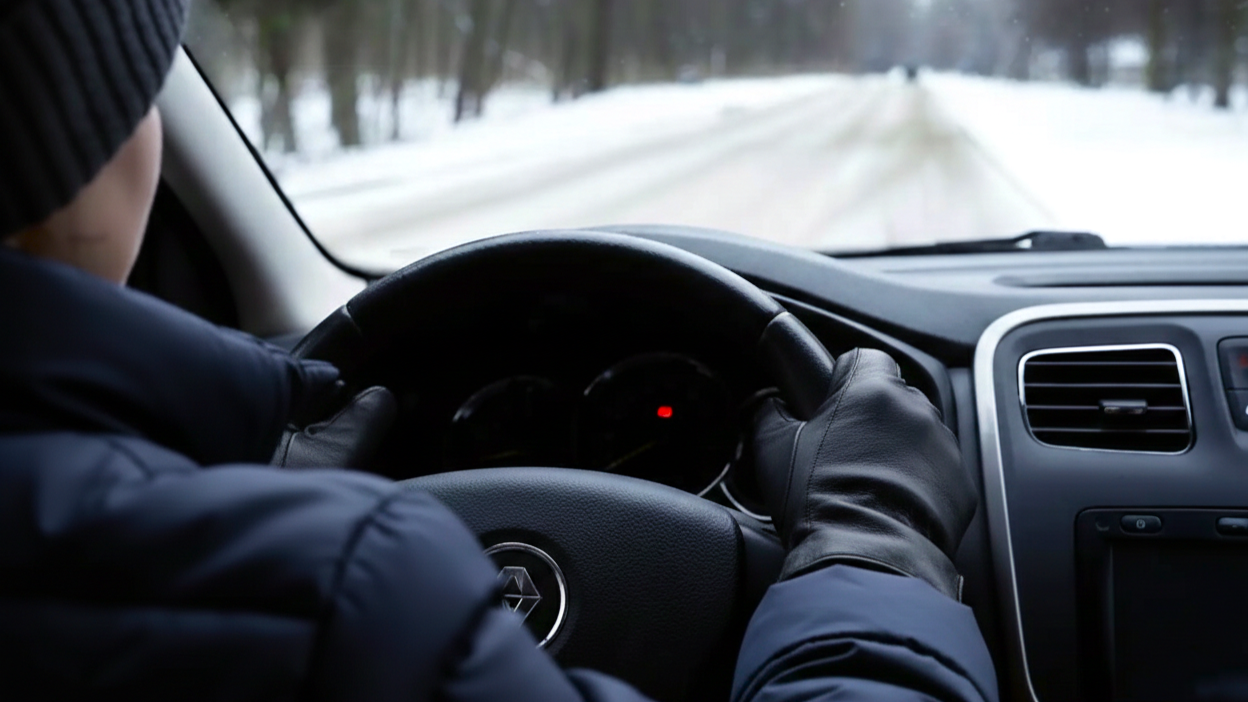
The main rule of winter driving is smoothness. All actions – steering, accelerating, braking – should be as gentle and predictable as possible.
Working the Pedals:
- Braking. Increase your following distance to the car ahead by 3-4 times. Start braking early and smoothly. The most effective way to slow down on a slippery road is by engine braking, i.e., shifting down through the gears.
- Accelerator. Press the gas pedal very gently, especially when starting from a stop, to avoid wheelspin.
Steering:
Turn the steering wheel smoothly, without sharp movements. When a skid begins, the instinctive reaction is to turn the wheel more sharply. The correct action is to slightly reduce the steering angle to regain tire grip.
Active Safety Systems: The Driver's Assistants
Modern electronic systems are your main allies, but it is important to understand how they work. A good winterized car must have its safety systems in proper working order.
- ABS (Anti–lock Braking System). It prevents the wheels from locking up during hard braking, allowing you to maintain steering control. On ice or in deep snow, the braking distance with ABS may increase, but you will be able to steer around an obstacle. The correct technique: in an emergency, press the brake pedal hard and all the way down, without being afraid of the grinding and vibration – that's the ABS doing its job.
- ESP/ESC (Electronic Stability Program). An electronic guardian angel. If the car starts to skid, ESP brakes individual wheels to bring it back on course. When to turn it off: ESP should be briefly disabled in only one situation – when you need to rock the car out of a deep snowdrift. In all other cases, it should always be on.
Dangerous Situations and How to Overcome Them
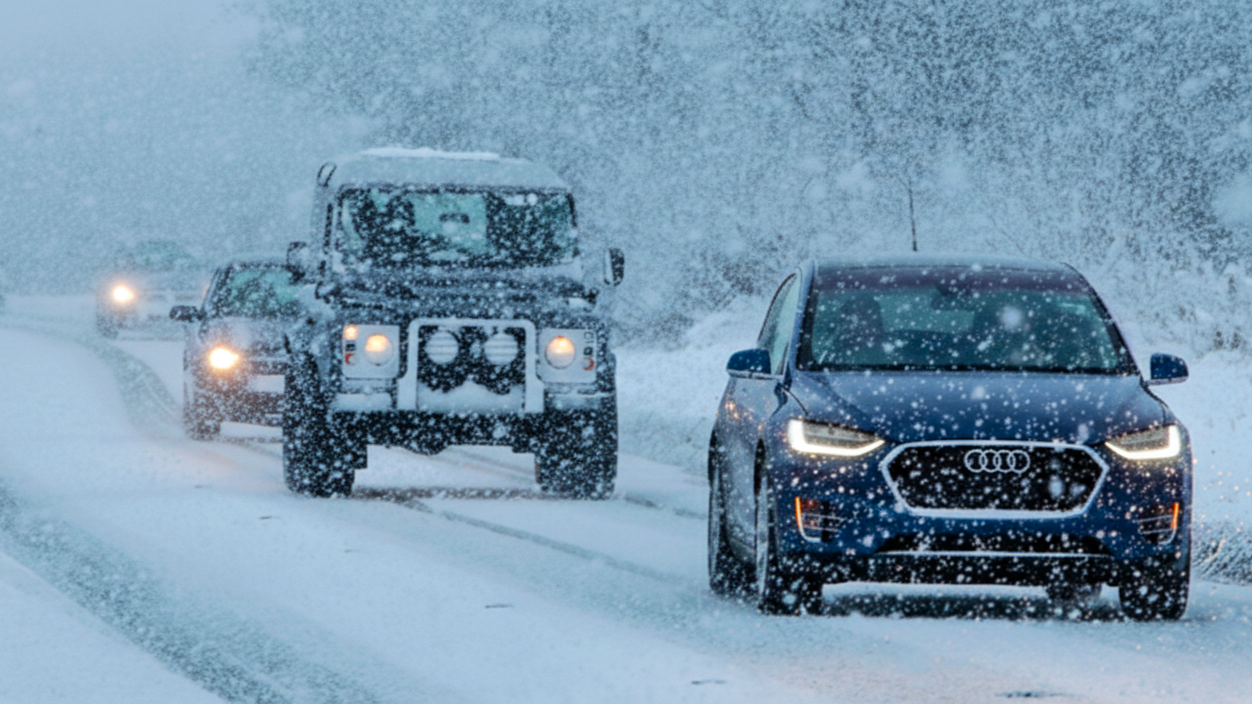
- Rear–wheel skid (for rear–wheel drive): Immediately steer into the direction of the skid and gently ease off the gas.
- Front–wheel skid (for front–wheel drive): Slightly reduce the throttle to add weight to the front wheels and slightly reduce the steering angle.
Situation | Your Actions |
"Black ice" (a thin, invisible layer of ice) | Make no sudden movements. Gently reduce speed without braking. |
Slush on the road | Reduce speed to avoid hydroplaning. Hold the steering wheel firmly. |
Stuck in a snowdrift | Don't floor it. Try to rock the car back and forth by alternating between first and reverse gears. |
Driving in Real Winter Conditions
Theory is important, but the road dictates its own rules. Snow, ice, and urban slush require different driving approaches.
Breaking Through the Snow
Snow driving techniques directly depend on its density. When driving through fresh, loose snow ("powder"), maintain a constant, steady momentum. Avoid sharp accelerations that will dig the drive wheels in, and don't stop on inclines. If you need to get through a deep snowdrift, do it with a little momentum. Packed snow is treacherous – under the wheels, it quickly turns into slippery ice. Here, the rules of ice driving apply: increase your distance, minimize steering inputs, and work the pedals with surgical precision. In slushy snow on the roads, the main danger is hydroplaning. Reduce your speed before puddles and hold the steering wheel firmly with both hands to be ready for a sudden pull.
Conquering the Urban Jungle in Winter
Winter in the city adds new challenges to slippery roads. Intersections polished by thousands of tires turn into ice rinks. Cross them with maximum caution, reducing speed in advance. Be extremely attentive to pedestrians – on slippery sidewalks, they can fall right under your wheels. Avoid parking in deep snowdrifts left by snowplows – it will be difficult to get out of such a trap in the morning. Winter car maintenance also includes body care, so don't forget to clear it of accumulated snow.
Planning a Countryside Expedition
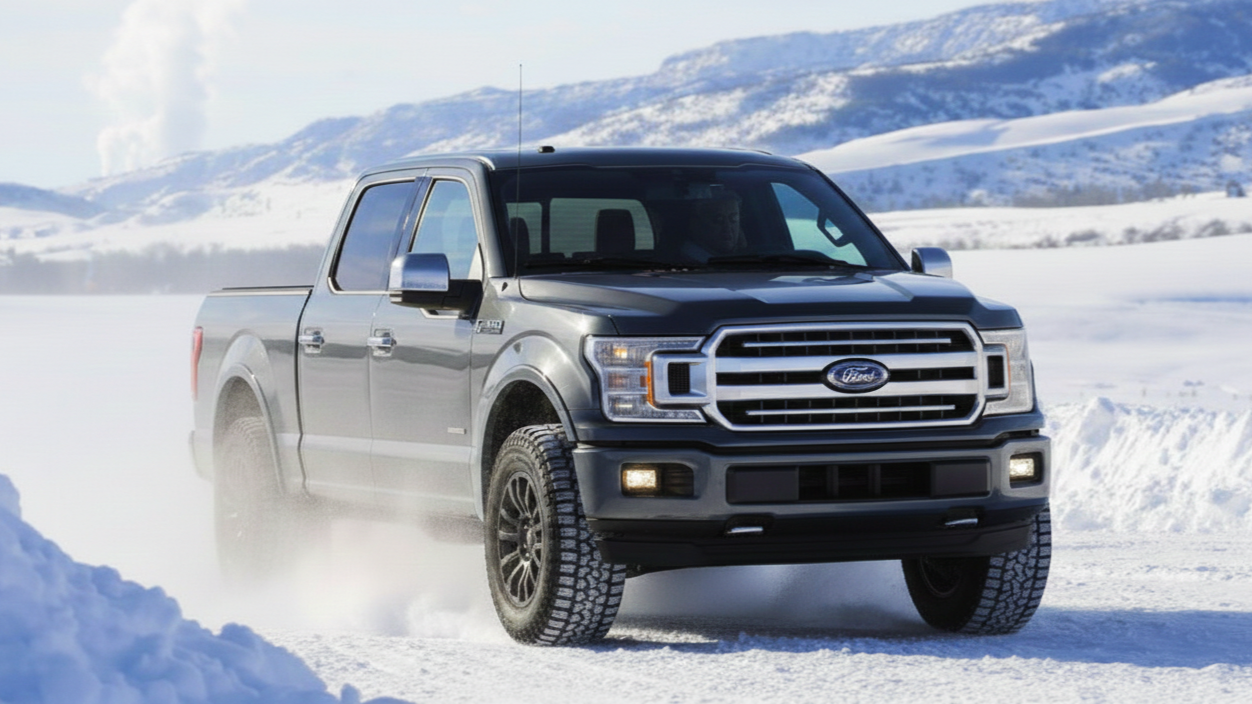
A long winter trip requires the preparation of a small expedition. Check the weather forecast for the entire route and the condition of the roads on the websites of road services in advance. Fill up the fuel tank and the washer fluid reservoir. Your "emergency kit" in the trunk should be supplemented with warm clothes, a blanket, a thermos with a hot drink, a supply of food, and a powerful portable charger. Inform your loved ones of your route and estimated time of arrival. On an unfamiliar snowy road, never attempt a risky overtake. It's better to lose ten minutes than to spend several hours waiting for help in a stalled car in the cold.
Warming Up the Engine Smartly: Ecology and Economy
Forget the old rule of "warming up the car for 10 minutes." A modern fuel-injected engine does not need a long warm-up at idle. This is a waste of fuel, increased wear, and unnecessary emissions. The algorithm is simple: start the engine, wait 30–60 seconds for the oil to circulate and the RPMs to stabilize, and then start driving smoothly without sharp accelerations or high revs. The engine will warm up much faster and more efficiently under load than at idle.
Conclusion
Winter driving safety is the result of preparation and the right skills. Therefore, you should never rely on luck alone. Thorough winter car maintenance, quality tires, and a calm, smooth driving style are the foundation on which your confidence on a slippery road is built. Follow our preparing your car for winter checklist, adapt your skills to the weather conditions. Then, winter driving will cease to be stressful and will simply become a part of everyday life.

